![[등록] 2026-09-01 15:48:31](/support/_updata/banner2/tl181982910_6749.png)


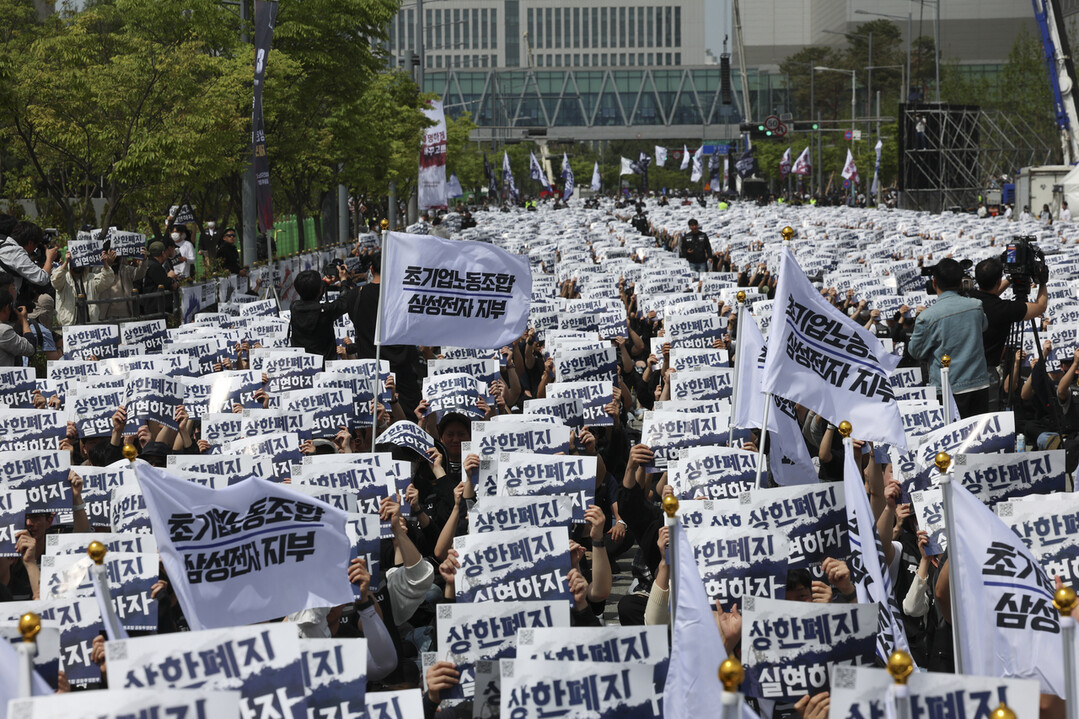
SEOUL — Tensions at Samsung Electronics have reached a boiling point as the company’s primary labor union flatly rejected a government-mediated settlement featuring a staggering 40 trillion won ($29 billion) performance bonus package. With the union leadership dismissing the proposal as "nonsense," South Korea’s tech giant is now bracing for a massive 18-day general strike scheduled to begin on May 21.
The "40 Trillion Won" Stalemate
The National Labor Relations Commission (NLRC) recently stepped in to mediate the escalating dispute between Samsung management and the Samsung Electronics Branch of the Super-Enterprise Union. The commission’s proposal sought a middle ground: maintaining the existing Economic Value Added (EVA) based bonus system while introducing a "Special Reward" for the Device Solutions (DS) division.
Under this plan, if the semiconductor division reclaimed the top industry spot in revenue and operating profit, 12% of the operating profit would be allocated for bonuses. Given current projections of a 300 trillion won operating profit, this would result in a record-breaking 40 trillion won payout for DS employees this year alone.
Despite the scale of the offer, Choi Seung-ho, chairman of the union, reportedly dismissed the mediation and the suggestion to put the deal to a member vote. In a message to union members, Choi labeled the commission’s efforts as "nonsense" and "rotten," signaling a breakdown in diplomatic channels.
Institutionalization vs. Discretion
The core of the conflict lies not just in the amount, but in the "institutionalization" of the bonus system. The union is demanding:
An unconditional allocation of 15% of operating profits toward bonuses.
The removal of the current cap on bonuses (currently set at 50% of annual salary).
A transparent, codified system that removes management's discretion over payouts.
The union has signaled a slight willingness to negotiate the percentage—perhaps dropping to 13–14%—provided the company introduces a "Stock Compensation Option," allowing workers to receive half of their bonuses in company shares. However, the demand for a total removal of the bonus cap remains a non-negotiable sticking point.
Internal Dissent and "Dictatorial" Leadership
While the union leadership maintains a hardline stance, cracks are appearing within the rank and file. Samsung’s internal "Blind" community has seen a surge in posts from employees worried about the economic fallout. "Let’s not blow this out of proportion and settle at a reasonable level," one employee wrote, while others expressed concern over the potential 30 trillion won loss in productivity and the "dogmatic" decision-making of the union leadership.
Critics point to the union’s "deformed" structure. Despite boasting over 70,000 members, the Super-Enterprise Union has operated without a representative delegate system since its launch in early 2023, leading to accusations that Chairman Choi is making unilateral decisions without a democratic mandate from the workers.
The Nuclear Option: Emergency Adjustment Power
As the May 21 strike deadline looms, calls are growing for the South Korean government to exercise its "Emergency Adjustment Power" under Article 76 of the Labor Relations Act. This rare legal measure allows the Labor Minister to intervene when a strike threatens the national economy or the daily lives of citizens.
If invoked, all strike actions would be suspended for 30 days while the NLRC conducts mandatory arbitration.
"Considering Samsung Electronics’ systemic importance to the domestic stock market and the national economy, the legal grounds for emergency adjustment are becoming increasingly plausible," noted Lee Jeong, a professor at Hankuk University of Foreign Studies Law School.
With both sides entrenched, the coming week will be a critical juncture for the global semiconductor supply chain and the future of labor-management relations in South Korea. Should the strike proceed, it could mark one of the most significant industrial disruptions in the history of the "Galaxy" maker.
[Copyright (c) Global Economic Times. All Rights Reserved.]