• 2026.10.07 (Wed)
  • All articles
  • LOGIN
  • JOIN
Global Economic Times
[등록] 2026-09-01 15:48:31
  • Synthesis
  • World
  • Business
  • Industry
  • ICT
  • Distribution Economy
  • Well+Being
  • Travel
  • Eco-News
  • Education
  • Korean Wave News
  • Opinion
  • Arts&Culture
  • Sports
  • People & Life
    • International Student Report
    • With Ambassador
  • Column
    • Cho Kijo Column
    • Cherry Garden Story
    • Ko Yong-chul Column
    • Kim Seul-Ong Column
    • Lee Yeon-sil Column
  • Photo News
  • New Book Guide
MENU
 
Home > Distribution Economy

Jeju Farmers Sigh Over Air Cargo Fare Hikes

Hee Chan Kim Reporter / Updated : 2026-10-07 14:30:54
  • -
  • +
  • Print
Transportation cost for a 4kg box of wild chive (Chwinamul) jumps 13.0% from 2,300 won to 2,600 won.
Fears grow over a domino effect on logistics costs ahead of the peak winter vegetable shipping season, including broccoli.
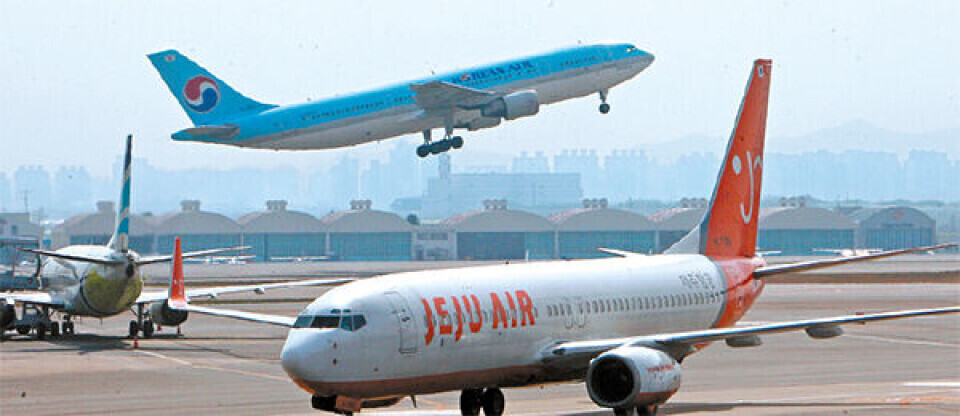

While rising global oil prices have increased the burden of airfares for Jeju residents and tourists, local farmers who ship agricultural products to other regions by air are also voicing concerns over mounting air cargo fees. In particular, as Jeju approaches the peak harvest season in November for winter vegetables such as broccoli and green onions—which heavily rely on air freight—there are growing worries that higher air cargo costs will not only increase the financial burden on farmers but also weaken the price competitiveness of Jeju's agricultural produce.

According to regional agricultural cooperatives and the aviation industry on the 6th, an air cargo agency holding a transport contract with Aewol Agricultural Cooperative raised its shipping fees by 75 won per kilogram last June. Consequently, the transport fee for a 4kg box of wild chives rose by 13.0% (300 won), from 2,300 won to 2,600 won.

This agency-level fee hike was triggered by Korean Air, which operates cargo sales through agencies, raising its domestic air cargo rates by 15 won per kilogram. The issue, however, is that the agency's rate increase was several times higher than that of Korean Air. Because the distribution structure involves the cargo agency collecting wild chives from farm sites via truck and transporting them by air to the Garak Agricultural Market in Seoul, the agency factored in both the increased freight unit prices and soaring vehicle fuel costs. Ultimately, however, these surging logistics expenses are being passed entirely onto the farmers.

As the burden of air cargo fee increases intensified, officials from regional agricultural cooperatives in major upland crop production areas, the Jeju Special Self-Governing Province, and the National Agricultural Cooperative Federation (NACF) Jeju Headquarters paid a protest visit to the Korean Air cargo office at Jeju International Airport in late September. They requested cooperation to minimize freight rate hikes during the upcoming peak winter agricultural shipping season, and to ensure prior notification and coordination with trading cooperatives and local governments should any rate adjustments occur.

The core concern is the possibility that these air cargo rate hikes will spread to other agricultural products. As regional agricultural cooperatives sign transport contracts with air cargo agencies to coincide with the shipping seasons of winter vegetables like broccoli, cooperatives facing impending contracts are deeply worried about potential fare increases.

The NACF Jeju Headquarters estimates that if air transport fees for other crops rise by a margin similar to that of wild chives, local farmers would face an additional annual air cargo burden of approximately 1.4 billion won. In 2025, the combined annual air transport volume of wild chives, green onions, and rape greens—which rely on air transport for about 90% of their distribution—along with broccoli (at about 40%), reached approximately 19,300 tons.

"With Korean Air raising its air cargo transport rates, other cargo agencies are highly likely to raise their unit prices to a level similar to that of wild chives," said Kim Goon-jin, Chairman of the Jeju Agricultural Cooperative Upland Agriculture Competitiveness Promotion Council (and head of Hankyung Agricultural Cooperative). "Since winter vegetables will begin full-scale shipments in a month or two, the Jeju provincial government should also actively consider support measures for the sharply escalated logistics costs."

[Copyright (c) Global Economic Times. All Rights Reserved.]

  • #\ormuz Impasse
  • #globaleconomictimes
  • #micorea
  • #mykorea
  • #nammidonganews
  • #singaporenewsk
  • #Samsung
  • #Daewoo
  • #Hyos
Hee Chan Kim Reporter

Popular articles

  •  Iran and Gulf Nations to Hold First Ministerial Meeting in Salalah for Hormuz Navigation

  • The Era of "Working AI" Has Arrived: Why OpenAI's GPT-6 Astra is a Blessing for Samsung Electronics and SK Hynix

  • Expanding Beyond Old Downtown to Western Busan: The Growing Vitality of ‘Starry Sea Busan’ Night Tourism

I like it
Share
  • Facebook
  • X
  • Kakaotalk
  • LINE
  • BAND
  • NAVER
  • https://globaleconomictimes.kr/article/1065591014498345 Copy URL copied.
Comments >

Comments 0

Weekly Hot Issue

  • Silent Progression of Pancreatic Cancer: Watch for Weight Loss and Jaundice
  • Nearly 150 Disciplinary Actions Taken Against MOLIT Officials, Including 13 Cases at Daejeon Regional Office for Sexual Misconduct and Drunk Driving
  • Crackdown on Scalpers: 170 Suspects Referred to Police for 1 Billion Won Ticket Scam
  • South Korea’s Ministry of Defense Aims to Phase Out Military Service Exemptions for Arts and Sports
  • South Korea’s Nuri Space Rocket Successfully Launches, Deploys 15 Satellites: Ground Station Contact Pending
  • Chungnam Institute of Confucianism and Culture to Host ‘K-Heritage in France’ in Dijon

Most Viewed

1
Guitarist Kim Ji-hee to Hold Storytelling Concert 'The Guitar is Happiness'
2
Samsung Electronics Jumps 3.25% Ahead of Chuseok Holiday; SK Hynix Also Gains 1.2%
3
US Deploys Third Carrier and 10,000 Troops to Middle East Amid Rising Tensions with Iran
4
Gyeongsangbuk-do Promotes Excellence of Korean Traditional Crafts in Washington, D.C.
5
Chungbuk Province Goes All-Out to Attract Young Visitors for the 2026 Osong Cosmetics Beauty Expo
체리가든 스토리
nutri huevos
로타리
동포저널

Hot Issue

"912 km on a Single Tank"… Genesis Launches Its First Hybrid, the 'GV80'

Foreigners Net Sell 1.7 Trillion Won; KOSPI Surrenders 7,000 Mark While KOSDAQ Surges Nearly 3%

AI Rally Fails to Be Damped by Interest Rates… NVIDIA Nears $6 Trillion, Musk Returns to Centibillionaire Status

Physical AI Innovation in Robot Automation... "What Matters is the Robot's Fingertip"

Fashion Runway Show 2026

Global Economic Times
korocamia@naver.com
CEO : LEE YEON-SIL
Publisher : KO YONG-CHUL
Registration number : Seoul, A55681
Registration Date : 2024-10-24
Youth Protection Manager: KO YONG-CHUL
Singapore Headquarters
5A Woodlands Road #11-34 The Tennery. S'677728
Korean Branch
Phone : +82(0)10 4724 5264
#304, 6 Nonhyeon-ro 111-gil, Gangnam-gu, Seoul
Copyright © Global Economic Times All Rights Reserved
  • 향기네무료급식
  • BCB부천방송
  • 반달곰 프로젝트
Search
Category
  • All articles
  • Synthesis
  • World
  • Business
  • Industry
  • ICT
  • Distribution Economy
  • Well+Being
  • Travel
  • Eco-News
  • Education
  • Korean Wave News
  • Opinion
  • Arts&Culture
  • Sports
  • People & Life 
    • 전체
    • International Student Report
    • With Ambassador
  • Column 
    • 전체
    • Cho Kijo Column
    • Cherry Garden Story
    • Ko Yong-chul Column
    • Kim Seul-Ong Column
    • Lee Yeon-sil Column
  • Photo News
  • New Book Guide
  • Overseas Koreans
  • Multicultural News