• 2026.03.06 (Fri)
  • All articles
  • LOGIN
  • JOIN
Global Economic Times
fashionrunwayshow2026
  • Synthesis
  • World
  • Business
  • Industry
  • ICT
  • Distribution Economy
  • Well+Being
  • Travel
  • Eco-News
  • Education
  • Korean Wave News
  • Opinion
  • Arts&Culture
  • Sports
  • People & Life
    • International Student Report
    • With Ambassador
  • Column
    • Cho Kijo Column
    • Cherry Garden Story
    • Ko Yong-chul Column
    • Kim Seul-Ong Column
    • Lee Yeon-sil Column
  • Photo News
  • New Book Guide
MENU
 
Home > Synthesis

Prime Minister Kim Announces 20 Trillion Won Support for New "Integrated Special Cities"

Desk / Updated : 2026-01-16 13:52:01
  • -
  • +
  • Print


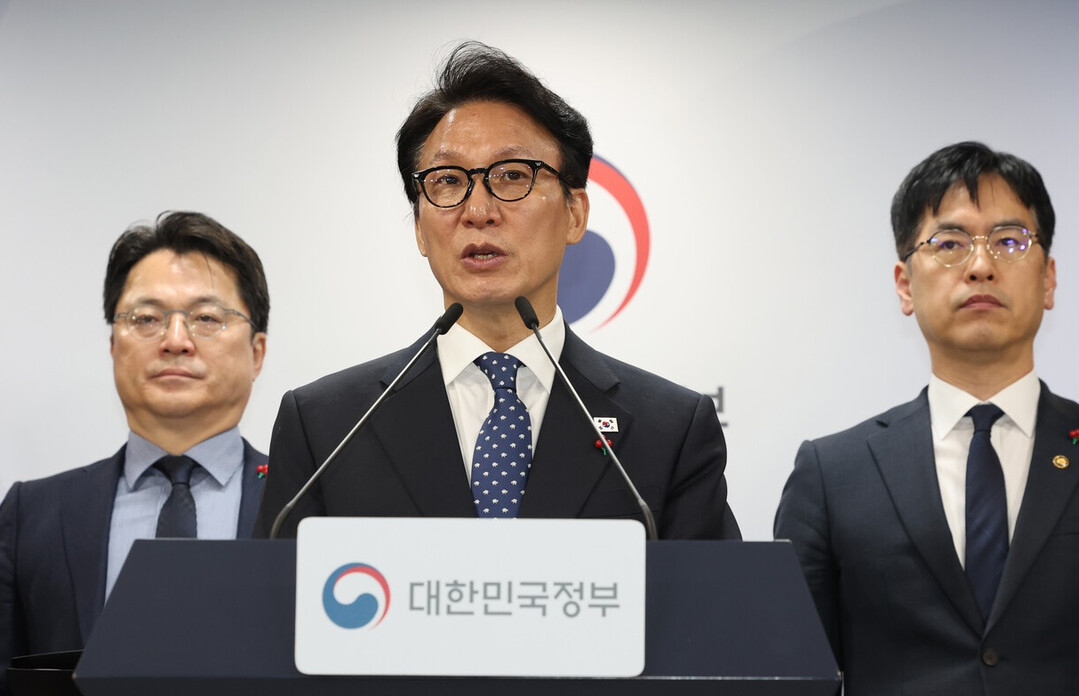
SEOUL – In a landmark move to decentralize national growth, Prime Minister Kim Min-seok announced on Friday a massive support package for newly formed "Integrated Special Cities." The government pledges up to 20 trillion won ($14.8 billion) over four years to incentivized provinces and cities that successfully merge their administrative bodies.

Elevating Regional Status to Match Seoul
The core of the proposal is to grant these integrated entities a legal status equivalent to Seoul Metropolitan City. This includes:

Administrative Expansion: Increasing the number of vice-mayors to four and elevating their rank to the vice-ministerial level.
Enhanced Autonomy: Granting broader self-governing authority to ensure regional policies are led by local needs rather than central mandates.

Financial Incentives and Tax Breaks
To facilitate this "Great Transition" from Seoul-centric to region-led growth, the government plans to introduce the "Administrative Integration Shared Tax" and "Administrative Integration Subsidy."

Beyond direct cash injections of 5 trillion won annually, the Prime Minister outlined several corporate incentives to attract business:

Tax Reductions: Deep cuts in local taxes for development projects and corporate occupants.
Employment Support: Direct subsidies for hiring and vocational training.
Land Benefits: Extended leases on state-owned property and significant rental discounts.

Strategic Relocation of Public Institutions
Prime Minister Kim also confirmed that Integrated Special Cities would receive priority during the second phase of public institution relocation scheduled for 2027. This strategy aims to create a "Special Opportunity Zone" effect, mirroring the benefits of existing high-growth economic districts.

"We are shifting the paradigm of national development," Prime Minister Kim stated. "By providing certain incentives and autonomy, we will ensure that integrated local governments become the new engines of the Korean economy."

Remaining Challenges
While the vision is ambitious, specific funding mechanisms remain undecided. The Ministry of Planning and Budget noted that a joint task force will soon be established to determine the exact ratio of national-to-local tax adjustments required to sustain this 20 trillion won commitment.

[Copyright (c) Global Economic Times. All Rights Reserved.]

  • #Globaleconomictimes
  • #Korea
  • #Seoul
  • #Samsung
  • #LG
  • #Bitcoin
  • #Meta
  • #Business
  • #Economic
  • #The Woori Bank
  • #Elon Musk
  • #C
Desk
Desk

Popular articles

  • Samsung TV Plus Surpasses 100 Million Monthly Active Users, Solidifying Leadership in Global FAST Market

  • South Korean Conglomerates Pledge 270 Trillion Won for Regional Investment to Boost Jobs and Growth

  • Mixed U.S. Employment Data Sparks Wall Street Retreat; Fed Shifts Focus to Inflation

I like it
Share
  • Facebook
  • X
  • Kakaotalk
  • LINE
  • BAND
  • NAVER
  • https://globaleconomictimes.kr/article/1065588614779746 Copy URL copied.
Comments >

Comments 0

Weekly Hot Issue

  • The Illusion of a "Stress-Relieving" Smoke: Study Finds Smokers More Prone to Depression
  • From Table to Space: Japan Unveils Edible Spoons Made of Cookies
  • Luckin Coffee Shakes Up Global Market with Blue Bottle Acquisition
  • U.S. Private Sector Hiring Hits 7-Month High in February, ADP Reports
  • Self-Employed Loan Delinquency Rates Double in a Decade Amid Economic Headwinds
  • Multi-Homeowner Loan Balance Hits 103 Trillion Won; Half Concentrated in Seoul and Gyeonggi

Most Viewed

1
Adwa’s Echo in Korea: A Shared Story of Dignity and Freedom
2
2026, The Grand Year of Hangeul Celebration — The River of History Where Five Streams Converge
3
A New Milestone for Ukraine’s Post-War Reconstruction: The Birth of ISVP
4
Mexican currency and the powerful history behind its designs
5
Revised and Expanded Edition of ‘Failure of Negotiations with North Korea: Truth and Solutions’ Published
광고문의
임시1
임시3
임시2

Hot Issue

South Korean Markets Shaken by "Iran Shock": KOSPI Suffers Historic Rout Amid Soaring Oil and FX Rates

Self-Employed Loan Delinquency Rates Double in a Decade Amid Economic Headwinds

U.S. Private Sector Hiring Hits 7-Month High in February, ADP Reports

Industrial Output Dips in January Amid Semiconductor Adjustments; Middle East Tensions Loom as Wild Card

Let’s recycle the old blankets in Jeju Island’s closet instead of incinerating them.

Global Economic Times
korocamia@naver.com
CEO : LEE YEON-SIL
Publisher : KO YONG-CHUL
Registration number : Seoul, A55681
Registration Date : 2024-10-24
Youth Protection Manager: KO YONG-CHUL
Singapore Headquarters
5A Woodlands Road #11-34 The Tennery. S'677728
Korean Branch
Phone : +82(0)10 4724 5264
#304, 6 Nonhyeon-ro 111-gil, Gangnam-gu, Seoul
Copyright © Global Economic Times All Rights Reserved
  • 에이펙2025
  • APEC2025가이드북TV
  • 독도는우리땅
Search
Category
  • All articles
  • Synthesis
  • World
  • Business
  • Industry
  • ICT
  • Distribution Economy
  • Well+Being
  • Travel
  • Eco-News
  • Education
  • Korean Wave News
  • Opinion
  • Arts&Culture
  • Sports
  • People & Life 
    • 전체
    • International Student Report
    • With Ambassador
  • Column 
    • 전체
    • Cho Kijo Column
    • Cherry Garden Story
    • Ko Yong-chul Column
    • Kim Seul-Ong Column
    • Lee Yeon-sil Column
  • Photo News
  • New Book Guide
  • Multicultural News
  • Jobs & Workers