• 2025.12.13 (Sat)
  • All articles
  • LOGIN
  • JOIN
Global Economic Times
APEC2025KOREA가이드북
  • Synthesis
  • World
  • Business
  • Industry
  • ICT
  • Distribution Economy
  • Well+Being
  • Travel
  • Eco-News
  • Education
  • Korean Wave News
  • Opinion
  • Arts&Culture
  • Sports
  • People & Life
  • Column
    • Cho Kijo Column
    • Lee Yeon-sil Column
    • Ko Yong-chul Column
    • Cherry Garden Story
  • Photo News
  • New Book Guide
MENU
 
Home > World

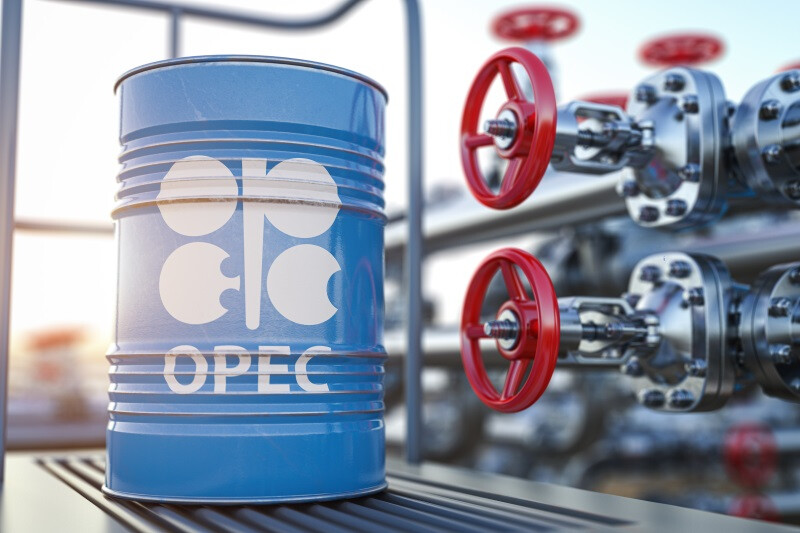
OPEC+ Cuts Extend Oil Market Tightness into 2025

Pedro Espinola Special Correspondent / Updated : 2024-12-13 13:22:42
  • -
  • +
  • Print


OPEC+’s Prolonged Production Cuts and Rising Demand Tighten Global Oil Market

The global oil market is poised to remain tight in 2025, despite OPEC+’s decision to extend its voluntary production cuts by an additional three months. The International Energy Agency (IEA) has raised its global oil demand growth forecast for 2025 to 1.1 million barrels per day (bpd), driven by robust demand from Asian markets.   

While OPEC+’s production cuts aim to stabilize the market, the IEA cautions that overproduction from some members and strong supply growth from non-OPEC+ countries could still lead to a surplus. However, the IEA predicts that the market will remain comfortably supplied.   

Key Takeaways:

Strong Demand Growth: Global oil demand is projected to reach 103.9 million bpd in 2025, driven by rising demand from Asian economies.   

OPEC+ Production Cuts: The extension of OPEC+’s voluntary production cuts to September 2026 will help to tighten the market and support prices.
Non-OPEC+ Supply Growth: Non-OPEC+ countries, particularly the US, Brazil, Canada, Guyana, and Argentina, are expected to contribute significantly to global oil supply growth.
Saudi Arabia’s Jafurah Gas Project: The start-up of this project will boost Saudi Arabia’s natural gas liquid supply, indirectly impacting oil production.

Market Outlook:

While the oil market is expected to remain relatively balanced in 2025, several factors could influence future price trends:

Geopolitical Risks: Geopolitical tensions, particularly in the Middle East, could disrupt oil supplies and lead to price volatility.   

Economic Slowdown: A global economic slowdown could reduce oil demand and put downward pressure on prices.   

Renewables and Energy Transition: The increasing adoption of renewable energy sources could impact long-term oil demand.
As the global energy landscape continues to evolve, it is crucial to monitor these factors to assess their potential impact on the oil market.

[Copyright (c) Global Economic Times. All Rights Reserved.]

  • #globaleconomictimes
  • #koyongchul
  • #cherrylee
  • #seoulkorea
  • #periodicoeconomico
  • #글로벌이코노믹타임즈
  • #GET
  • #GETtv
  • #liderdel
Pedro Espinola Special Correspondent

Popular articles

  • Trump Vows Permanent 'Third World' Immigration Ban, Mass Deportations Following Fatal Shooting

  • Louvre Museum Rocked by New Crisis: Leak Damages Hundreds of Rare Egyptian Studies Texts

  • Deadly Attack on Paramilitary Headquarters in Pakistan Near Afghan Border Raises Regional Tensions

I like it
Share
  • Facebook
  • X
  • Kakaotalk
  • LINE
  • BAND
  • NAVER
  • https://globaleconomictimes.kr/article/1065586887110223 Copy URL copied.
Comments >

Comments 0

Weekly Hot Issue

  • International Organizations Raise China's Growth Forecasts, Citing Stimulus and Exports
  • US-Japan Counteract Sino-Russian Drills with Joint Bomber Exercise in East Sea Airspace
  • Thailand-Cambodia Conflict Escalates: 22 Dead, Over 100 Injured as Border Clashes Spread
  • Swiss Economy Minister Guy Parmelin Poised to Lead as President in 2026
  • Russia Claims Downing Record 278 Ukrainian Drones Overnight, 40 Targeting Moscow Region
  • ZTE Faces Massive US Fine Over Alleged Foreign Bribery; Potential Settlement Could Exceed $2 Billion

Most Viewed

1
A Garden Where the City's Rhythm Stops: Dongdaemun's 'Cherry Garden', Cooking Consideration and Diversity
2
The Sudden Halt of Ayumi Hamasaki's Shanghai Concert: Unpacking the Rising Sino-Japanese Tensions
3
Choi Bun-do, Chairman of PTV Group, Assumes Presidency of the Korean Chamber of Commerce and Industry in South Central Vietnam
4
The Paradox of the 'Juvenile Offender' (Chokbeop Sonyeon): Impunity or Unfinished Rehabilitation?
5
South Korea Unveils 'K-Med': A Gigantic leap in Medical AI, Challenging Global Tech Giants
광고문의
임시1
임시3
임시2

Hot Issue

Mexico Hikes Tariffs on 'Strategic Goods' from South Korea, China, and Other Non-FTA Nations

Tech Tensions Flare: DeepSeek Allegedly Smuggles Banned NVIDIA Blackwell Chips for New AI Model

Netflix Stock Plummets 10% on Credit Downgrade Fears Following Blockbuster Warner Bros. Acquisition

LG Innotek Develops Eco-Friendly Next-Gen Smart IC Substrate, Reducing Carbon Emissions by Half

Let’s recycle the old blankets in Jeju Island’s closet instead of incinerating them.

Global Economic Times
korocamia@naver.com
CEO : LEE YEON-SIL
Publisher : KO YONG-CHUL
Registration number : Seoul, A55681
Registration Date : 2024-10-24
Youth Protection Manager: KO YONG-CHUL
Singapore Headquarters
5A Woodlands Road #11-34 The Tennery. S'677728
Korean Branch
Phone : +82(0)10 4724 5264
#304, 6 Nonhyeon-ro 111-gil, Gangnam-gu, Seoul
Copyright © Global Economic Times All Rights Reserved
  • 에이펙2025
  • APEC2025가이드북TV
  • 독도는우리땅
Search
Category
  • All articles
  • Synthesis
  • World
  • Business
  • Industry
  • ICT
  • Distribution Economy
  • Well+Being
  • Travel
  • Eco-News
  • Education
  • Korean Wave News
  • Opinion
  • Arts&Culture
  • Sports
  • People & Life
  • Column 
    • 전체
    • Cho Kijo Column
    • Lee Yeon-sil Column
    • Ko Yong-chul Column
    • Cherry Garden Story
  • Photo News
  • New Book Guide
  • Multicultural News
  • Jobs & Workers