![[등록] 2026-09-01 15:48:31](/support/_updata/banner2/tl181982910_6749.png)


(C) NYTimes
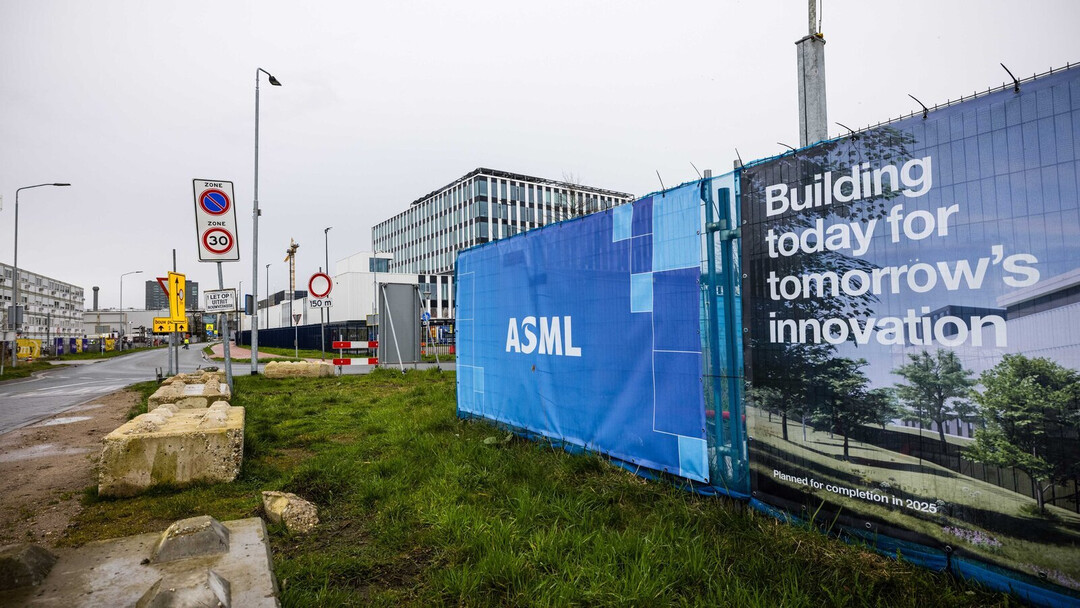
BEIJING — As the United States intensifies its efforts to sever China’s access to cutting-edge semiconductor technology, Beijing’s industry titans and academic elite are calling for an unprecedented "national mobilization." The goal is clear and ambitious: to build a domestic equivalent of ASML, the Dutch giant that currently holds a monopoly on the world’s most advanced chipmaking machinery.
According to reports from Chinese media outlet Guancha and industry observers on March 7, 2026, a high-level collective of semiconductor leaders—including Wang Yangyuan, co-founder of China’s largest foundry SMIC—has submitted a strategic proposal titled "Building a Self-Controllable Integrated Circuit Industry System."
Ending "Scattered Sand" Competition
The report offers a blunt diagnosis of China’s current silicon landscape. While the industry has grown, it remains vulnerable and plagued by "inefficient competition" among domestic firms. The authors use a poignant Chinese proverb to describe the situation: "Scattered sand cannot build a pagoda."
To counter this, the proposal urges the government to implement a unified national strategy during the 15th Five-Year Plan (2026–2030). The focus is on breaking the "triple shackle" imposed by U.S.-led sanctions:
-Electronic Design Automation (EDA) software.
-Extreme Ultraviolet (EUV) lithography equipment.
-Advanced Silicon Materials.
Demystifying the ASML Monopoly
The center of gravity for this initiative is the development of a domestic EUV scanner. ASML’s EUV machines are arguably the most complex devices ever mass-produced, consisting of over 100,000 parts and a supply chain of 5,000 global partners.
However, the Chinese report strikes a defiant tone, arguing that "ASML is merely a masterpiece of technological integration." The experts suggest that if China consolidates its state-level resources, manages capital and talent with military precision, and fosters a single "national champion" leader, it can replicate this feat of integration.
"The next five years will be a period of 'lying on faggots and tasting gall' (Washing-shangdan)," the report states, invoking a famous historical idiom for enduring hardship to achieve future revenge.
The Heavyweights Behind the Move
This is not merely an academic exercise. The proposal’s signatories represent the "Who's Who" of Chinese tech:
-Chen Nanxiang, Chairman of NAND flash leader YMTC.
-Zhao Jinrong, Chairman of equipment giant Naura Technology.
-Liu Weiping, Chairman of EDA specialist Empyrean.
The timing is equally significant. The proposal was highlighted during the Two Sessions, China's most important annual political gathering, where the 15th Five-Year Plan is a central agenda item. Zheng Shanjie, Chairman of the National Development and Reform Commission (NDRC), signaled massive financial backing for such projects, hinting at investments ranging from 100 billion to 1 trillion yuan ($14B–$140B USD).
The Road Ahead: 2028 and Beyond
While the rhetoric is bold, the technical hurdles remain immense. Reports from late 2025 indicated that Chinese engineers—some reportedly former ASML employees—have succeeded in generating extreme ultraviolet light via "reverse-engineering" prototypes.
While these prototypes are currently undergoing testing, industry insiders suggest a target for actual chip production could be as early as 2028. If successful, it would mark a seismic shift in the global balance of power, proving that China can indeed build its "pagoda" even in the face of a global blockade.
[Copyright (c) Global Economic Times. All Rights Reserved.]