• 2026.06.05 (Fri)
  • All articles
  • LOGIN
  • JOIN
Global Economic Times
fashionrunwayshow2026
  • Synthesis
  • World
  • Business
  • Industry
  • ICT
  • Distribution Economy
  • Well+Being
  • Travel
  • Eco-News
  • Education
  • Korean Wave News
  • Opinion
  • Arts&Culture
  • Sports
  • People & Life
    • International Student Report
    • With Ambassador
  • Column
    • Cho Kijo Column
    • Cherry Garden Story
    • Ko Yong-chul Column
    • Kim Seul-Ong Column
    • Lee Yeon-sil Column
  • Photo News
  • New Book Guide
MENU
 
Home > Education

South Korea to Conduct First Nationwide Census of Public AI Training Data: 100 Key Datasets Target Public Release

Desk / Updated : 2026-04-10 13:04:16
  • -
  • +
  • Print
Ministry of Science and ICT aims to break down data silos and establish a unified "AI Hub" to fuel the nation’s generative AI ecosystem.


SEOUL — In a strategic move to solidify the nation’s standing in the global artificial intelligence race, the South Korean government has announced its first-ever comprehensive census of AI training data held by the public sector.

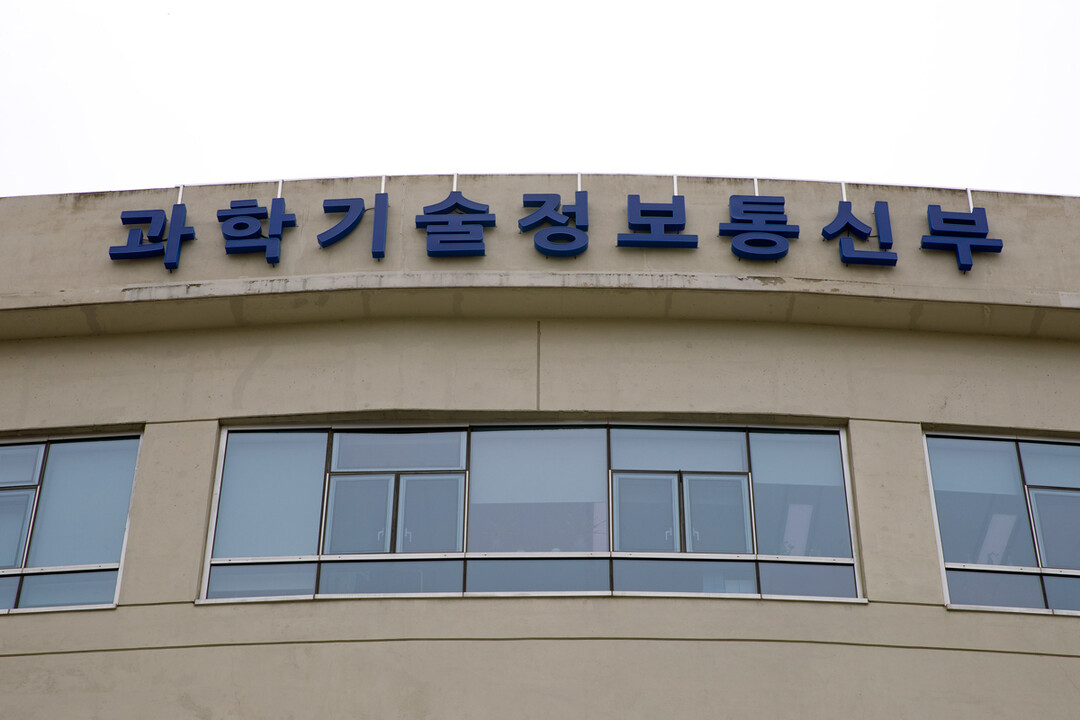
The Ministry of Science and ICT (MSIT), in collaboration with the National Information Society Agency (NIA), launched the "AI Training Data Census" project on April 10, 2026. The initiative is designed to systematically identify, evaluate, and integrate high-quality datasets scattered across various government ministries and public agencies into a centralized accessible platform.

Bridging the "Data Divide"
Despite the wealth of information collected by public institutions, a significant portion of AI-ready data currently remains "siloed." Because these datasets are managed independently by different organizations, private AI developers and startups have long faced challenges in identifying what data exists and how to utilize it for machine learning.

"The core of AI performance and quality lies in the availability of abundant, high-quality data," said Kim Kyung-man, Director General of the Artificial Intelligence Policy Bureau at MSIT. "Through this census, we will systematically discover the AI data assets held by the public sector and build a foundation where they can be utilized conveniently by the private sector."

The 100 Dataset Initiative
The project is rooted in Article 15 of the AI Basic Act, which mandates the establishment of policies to promote AI training data. Key highlights of the roadmap include:

Comprehensive Inventory: The census will cover not only existing AI-ready data but also raw data that has high potential for future processing and labeling.
Selection of High-Value Assets: The Ministry plans to identify 100 priority datasets that show the highest potential for industrial and social utility.
Technical and Financial Support: A budget of 6 billion KRW has been allocated to the "Integrated AI Training Data Provision System." This funding will support the cleaning, standardization, and de-identification (anonymization) of the selected 100 datasets to ensure they meet strict privacy and quality standards.
Infrastructure Expansion: These datasets will be integrated into 'AI Hub,' a national platform that already hosts 903 types of data across 14 categories.

Ensuring Security and Accessibility
Recognizing that some public data may contain sensitive information that cannot be shared openly online, the Ministry announced a hybrid distribution model. While most data will be available for download via the revamped AI Hub, highly sensitive or restricted datasets will be accessible through 'Data Safe Zones'—secure physical or virtual environments where researchers can train models without the risk of data leakage.

The census will evaluate data based on standardized metrics, including data structure, purpose of construction, and the scope of legal provision. To ensure the selection process reflects real-world market needs, the Ministry will conduct in-depth expert interviews and private-sector demand surveys.

A Foundation for Sovereignty
Experts view this census as a critical step toward "AI Sovereignty." By unlocking public data in sectors such as healthcare, administrative services, and urban planning, South Korea aims to help local tech companies reduce their reliance on foreign datasets and build AI models that are better optimized for the Korean language and cultural context.

As the global competition for high-quality "tokens" (units of data used for AI training) intensifies, South Korea’s proactive approach in treating public data as a national strategic asset is expected to provide a significant tailwind for the domestic AI industry.

[Copyright (c) Global Economic Times. All Rights Reserved.]

  • #globaleconomictimes
  • #micorea
  • #mykorea
  • #nammidonganews
  • #singaporenewsk
  • #Samsung
  • #Daewoo
  • #Hyosung
  • #Apple
  • #korea
Desk
Desk

Popular articles

  • Banking War 2.0: South Korean Banks Race to Transition into 'AI-First' Institutions

  • Celltrion’s Zymfentra Sees Explosive 300% Growth, Hits Record Quarterly Prescriptions in the U.S.

  • China’s Foundry Offensive: Chasing Samsung’s No. 2 Spot via ‘Mature Node’ Dominance

I like it
Share
  • Facebook
  • X
  • Kakaotalk
  • LINE
  • BAND
  • NAVER
  • https://globaleconomictimes.kr/article/1065585653748025 Copy URL copied.
Comments >

Comments 0

Weekly Hot Issue

  • Samsung Electronics Super-Enterprise Union Loses Majority Status Amid Backlash Over Bonus Disparities
  • Samsung to Embed Vital Signs and Heart Health Scores in Upcoming Galaxy Watch9 Lineup
  • Apple Honors Digital Excellence: 12 Exceptional Apps and Games Celebrated at the 2026 Design Awards
  • Nexon Revamps Signature Youth Coding Competition into AI-Driven 'Nexon Young Programmers Cup'
  • Tech University of Korea Gathers 200 Game and AI Researchers to Discuss Industrial Expansion
  • Major Korean Telcos Trim Online-Exclusive Plans by Up to 50% Amid Shift to Unified Mobile Tariffs

Most Viewed

1
From a moment of collective sacrifice to a moment of collective democracy: The Timing of the Election in Ethiopia and Korea
2
U.S. Holds Off on Immediate Comprehensive Semiconductor Tariffs, but Pressure Mounts for Samsung and SK Hynix to Accelerate Domestic Investments
3
[Interview] "Halal is Not a Religious Regulation, but a 'Trust Infrastructure'… Creating a Premium 'K-Halal' Centered on Data and Platforms"
4
‘600 Million Won Bonus’ at Samsung Electronics Triggers Deep Sense of Relative Deprivation Among Korean Workers
5
Musk’s SpaceX Secures Space Hegemony with Flawless Starship V3 Recovery Ahead of Historic IPO
광고문의
임시1
임시3
임시2

Hot Issue

Murata Unveils Next-Gen Resin Electrode MLCC for Automotive Applications

Samsung to Embed Vital Signs and Heart Health Scores in Upcoming Galaxy Watch9 Lineup

L&F Plus Secures KRW 220 Billion from National Growth Fund to Anchor South Korea’s First Mass LFP Cathode Production

Samsung Electronics Super-Enterprise Union Loses Majority Status Amid Backlash Over Bonus Disparities

Fashion Runway Show 2026

Global Economic Times
korocamia@naver.com
CEO : LEE YEON-SIL
Publisher : KO YONG-CHUL
Registration number : Seoul, A55681
Registration Date : 2024-10-24
Youth Protection Manager: KO YONG-CHUL
Singapore Headquarters
5A Woodlands Road #11-34 The Tennery. S'677728
Korean Branch
Phone : +82(0)10 4724 5264
#304, 6 Nonhyeon-ro 111-gil, Gangnam-gu, Seoul
Copyright © Global Economic Times All Rights Reserved
  • 에이펙2025
  • APEC2025가이드북TV
  • 반달곰 프로젝트
Search
Category
  • All articles
  • Synthesis
  • World
  • Business
  • Industry
  • ICT
  • Distribution Economy
  • Well+Being
  • Travel
  • Eco-News
  • Education
  • Korean Wave News
  • Opinion
  • Arts&Culture
  • Sports
  • People & Life 
    • 전체
    • International Student Report
    • With Ambassador
  • Column 
    • 전체
    • Cho Kijo Column
    • Cherry Garden Story
    • Ko Yong-chul Column
    • Kim Seul-Ong Column
    • Lee Yeon-sil Column
  • Photo News
  • New Book Guide
  • Multicultural News
  • Jobs & Workers