GENEVA — Efforts by the international community to establish a binding legal framework on lethal autonomous weapons systems—often referred to as "killer robots"—are facing major setbacks as the United States, Russia, and other military powers push back against binding regulations.
Delegates from 128 nations convened in Geneva for the 7th Review Conference of the Convention on Certain Conventional Weapons (CCW), scheduled from Monday through Friday. A central point of contention is whether to initiate formal negotiations for a legally binding treaty that would restrict or completely ban the use of weapons capable of selecting and engaging targets without human intervention.
While a majority of participating countries support the creation of mandatory regulations, key military leaders including the U.S., Russia, and Israel argue that existing international humanitarian law is sufficient to govern modern warfare. Consequently, they oppose adopting a new convention.
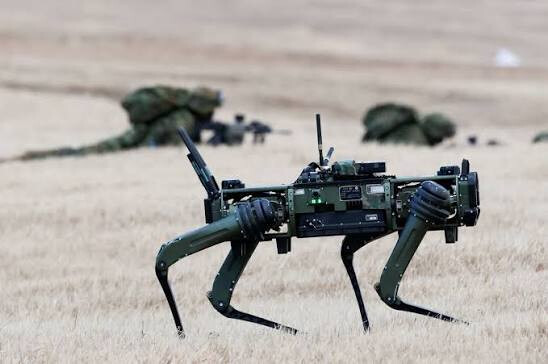
Autonomous weapons systems leverage advancements in artificial intelligence to execute missions across various military platforms, including drones, tanks, submarines, and automated robotics. Early versions or semi-autonomous applications of these technologies have already been deployed in conflicts such as Ukraine, Sudan, and the Middle East.
Human rights advocates and ethics experts have voiced grave concerns over the potential for fatal miscalculations when machines are given authority over life and death. Verity Coyle of Human Rights Watch warned that allowing machines to make life-or-death battlefield decisions crosses an unacceptable ethical line, noting that this dystopian reality is rapidly materializing. Similarly, Ana Hehir of the Future of Life Institute emphasized that fully autonomous systems are no longer confined to science fiction, pointing to emerging reports of early-stage deployments in Ukraine.
Diplomatic positions remain sharply divided. The United States favors non-binding guidelines over mandatory legal obligations, proposing a five-year window to negotiate voluntary frameworks. Conversely, the conference chair has advocated for a two-year timeline leading to a legally binding protocol, while the UK, Germany, and France have floated a compromise option that would begin negotiations while leaving the final legal status open.
Russia has consistently opposed legally binding constraints on autonomous weapons in past forums, and Western diplomats reported that Moscow has sought to limit procedural participation by observer entities like the European Union.
Organizations such as the United Nations and the International Committee of the Red Cross (ICRC) continue to stress that existing legal frameworks are inadequate for addressing the unique technological risks posed by autonomous systems. Despite these warnings, diplomats note that reaching a consensus this week will be highly challenging, though compromises combining advisory guidelines and targeted restrictions remain under active discussion.
[Copyright (c) Global Economic Times. All Rights Reserved.]