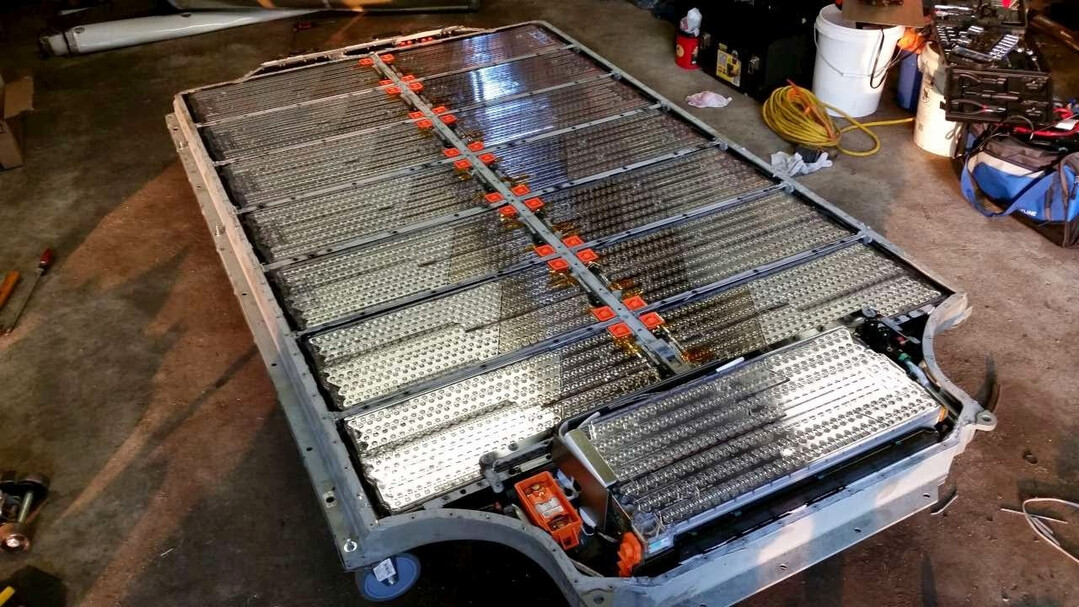
SEOUL — Tesla’s recent admission that battery shortages are capping its electric vehicle (EV) production growth has sent ripples through the global battery market. For South Korea’s leading battery manufacturers—often referred to as the "K-battery" trio—Tesla’s bottleneck presents a complex dual narrative. On one hand, surging demand for "non-China" batteries in the United States creates a golden window of opportunity. On the other hand, a closer look reveals a strategic disconnect between the vehicle-specific battery constraints cited by Tesla and the energy storage system (ESS) contracts recently secured by South Korean firms.
The Production Bottleneck: Cells vs. Packs
During its third-quarter earnings call on October 21 (local time), Tesla highlighted that battery supply constraints continued to limit vehicle volume expansion during the quarter. Although the company reported that its passenger vehicle order backlog reached a four-year high, it refrained from disclosing specific figures.
Tesla’s third-quarter delivery volume hit 486,532 units, outpacing production by 22,141 units. This outperformance reduced inventory days from 15 in the second quarter to 11 days. To combat these limits, Tesla outlined ambitious plans to expand capacity across its entire manufacturing chain—from lithium processing and cathode production in Texas, to basic cell manufacturing in Nevada, and final pack assembly in Berlin, Germany.
However, industry experts note that Tesla’s explanations leave critical questions unanswered. The company failed to clarify whether the bottleneck stems from a shortage of raw "cells" or limitations in "pack assembly" capacity. If the issue lies in cell supply, expanding external procurement could open doors for suppliers. Conversely, if pack assembly is the primary restriction, the challenge is an internal engineering and operational hurdle for Tesla to solve rather than a shortfall easily filled by outside vendors.
Skeptics also argue that a pure battery shortage does not fully explain current trends. Electrek, an American EV specialty publication, raised doubts by pointing out that the average selling price (ASP) per vehicle has declined. Basic economic logic suggests that if consumer demand heavily outpaces supply, a company has little incentive to lower prices. Furthermore, Electrek’s independent estimates put Model 3 and Model Y factory utilization rates at roughly 81%, suggesting other operational variables are at play.
K-Battery Strategy: Differentiating Vehicles from ESS
Market analysts emphasize that the impact on South Korean battery makers must be evaluated by separating vehicle applications from ESS deployments. For instance, LG Energy Solution’s $4.3 billion (approx. 6 trillion won) contract with Tesla focuses on Lithium Iron Phosphate (LFP) cells for ESS applications, slated for supply from its Lansing plant in Michigan starting in 2027. Similarly, industry insiders attribute Samsung SDI’s North American supply agreements to Tesla’s ESS division.
Consequently, these deals represent broader opportunities driven by the intensifying preference for non-Chinese supply chains in the U.S. market, rather than being immediate windfalls from vehicle production scaling.
With the U.S. government maintaining steep tariffs and stringent regulatory barriers against Chinese battery components, Tesla’s viable sourcing options in the U.S. have effectively narrowed to South Korea's major battery makers and Japan's Panasonic. According to Bloomberg, South Korean firms should face few technical hurdles in securing additional cell supply contracts with Tesla. However, Bloomberg also cautioned that securing batteries for specialized upcoming platforms—such as the "Cybercab" robotaxi and the "Semi" electric truck—could face tighter constraints.
Potential Pressures and Future Risks
Substantial burdens remain on the horizon. While Tesla’s third-quarter ESS deployment volume grew 10% year-over-year to 13.7 GWh, its energy division revenue dropped 16% to $2.881 billion (approx. 4 trillion won). Although product mix shifts and pricing strategies played a role, analysts warn of looming downward pressure on selling prices.
Furthermore, Tesla is actively pursuing vertical integration. The company recently initiated initial shipments of "Megapack" ESS products built using its own in-house LFP cells. While these internal volumes are not yet large enough to replace external procurement, they introduce a long-term variable that could alter future supplier negotiations.
The Road Ahead
Ultimately, the defining challenge for South Korean battery makers is whether they can leverage their established relationships in the ESS sector to capture lucrative contracts for vehicle batteries. Industry experts note that automotive cells require deep customization starting from the design phase, meaning actual supply timelines are inherently protracted. With multiple suppliers in play, Tesla may also pit manufacturers against one another to drive down component costs.
A representative from the South Korean battery sector remarked, "Moving forward, contract values and headline figures alone will not guarantee success. The actual supply timeline, unit pricing conditions, and bottom-line profitability will emerge as the decisive factors for long-term viability."
[Copyright (c) Global Economic Times. All Rights Reserved.]