![[등록] 2026-09-01 15:48:31](/support/_updata/banner2/tl181982910_6749.png)


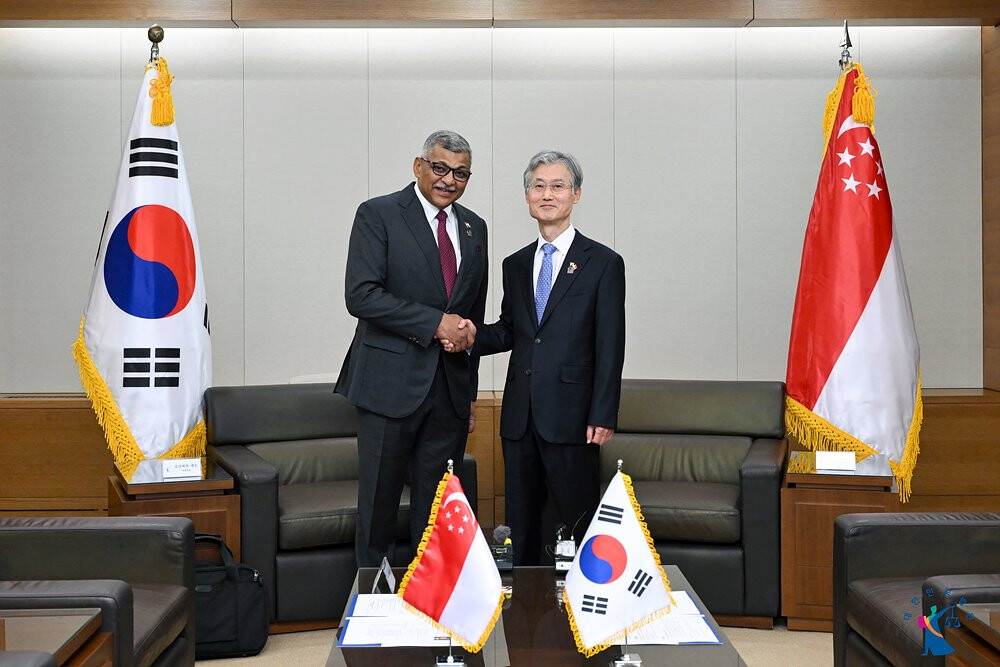
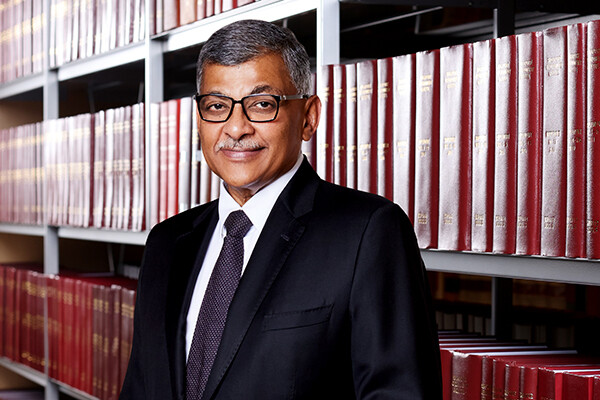
Singapore's Chief Justice Sundaresh Menon, renowned for overseeing a judicial system marked by high public trust and efficiency, visited South Korea from March 11-12. In an exclusive written interview with the Legal Times during his visit, Chief Justice Menon delved into the secrets behind Singapore's robust judicial credibility, its personnel and organizational management, and its forward-thinking approach to artificial intelligence (AI) and other cutting-edge technologies.
Key Factors for Maintaining Judicial Trust: Competent Personnel, Public Engagement, and User-Centric Reforms
Chief Justice Menon identified the judiciary's personnel, the public, and court users as pivotal to maintaining Singapore's high judicial trust. He noted, "The role of the courts, traditionally confined to dispute resolution, is expanding to encompass broader responsibilities of system administration, given global challenges like information proliferation, technological advancements, and gaps in access to justice." To address these, Singapore has focused on internal improvements, including enhanced training for judges and court officials, and the clarification and publication of judicial ethics standards. The establishment of the Singapore Judicial College (SJC) in 2015 and the public availability of the Judges’ Code of Conduct on their website underscore this commitment to transparency and education.
Public engagement is another cornerstone of Singapore's strategy. Since 2000, the Supreme Court has published judgments and summaries, utilized official messaging channels to disseminate key rulings, and conducted 'Community Conversations' to foster dialogue about the court's role. Chief Justice Menon believes these efforts have "significantly contributed to building trust by enhancing the transparency of the judiciary's work."
User-centric reforms, particularly for self-represented litigants, are also prioritized. The Access to Justice Division (A2JD) and the Office of Transformation and Innovation (OTI) are instrumental in these efforts. OTI, in collaboration with Harvey AI, is developing an AI-driven platform for Small Claims Tribunals (SCT) users. A2JD is enhancing accessibility through digital guides and instructional videos on court procedures. The "No Wrong Door Policy," ensuring all courts handle inquiries regardless of jurisdiction, further exemplifies Singapore's user-focused approach.
Ensuring Judicial Independence Through Robust Institutional Safeguards
Addressing concerns about judicial independence in some nations, Chief Justice Menon outlined Singapore's strong institutional safeguards. The constitution guarantees the tenure and remuneration of Supreme Court judges, and appointments involve consultations with the Chief Justice and the President. Lower court appointments, deployments, and removals are the exclusive purview of the Judicial Service Commission.
He also highlighted the offense of scandalizing the judiciary, noting, "While fair criticism of judgments is permissible, unfounded attacks and personal assaults are not." He emphasized, "Given the erosion of truth and declining trust in public institutions, robust safeguards for judicial independence are more critical than ever," offering a pertinent message to the international community.
eLitigation System and Enhanced Efficiency
Discussing South Korea's adoption of a next-generation e-litigation system, Chief Justice Menon shared Singapore's experience with its eLitigation system. Despite initial resistance to change, the system has significantly boosted efficiency and user convenience by eliminating the need for physical court visits and enabling remote document access.
Widespread Adoption of Video Conferencing Post-Pandemic
Singapore's extensive use of video conferencing for court hearings post-pandemic has garnered high satisfaction. Chief Justice Menon acknowledged the time-saving benefits for lawyers and judges but noted concerns about the impact on young lawyers' advocacy skills and courtroom decorum. He advocated for a balanced approach, integrating in-person and remote hearings based on case type, ensuring that the quality of justice is not compromised.
AI-Driven Platforms for Enhanced Access to Justice
Singapore is collaborating with Harvey AI to develop an AI platform for self-represented litigants in the SCT. Chief Justice Menon anticipates the platform will provide practical assistance with evidence, document organization, and procedural guidance. He foresees minimal resistance to AI adoption, viewing it as a valuable tool for both litigants and judges.
Proactive Measures for Long-Term Vitality of the Legal Profession
To ensure the legal profession’s long-term vitality amid rapid technological change, the Singapore Academy of Law and the Law Society are actively promoting AI literacy among lawyers. Chief Justice Menon emphasized the importance of supporting young lawyers in acquiring essential skills to navigate technological advancements.
Establishing the Appellate Division of the High Court to Address Backlogs
Addressing the issue of case backlogs, Chief Justice Menon discussed the establishment of the Appellate Division of the High Court in 2021. This measure has significantly reduced the caseload of the Court of Appeal, enabling more efficient case processing.
Singapore International Commercial Court (SICC) as a Hub for International Disputes
Celebrating the 10th anniversary of the SICC, Chief Justice Menon highlighted its role as a successful model for international commercial dispute resolution. The SICC, with its diverse panel of international judges and flexible procedures, has enhanced Singapore's position as a hub for international dispute resolution.
Strengthening Cross-Border Judicial Cooperation
Singapore is actively strengthening cross-border judicial cooperation through initiatives like the SICC International Committee. This committee aims to provide a transnational appellate mechanism for complex international commercial law.
Attracting and Retaining Top Talent
Chief Justice Menon noted that Singapore has not recently experienced a talent drain from its judiciary. Competitive remuneration, a commitment to recruiting top talent at all levels, and continuous training are key to attracting and retaining high-caliber individuals dedicated to public service. The "Senior Judge" scheme also leverages the expertise of experienced retired judges.
Implementing a 'Therapeutic Justice Model' in Family Law
Singapore's recent reforms in family law, guided by the 'Therapeutic Justice' model, aim to minimize conflict and promote healing in divorce proceedings, prioritizing the well-being of children. Simplified procedures and enhanced judicial authority are central to this approach, which has shown high success rates. Chief Justice Menon also suggested exploring the application of this model to other legal domains, such as climate disputes.
Vision for the Future Judiciary: Accessibility, Efficiency, and Collaboration
Concluding the interview, Chief Justice Menon envisioned a future judiciary characterized by universal accessibility, enhanced efficiency through technology, and a re-evaluation of adversarial processes in specific legal areas. He stressed the importance of collaboration among judiciaries to address global challenges, emphasizing the value of open dialogue and mutual learning. He expressed hope for continued positive relations and knowledge exchange with the South Korean judiciary following his visit.
[Copyright (c) Global Economic Times. All Rights Reserved.]