![[등록] 2026-09-01 15:48:31](/support/_updata/banner2/tl181982910_6749.png)


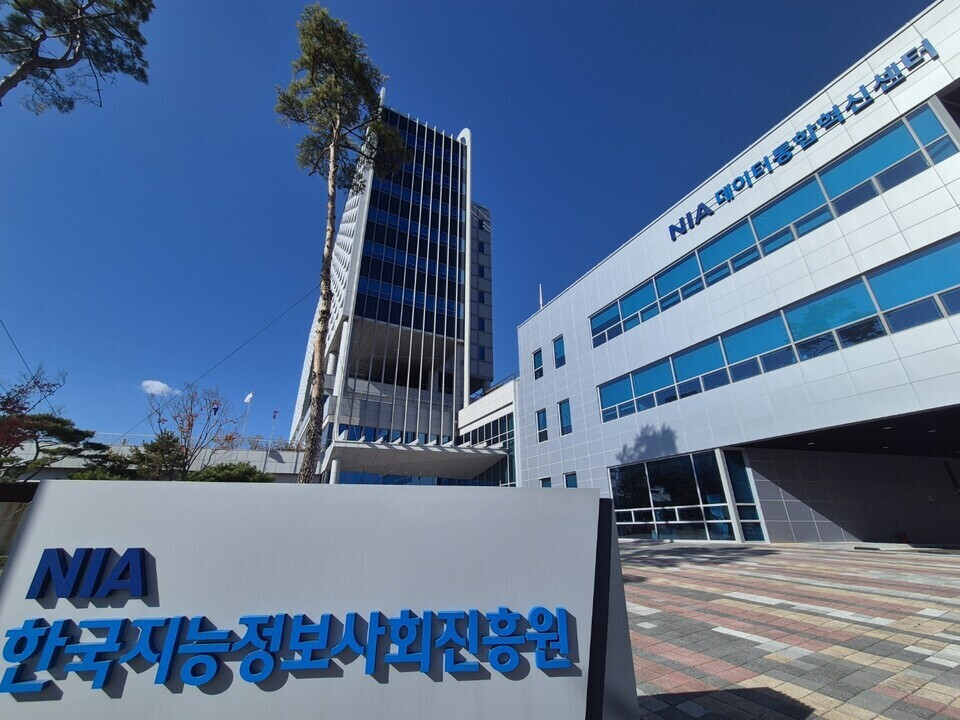
SEOUL — South Korea has taken a significant step toward its ambition of becoming one of the world’s top three (G3) artificial intelligence powerhouses. On June 30, the National Information Society Agency (NIA) officially inaugurated the "AI Policy Center" at its Seoul office, establishing a dedicated think tank designed to bridge the gap between high-level government policy, legal frameworks, and the practical demands of the industrial sector.
The establishment of the center follows the NIA's designation by the Ministry of Science and ICT (MSIT) last April as the sole public agency responsible for executing duties under the new AI Basic Act. With the South Korean government recently identifying semiconductors, physical AI, and AI data centers as the three pillars of its national economic strategy, the center is expected to serve as the critical intellectual engine behind these initiatives.
A Bridge Between Policy and Industry
"We aim to grow into a robust professional institution that supports the entirety of our national AI policy," said Kim Hyung-chul, President of the NIA, during the opening ceremony. "Most importantly, we will serve as a vital bridge connecting AI policy with real-world industrial sites. We hold firm to the belief that even the most sophisticated policies are meaningless if they fail to reach the front lines of industry."
Kim emphasized that the center’s mission extends beyond mere research; it aims to foster an AI ecosystem that the public can trust by balancing rapid technological advancement with social acceptability.
Core Functions and Global Ambitions
The AI Policy Center is tasked with a comprehensive suite of responsibilities aimed at strengthening South Korea's institutional readiness for the AI era. Its primary functions include:
Policy Formulation: Providing expert technical support for the establishment of national AI master plans and the implementation of strategic projects.
Impact Analysis: Investigating and analyzing the socio-economic effects of AI adoption and diffusion across various sectors.
Legal & Regulatory Research: Conducting in-depth research on AI-related laws and institutional frameworks to ensure ethical and safe development.
International Standards: Spearheading efforts to establish and disseminate global AI norms.
A particularly ambitious project for the center is the development of a South Korean "AI Index," modeled after the renowned AI Index produced by Stanford University’s Human-Centered AI (HAI). By creating a credible, localized metric for AI development, the center hopes to provide actionable data for policymakers and industry leaders alike.
Strengthening the National AI Ecosystem
To ensure a cohesive approach, the NIA plans to expand its collaborative network with key stakeholders, including the National AI Strategy Committee, the Korea AI & Software Association (KOSA), the National AI Research Hub, and the Korea Institute for Defense Analyses. This network will facilitate ongoing policy consultation and expert exchange, ensuring that South Korea’s AI strategy remains agile in the face of rapidly shifting global trends.
Government Commitment to Execution
Ryu Je-myung, the 2nd Vice Minister of Science and ICT, underscored the importance of the center during the opening ceremony. Referring to the "Three Mega Projects" recently announced by President Lee Jae-myung, Ryu noted that both the government and the private sector are accelerating their efforts to boost AI competitiveness.
"To achieve the goal of becoming a global AI G3 nation, we need more than just technology and infrastructure; we need well-designed policies, sound legal frameworks, and the executive power to ensure these are effectively implemented in the field," Ryu said. "I expect the AI Policy Center to act as the fulcrum that connects policy and law with the industrial front lines, playing a pivotal role in our journey toward G3 status."
The launch of the center marks a transition from a phase of conceptual planning to one of systematic execution. As South Korea positions itself for an AI-driven economic future, the NIA's new center will be the entity ensuring that the regulatory and policy environment is not a hurdle, but a foundation for innovation.
[Copyright (c) Global Economic Times. All Rights Reserved.]