• 2026.11.26 (Thu)
  • All articles
  • LOGIN
  • JOIN
Global Economic Times
한인동포뉴스(상단)
  • Synthesis
  • World
  • Business
  • Industry
  • ICT
  • Distribution Economy
  • Well+Being
    • Pet Life
    • Halal Horizon
  • Travel
  • Eco-News
  • Education
  • Korean Wave News
  • Opinion
  • Arts&Culture
  • Sports
  • People & Life
    • International Student Report
    • With Ambassador
  • Column
    • Cho Kijo Column
    • Cherry Garden Story
    • Ko Yong-chul Column
    • Kim Bong-seon's Photo Column
    • Kim Seul-Ong Column
    • Lee Yeon-sil Column
    • Professor Lee Soo-young’s Life Essays
  • Photo News
  • New Book Guide
MENU
 
Home > World

China Exercises ‘Strategic Patience’ Amid U.S. Chip Curbs, Banking on Direct Talks with Trump

Nathan Ko Special Correspondent / Updated : 2026-11-26 08:48:55
  • -
  • +
  • Print

BEIJING — Rather than responding to Washington’s tightening semiconductor export controls with immediate retaliation, Beijing is opting for calculated restraint—extending key trade concessions while keeping its most potent economic weapons in reserve ahead of high-stakes diplomacy.

This week, China’s Ministry of Commerce announced an extension to its suspension of export restrictions on critical minerals—including gallium, germanium, and antimony—bound for the United States, acting just days before the waiver was set to expire. On the same day, a subsidiary of China Southern Airlines finalized a deal to acquire 50 Boeing 737-8 jets, marking the U.S. aerospace giant’s largest order from a Chinese carrier since 2017 and fulfilling pledges made during bilateral summit talks in May.

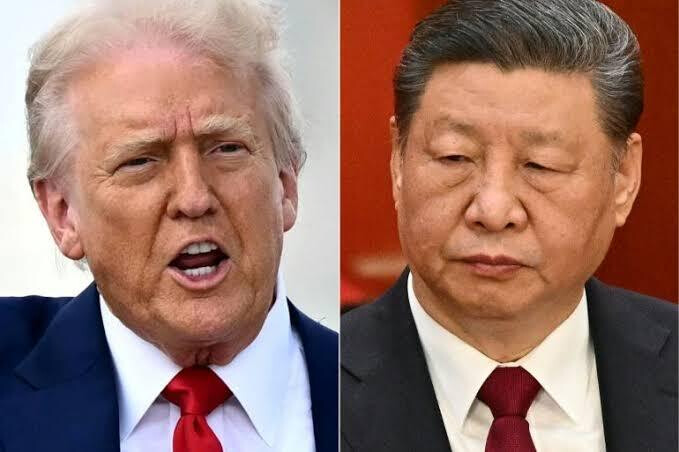
Political observers suggest that Chinese President Xi Jinping is deliberately avoiding a full-scale trade war to preserve a direct negotiating channel with U.S. President Donald Trump. Beijing appears to be capitalizing on a perceived policy divide within Washington: while congressional Republicans and national security hawks have pushed for harsher tech restrictions, Trump recently intervened to back the reinstatement of Nvidia CEO Jensen Huang—a vocal proponent of maintaining semiconductor sales to China—despite scrutiny over Huang's personal ties and broader security debates.

"Trump’s strong backing of Jensen Huang sends a reassuring signal to Beijing that the president himself remains open to technology trade, regardless of hawkish voices elsewhere in his administration," noted Dennis Wilder, a senior fellow at Georgetown University and former senior CIA official.

Following warm personal exchanges during a summit in Shenzhen last week, Chinese officials are looking toward next month’s G20 leaders' meeting in Florida as another opportunity for direct deal-making.

Domestic political calculations are also reinforcing Beijing's cautious posture. With a major Chinese Communist Party leadership reshuffle approaching next year—where Xi is widely expected to secure an unprecedented fourth term—the Chinese leader is focused on consolidating internal power. Ongoing anti-corruption sweeps, including a newly announced investigation into a fourth sitting Politburo member, underscore Xi’s priority to maintain stability at home without the added volatility of an escalating trade conflict.

Still, analysts caution that Beijing’s conciliatory gestures should not be mistaken for capitulation. China’s Commerce Ministry recently warned that Washington's latest chip restrictions violate prior bilateral understandings and could trigger countermeasures. As U.S. authorities tighten oversight on overseas data center rentals and smuggling networks—channels that the Institute for Progress estimates supply roughly 40 percent of China's advanced AI computing capacity—friction over artificial intelligence continues to simmer.

"Beijing is trying to prevent tech disputes from spilling over into a broader economic confrontation, but Xi still holds the switch to escalate tensions at any moment," said Zhao Minghao, deputy director of the Center for American Studies at Fudan University.

Should the Trump administration impose new "overcapacity tariffs" or further tighten tech bans, China commands formidable leverage. According to U.S. Geological Survey data, China accounts for roughly 99 percent of global low-purity gallium production, 80 percent of natural graphite, and 36 percent of mined antimony, alongside its dominance in germanium. Combined with regulatory pressure it can exert on American multinationals operating in China, Beijing’s current patience leaves plenty of room for forceful retaliation if diplomacy falters.

[Copyright (c) Global Economic Times. All Rights Reserved.]

  • #Cherry Garden
  • #HalalFood
  • #Halal
  • #Petlife
  • #Cats
  • #Dogs
  • #Halalhorizone
  • #Hormuz Impasse
  • #Joseon
  • #globaleconomicti
Nathan Ko Special Correspondent

Popular articles

  • LG Electronics and Skyscanner Partner to Bring Smart Travel Planning to Living Rooms

  • KakaoBank Expands 'Global Territory' by Becoming Second-Largest Shareholder of Mongolia’s M Bank

  • South Korean Authorities Launch First-Ever Statutory Probe into GS E&C Security Breach

I like it
Share
  • Facebook
  • X
  • Kakaotalk
  • LINE
  • BAND
  • NAVER
  • https://globaleconomictimes.kr/article/1065570482210020 Copy URL copied.
Comments >

Comments 0

Weekly Hot Issue

  • Beyond the Score Sheet: Why Discarded Test Prep Reveals a Deeper Flaw in Exam-Driven Schooling
  • Beyond Costumes and Commerce: Rediscovering the Educational Value of Halloween in Korea
  • Supervision and Management of Middle and High School Internal Assessments Strengthened to CSAT Levels
  • Grassroots Group Screenings Keep Korean Film ‘Still Shining’ in Spotlight
  • LG HelloVision and CJ ENM Avert Channel Blackout Following Regulatory Mediation
  • 'Hope' Wins Best Picture at Blue Dragon Film Awards… Sol Kyung-gu and Jeon Do-yeon Sweep Best Actor and Actress

Most Viewed

1
Exercise Beats Diet in Extending Lifespan, Major Review Finds
2
South Korean Burger Chain Lotteria Expands Singapore Footprint with Halal Certification and New Teriyaki Lineup
3
AI Semiconductor Stocks Plummet: Philadelphia Index Drops 5.28% and Micron Plunges 7.59% Amid Executive Shakeup and Export Restrictions
4
"Stay Out, Get Paid, or Have Police Stay With You": Shenzhen Imposes Strict Security Ahead of APEC Summit
5
Taiwan Bans Short-Selling Below Previous Close Starting Nov. 23, Raises Margin Ratio to 150%
체리가든 스토리
nutri huevos
로타리
동포저널

Hot Issue

Surging Memory Costs Spark Pricing Disputes Across the AI Server Industry

Elon Musk and SpaceX Pledge $17.8 Billion in Stock to 'Trump Accounts' for American Youth

Washington Caps Tariffs on South Korean Goods at 15% Following Overcapacity Probe

Fashion Runway Show 2026

Let’s recycle the old blankets in Jeju Island’s closet instead of incinerating them.

Global Economic Times
korocamia@naver.com
CEO : LEE YEON-SIL
Publisher & Editor : KO YONG-CHUL
Registration number : Seoul, A55681
Registration Date : 2024-10-24
Youth Protection Manager: KO YONG-CHUL
Singapore Headquarters
5A Woodlands Road #11-34 The Tennery. S'677728
Korean Branch
Phone : +82(0)10 4724 5264
#304, 6 Nonhyeon-ro 111-gil, Gangnam-gu, Seoul
Copyright © Global Economic Times All Rights Reserved
  • News K
  • 반달곰 프로젝트
  • 광고문의
Search
Category
  • All articles
  • Synthesis
  • World
  • Business
  • Industry
  • ICT
  • Distribution Economy
  • Well+Being 
    • 전체
    • Pet Life
    • Halal Horizon
  • Travel
  • Eco-News
  • Education
  • Korean Wave News
  • Opinion
  • Arts&Culture
  • Sports
  • People & Life 
    • 전체
    • International Student Report
    • With Ambassador
  • Column 
    • 전체
    • Cho Kijo Column
    • Cherry Garden Story
    • Ko Yong-chul Column
    • Kim Bong-seon's Photo Column
    • Kim Seul-Ong Column
    • Lee Yeon-sil Column
    • Professor Lee Soo-young’s Life Essays
  • Photo News
  • New Book Guide
  • Overseas Koreans
  • Multicultural News