![[등록] 2026-09-01 15:48:31](/support/_updata/banner2/tl181982910_6749.png)


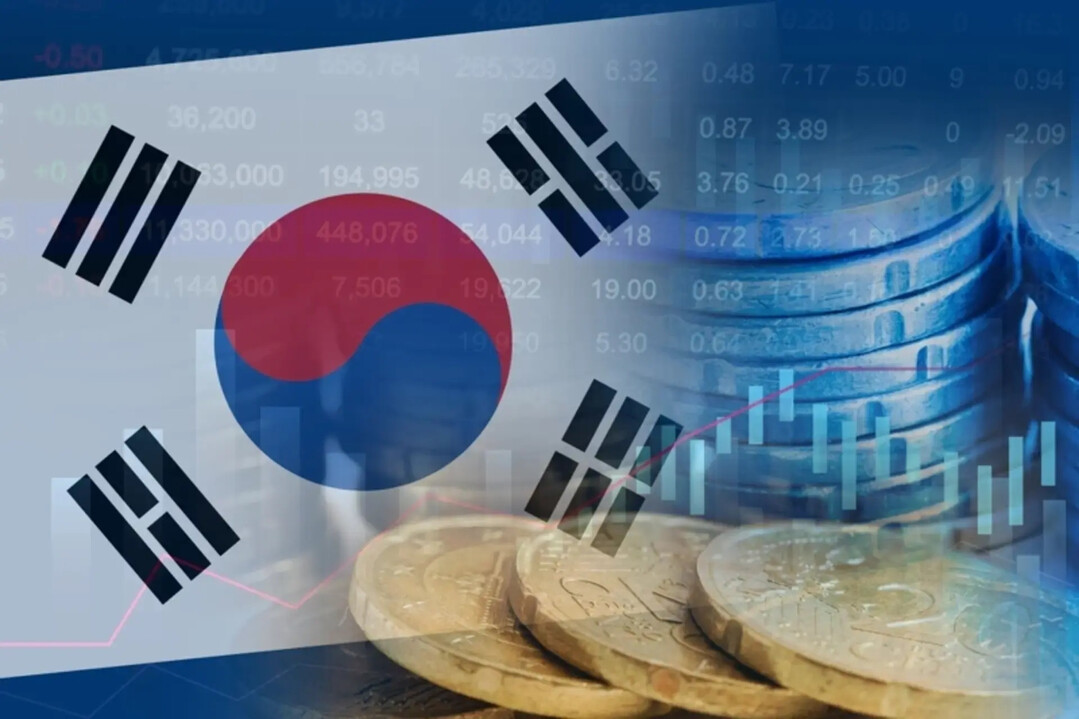
WASHINGTON & SEOUL — The U.S. Department of the Treasury has once again included South Korea on its foreign exchange monitoring list, maintaining close oversight of Seoul’s currency practices. However, in a notable acknowledgement, Washington explicitly praised South Korea’s ongoing structural reforms aimed at opening its foreign exchange (FX) market to global institutional investors.
According to the Treasury’s semi-annual report titled “Macroeconomic and Foreign Exchange Policies of Major Trading Partners,” submitted to Congress on July 23 (local time), South Korea was listed alongside nine other major economic partners: China, Japan, Taiwan, Singapore, Vietnam, Germany, Ireland, Switzerland, and Thailand.
The latest list reflects exact continuity from the previous semi-annual report issued in January, with no additions or deletions among the 10 monitored economies. Under U.S. federal law—specifically the Trade Facilitation and Trade Enforcement Act of 2015—the Treasury evaluates major trading partners based on three main criteria:
A significant bilateral trade surplus with the U.S. (exceeding $15 billion).
A material current account surplus (exceeding 3% of GDP).
Persistent, one-sided intervention in foreign exchange markets (net purchases exceeding 2% of GDP over a 12-month period).
Divergence Between Surplus and Won Value
In its granular analysis of South Korea's macroeconomic indicators, the U.S. Treasury pointed out a compelling economic divergence:
“Despite maintaining a large current account surplus, the South Korean Won has faced continuous depreciation pressure against the U.S. dollar.”
Throughout recent quarters, South Korea's export-driven economy—powered by a global rebound in advanced semiconductors, automotive exports, and high-tech manufacturing—has generated substantial trade surpluses. Normally, such trade buoyancy fuels demand for the domestic currency. However, elevated global interest rates, persistent capital outflows into foreign equity markets by domestic retail and institutional investors, and lingering geopolitical uncertainties have combined to exert structural downward momentum on the Korean currency.
Washington’s analysis indicates that Seoul’s inclusion on the monitoring list is primarily triggered by its high current account surplus and significant bilateral trade imbalance with the United States, rather than aggressive or artificial currency manipulation.
High Marks for FX Market Reforms
Significantly, the Treasury report devoted explicit commentary to applauding the South Korean government’s aggressive measures to modernize and liberalize its onshore foreign exchange market—an initiative officially launched by the Ministry of Economy and Finance (MOEF) and the Bank of Korea (BOK).
“Korean relationship authorities are demonstrating clear progress in removing barriers that historically restricted foreign financial institutions from participating directly in the domestic onshore FX market,” the report emphasized. “These structural adjustments are anticipated to substantially improve market liquidity and enhance price discovery functions over the medium term.”
Over the past two years, South Korea has implemented landmark market-opening reforms:
Extension of Trading Hours: Extending official onshore spot FX trading hours from 3:30 PM to 2:00 AM KST the following morning, bridging the gap between Asian and European/U.S. financial trading hubs.
Registered Foreign Institution (RFI) Framework: Granting accredited offshore financial institutions direct access to the domestic interbank FX market without establishing a local physical branch.
Global Index Inclusion Drive: Paving the path for South Korea's sovereign bonds to be integrated into FTSE Russell's flagship World Government Bond Index (WGBI), attracting broader international capital flows.
Strategic Implications for Seoul
Financial experts and government officials in Seoul view the Treasury report as a balanced and fair assessment. Being placed on the monitoring list does not entail immediate economic sanctions or punitive trade tariffs. Instead, it serves as a formal mechanism for enhanced bilateral dialogue between the U.S. Treasury and South Korea’s financial leadership.
Economic analysts note that the positive recognition from Washington regarding market openness validates South Korea's strategy of aligning its FX infrastructure with global standards. By strengthening market transparency and deepening liquidity, South Korea aims to mitigate structural currency volatility naturally while fostering long-term international investor confidence.
[Copyright (c) Global Economic Times. All Rights Reserved.]