• 2026.07.25 (Sat)
  • All articles
  • LOGIN
  • JOIN
Global Economic Times
fashionrunwayshow2026
  • Synthesis
  • World
  • Business
  • Industry
  • ICT
  • Distribution Economy
  • Well+Being
  • Travel
  • Eco-News
  • Education
  • Korean Wave News
  • Opinion
  • Arts&Culture
  • Sports
  • People & Life
    • International Student Report
    • With Ambassador
  • Column
    • Cho Kijo Column
    • Cherry Garden Story
    • Ko Yong-chul Column
    • Kim Seul-Ong Column
    • Lee Yeon-sil Column
  • Photo News
  • New Book Guide
MENU
 
Home > Business

Samsung Electronics Reassigns CSS Power Semiconductor Staff to Memory and Foundry Divisions

Kim Young Min Reporter / Updated : 2026-07-25 07:10:02
  • -
  • +
  • Print
Phased internal free-agent workforce reallocation triggers wider discussions over compensation disparity across semiconductor sectors.


SEOUL — Samsung Electronics has initiated a phased internal workforce reallocation, transferring personnel from its Compound Semiconductor Solutions (CSS) team—responsible for power semiconductors—to core operational business units within the Device Solutions (DS) division, including Memory, System LSI, and Foundry operations.

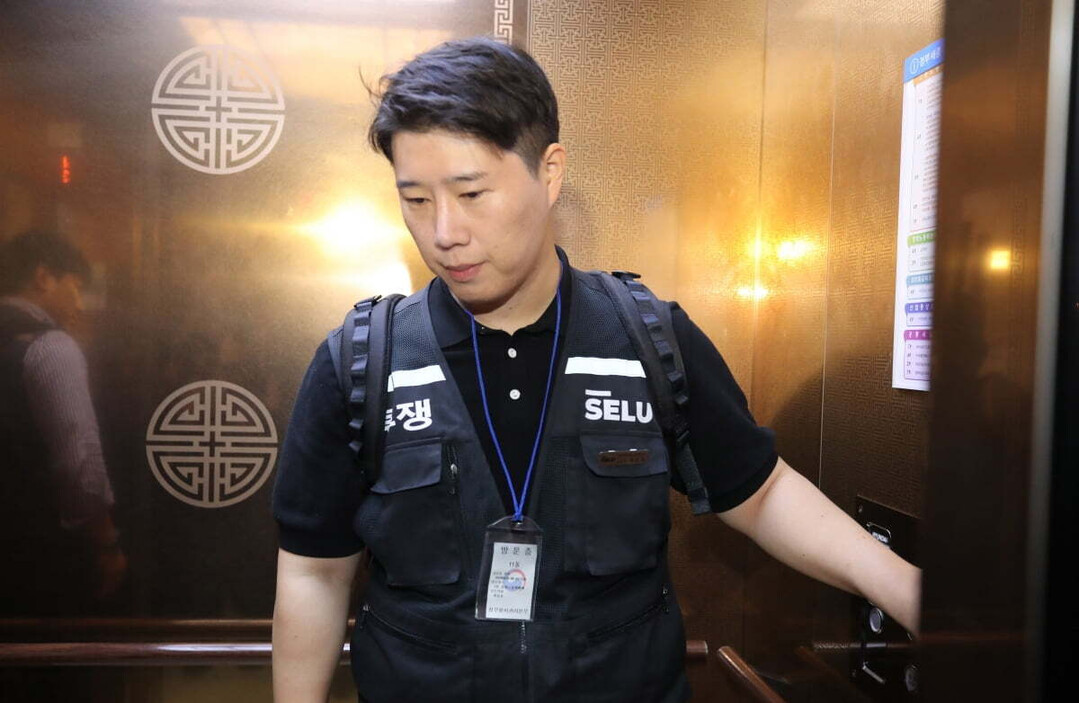
The strategic human resources movement was officially confirmed on July 23 by Choi Seung-ho, Chairman of the Samsung Electronics Branch of the Samsung Group Super-Enterprise Labor Union. Writing on the internal union bulletin board, Choi announced that an internal Free Agent (FA) system was officially opened earlier in the day for eligible members of the CSS business team. Under this system, staff members will be progressively redeployed across various core departments, including Memory, Common Infrastructure, System LSI, and Foundry units, starting in the second half of this year.

The reallocation currently targets non-packaging staff, leaving employees managing active packaging operations in their existing roles to maintain business continuity. Excluding dedicated research institute personnel, the CSS business team comprises approximately 500 personnel. Originally evolved from Samsung’s former Light Emitting Diode (LED) business, the CSS team operates within the broader DS division but has historically maintained an independent performance bonus and incentive framework.

Compensation Disparities and Internal Labor Dynamics

This structural distinction in compensation has drawn significant internal attention. During this year’s wage negotiations, CSS team members were excluded from the newly established DS Division Special Management Performance Bonus—a premium incentive pool funded by 10.5% of the semiconductor division's operating profits. Instead, CSS employees received treasury stock valued at approximately 6 million KRW (around $4,350 USD), aligning with win-win cooperation measures provided to the Device eXperience (DX) consumer electronics division.

Industry analyses project Samsung Electronics' annual operating profit to reach between 350 trillion and 400 trillion KRW. Under the newly negotiated 10.5% profit-sharing formula, employees in the booming Memory Business Division are estimated to receive between 600 million and 700 million KRW (approx. $435,000–$500,000 USD) each in stock-based special bonuses early next year.

Because performance bonus eligibility is tied to operational alignment during the earnings year, personnel reassigned from the CSS team will not qualify for the upcoming early-2027 Memory special bonus payout. However, following their integration, they will fully transition to the lucrative compensation and performance-based incentive frameworks of their new respective business units for subsequent evaluation cycles.

Strategic Realignment Amid AI-Driven Demand

Market observers view this workforce transition as part of Samsung’s broader strategic realignment to concentrate engineering capabilities into high-demand semiconductor verticals, such as High Bandwidth Memory (HBM) and advanced logic foundry nodes. As global artificial intelligence infrastructure spending surges, major technology conglomerates are increasingly streamlining legacy or auxiliary business units to reinforce core competitiveness in next-generation memory and system integration.

Meanwhile, internal discussions within Samsung's labor organization continue regarding sectoral representation. With distinct profit trajectories between semiconductor manufacturing and consumer device markets, labor leadership is increasingly adapting its negotiation strategies to reflect division-specific economic realities while ensuring smooth workforce transitions across evolving business units.

[Copyright (c) Global Economic Times. All Rights Reserved.]

  • #Hormuz Impasse
  • #globaleconomictimes
  • #micorea
  • #mykorea
  • #nammidonganews
  • #singaporenewsk
  • #Samsung
  • #Daewoo
  • #Hyos
Kim Young Min Reporter

Popular articles

  • NH NongHyup Life Insurance Leads Landmark 165 Billion Won Project Finance for Eco-Friendly BESS in Gwangyang

  • Seoul Metro to Ban Personal Mobility Devices and High-Capacity Lithium Batteries Starting July

  • 'The Jae-Chul Ryu Magic': LG Electronics Hits New Milestones in Q2 Performance

I like it
Share
  • Facebook
  • X
  • Kakaotalk
  • LINE
  • BAND
  • NAVER
  • https://globaleconomictimes.kr/article/1065564502053907 Copy URL copied.
Comments >

Comments 0

Weekly Hot Issue

  • EU Hits Google with €890 Million Fine Under Digital Markets Act, Triggering Sharp Backlash from Washington
  • KAIST and NVIDIA Partner to Establish $300 Million AI Joint Research Center in Korea 
  • Hanwha Ocean Bolsters Alliances with U.S. Partners to Drive Forward "MASGA" Shipbuilding Initiative
  • Government Extends 5.2 Trillion Won in Loans for Homeplus Suppliers to Minimize Damage to Workers and SMEs
  • BOK Governor Hyunsong Shin Discloses 8.2 Billion Won in Assets, Moves to Liquidate Foreign Assets Amid Ethics Scrutiny
  • S. Korea Accelerates Leveraged ETF Rules: ₩30M Cash Deposit Required Starting July 31

Most Viewed

1
[Special Feature] Laying the Foundation for Korea's Informatization: Looking Back at the 1st Administrative Computer Network Project - Part 1
2
Baek Geum-ja Wooriot to Host 'Musical Costume Fashion Gala Show' at DDP
3
South Korea to Tighten Rules on Single-Stock Leveraged Products; Minimum Deposit Raised to 30 Million Won
4
Google Cloud Deploys ‘Gemini Enterprise’ to Samsung Electronics DX Division
5
[Special Feature] The Foundation of Korea’s Informatization: Looking Back at the 1st Administrative Computer Network Project - Part 2
광고문의
임시1
임시3
임시2

Hot Issue

President Lee Embarks on 5-Nation Tour of the Americas and Germany... Full Focus on Advanced Industries and Supply Chain Diversification

EU Hits Google with €890 Million Fine Under Digital Markets Act, Triggering Sharp Backlash from Washington

KAIST and NVIDIA Partner to Establish $300 Million AI Joint Research Center in Korea 

“From AI to Robotics and Safety”: 80 Innovative Products Enter South Korea's Public Market

Fashion Runway Show 2026

Global Economic Times
korocamia@naver.com
CEO : LEE YEON-SIL
Publisher : KO YONG-CHUL
Registration number : Seoul, A55681
Registration Date : 2024-10-24
Youth Protection Manager: KO YONG-CHUL
Singapore Headquarters
5A Woodlands Road #11-34 The Tennery. S'677728
Korean Branch
Phone : +82(0)10 4724 5264
#304, 6 Nonhyeon-ro 111-gil, Gangnam-gu, Seoul
Copyright © Global Economic Times All Rights Reserved
  • 향기네무료급식
  • BCB부천방송
  • 반달곰 프로젝트
Search
Category
  • All articles
  • Synthesis
  • World
  • Business
  • Industry
  • ICT
  • Distribution Economy
  • Well+Being
  • Travel
  • Eco-News
  • Education
  • Korean Wave News
  • Opinion
  • Arts&Culture
  • Sports
  • People & Life 
    • 전체
    • International Student Report
    • With Ambassador
  • Column 
    • 전체
    • Cho Kijo Column
    • Cherry Garden Story
    • Ko Yong-chul Column
    • Kim Seul-Ong Column
    • Lee Yeon-sil Column
  • Photo News
  • New Book Guide
  • Multicultural News
  • Jobs & Workers