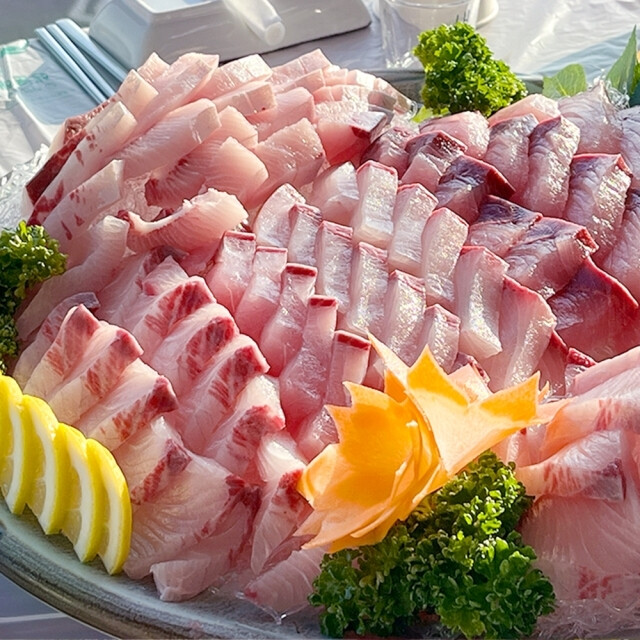
SEOUL — Yellowtail, known locally as bangeo, has long been South Korea’s quintessential winter comfort food, prized for its rich, fatty texture during the colder months. Recently, however, the beloved seasonal fish has earned a new nickname: "gold yellowtail," as soaring prices put it increasingly out of reach for everyday consumers.
According to wholesale auction data from Seoul’s Noryangjin Fisheries Wholesale Market, the average price of yellowtail in November reached 20,072 won ($14.50) per kilogram. This marks a more than fourfold increase compared to November 2016, when the fish traded at just 4,870 won per kilogram. While prices hovered between 4,000 and 8,000 won until 2018, they crossed the 10,000-won threshold in 2019 and have remained around the 20,000-won mark since 2024.
From Climate Winner to Heatwave Victim
Ironically, climate change initially boosted South Korea’s yellowtail supply. As a warm-water species, yellowtail migrated further north along the East Sea as coastal waters warmed, causing domestic catches to nearly double from 13,051 tons in 2020 to a peak of 25,372 tons in 2023.
However, the ocean has now warmed beyond the fish's comfort zone. Data from the National Institute of Fisheries Science (NIFS) shows that sea temperatures around the Korean Peninsula rose by 1.6°C between 1968 and 2025—more than double the global average increase of 0.76°C.
While yellowtail thrive in waters between 22°C and 26°C, summer sea temperatures have increasingly surged near 30°C. The Ministry of Oceans and Fisheries noted that high-temperature advisories at fish farms lasted a record 85 days last year, up from 57 days in 2023. These extreme conditions caused domestic catches to fall for two straight years to 19,623 tons last year, while triggering mass die-offs across southern fish farms this past summer.
Regional Supply Crunch Fuels "Climateflation"
To offset the domestic shortage, South Korea has grown heavily reliant on Japanese imports. In Noryangjin’s November live-fish auctions, Japanese yellowtail—which had zero market share between 2016 and 2018—accounted for 60% of all traded volume this year.
Yet Japan is facing similar climate-driven disruptions. In June, a severe red tide triggered by rising sea surface temperatures devastated farms in Kagoshima Prefecture, Japan's largest yellowtail-producing region, wiping out roughly 1.03 million farmed fish. As a result, South Korea's import bill for Japanese yellowtail jumped 47% last year to $81 million, even though import volume grew by only 7%.
Outlook and Government Response
Experts warn that this price surge is not a temporary spike, but a prime example of "climateflation"—where climate change directly drives up food prices. Over the past decade, South Korean waters warmed at an annual rate of 0.09°C, more than triple the long-term average. Without intervention, the government projects total domestic seafood production could drop by over 500,000 tons by 2050.
In response, the Ministry of Oceans and Fisheries has set a goal to maintain annual seafood production at 3.7 million tons through 2030 while capping price inflation on key marine products at around 2%.
"As ocean warming accelerates faster than anticipated, we are seeing clear shifts across the entire marine ecosystem," an NIFS official stated, emphasizing that authorities are prioritizing sustainable fishery measures to adapt to the ongoing climate crisis.
[Copyright (c) Global Economic Times. All Rights Reserved.]