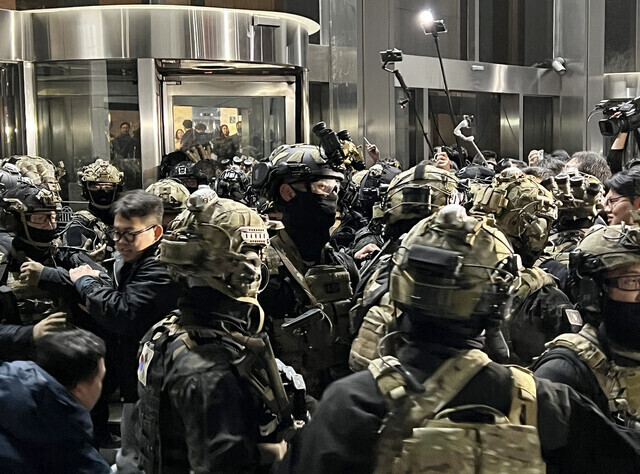
SEOUL — The South Korean government has officially moved to designate December 3 as "National Sovereignty Day" to commemorate citizen-led demonstrations against martial law, though the date will not be observed as a paid public holiday.
During the 50th Cabinet meeting held at the Blue House on the morning of the 24th, President Lee Jae-myung explained the rationale behind the designation. Referring to the December 3, 2024 protests near the National Assembly—which erupted in response to former President Yoon Suk-yeol’s declaration of martial law—as the "Revolution of Light," Lee stated that the new observance aims to reinforce the constitutional principle that power belongs to the people. He described the 2024 demonstrations as a historic triumph of citizens defending democracy, fulfilling a pledge he originally made in a special address on the first anniversary of the event last year.
In South Korea, national commemorative days are governed either by individual statutes or by the "Regulations on Various Commemorative Days," a presidential decree first enacted in 1973. The number of observances under this decree has grown from an initial 26 to 58 as of last month, encompassing historic milestones such as the April 19 Revolution Day, May 18 Democratic Uprising Day, and Children’s Day. Additionally, 148 other observances—including Women's Day and Korean Braille Day—are mandated under separate, standalone laws.
While official designation allows the government to host nationwide ceremonies and establish commemorative weeks, strict legal criteria apply. Under the decree's guidelines, a proposed date must reflect broad national consensus, uphold national legitimacy, or honor patriotic spirit, while avoiding overlap with existing observances or representing narrow regional and group interests.
Despite its new official status, December 3 will remain a regular working day rather than a "red day" on South Korean calendars. Legal public holidays are strictly defined under a separate mandate—the "Regulations on Holidays of Government Offices." Currently, statutory days off are limited to major traditional holidays like Seollal and Chuseok, alongside specific dates such as New Year's Day, Buddha's Birthday, Labor Day, Children's Day, Memorial Day, Christmas, and the nation's five major National Holidays (March 1st Movement Day, Constitution Day, Liberation Day, National Foundation Day, and Hangeul Day).
[Copyright (c) Global Economic Times. All Rights Reserved.]