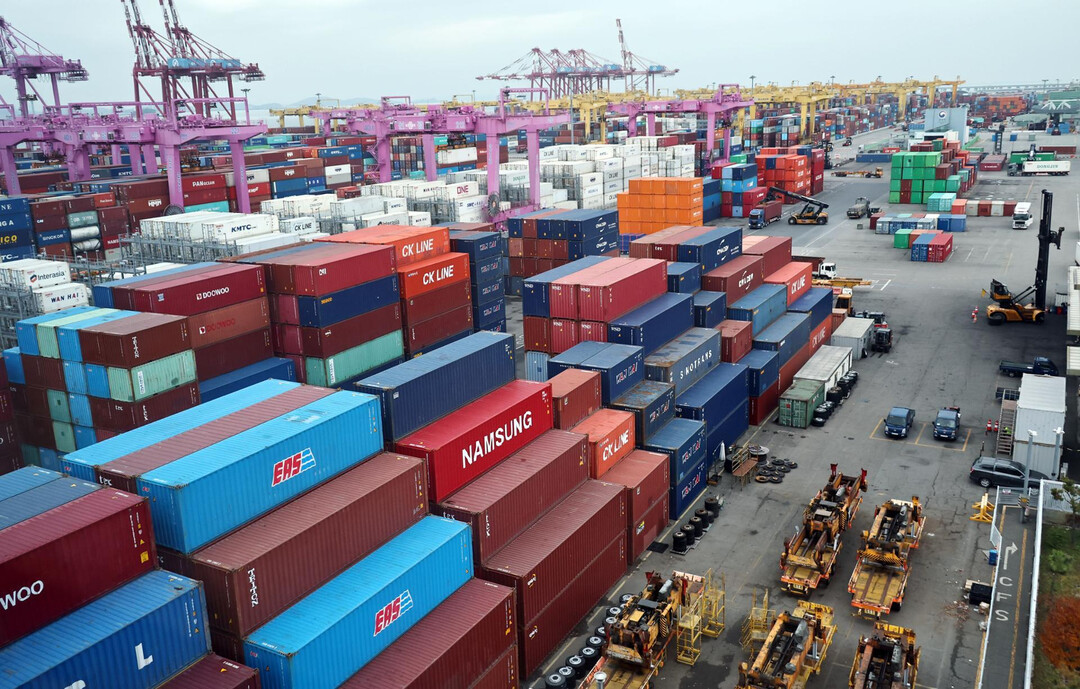
SEOUL — South Korea has officially entered the exclusive "$1 trillion export club," capping an extraordinary 78-year economic transformation from a war-torn, agrarian nation into one of the world’s premier trading powers.
According to government trade data released on November 19, South Korea’s cumulative exports for the year surpassed the $1 trillion mark (approximately 1,330 trillion won). With this milestone, South Korea becomes only the fourth country in history to achieve $1 trillion in annual outbound shipments, joining the United States and Germany (2006), and China (2007). Notably, the achievement places South Korea fourth in global export rankings—surpassing neighboring economic giant Japan for the first time.
A 50,000-Fold Leap
The milestone stands in stark contrast to South Korea's post-liberation beginnings. In February 1948, six months prior to the formal establishment of the South Korean government, the nation's first private trade vessel departed Busan for Hong Kong carrying dried squid and agar-agar, returning with bartered rubber and newsprint. Total exports in that inaugural year amounted to just $19 million. Over nearly eight decades, the country's export volume has multiplied more than 52,600-fold.
Semiconductors Power the Surge
The primary engine behind this year’s record-breaking performance has been the global semiconductor boom. Between January and October, chip exports skyrocketed 193.1% year-on-year to $396.8 billion, accounting for nearly 43% of the nation's total outbound shipments. Bolstered by strong chip demand, South Korea’s cumulative trade surplus for the first ten months hit $294.9 billion, more than tripling its previous annual record set in 2017.
President Lee Jae-myung celebrated the news via social media on Thursday afternoon, calling the milestone "the result of generations of perseverance and dedication." He emphasized that the government will build on this momentum by reinforcing core manufacturing sectors while scaling up future growth drivers, including artificial intelligence (AI), biotechnology, and K-consumer goods such as cosmetics and food.
Economists expect the upward trajectory to continue into next year. The Korea Development Institute (KDI) forecasts that South Korean exports will climb another 22.8% next year to reach $1.44 trillion, up from the $1.17 trillion projected for the entirety of this year.
Structural Risks and Trade Headwinds
Despite the headline figures, policymakers and economists warn that underlying vulnerabilities remain. Because export growth is heavily concentrated in capital-intensive sectors like semiconductors and petrochemicals led by major conglomerates, the economic benefits have been slow to trickle down to small- and medium-sized enterprises, contributing to sluggish real wage growth and a tight youth labor market.
External trade headwinds also pose a growing risk. As protectionist policies gain traction across the United States, China, and the European Union, South Korea's widening trade surplus could invite heightened scrutiny and tariff pressures from key trading partners. Trade analysts suggest that Seoul will need to diversify its export portfolio into high-growth areas—such as defense, shipbuilding, and bio-health—while strategically managing trade relations to sustain its economic momentum.
[Copyright (c) Global Economic Times. All Rights Reserved.]