


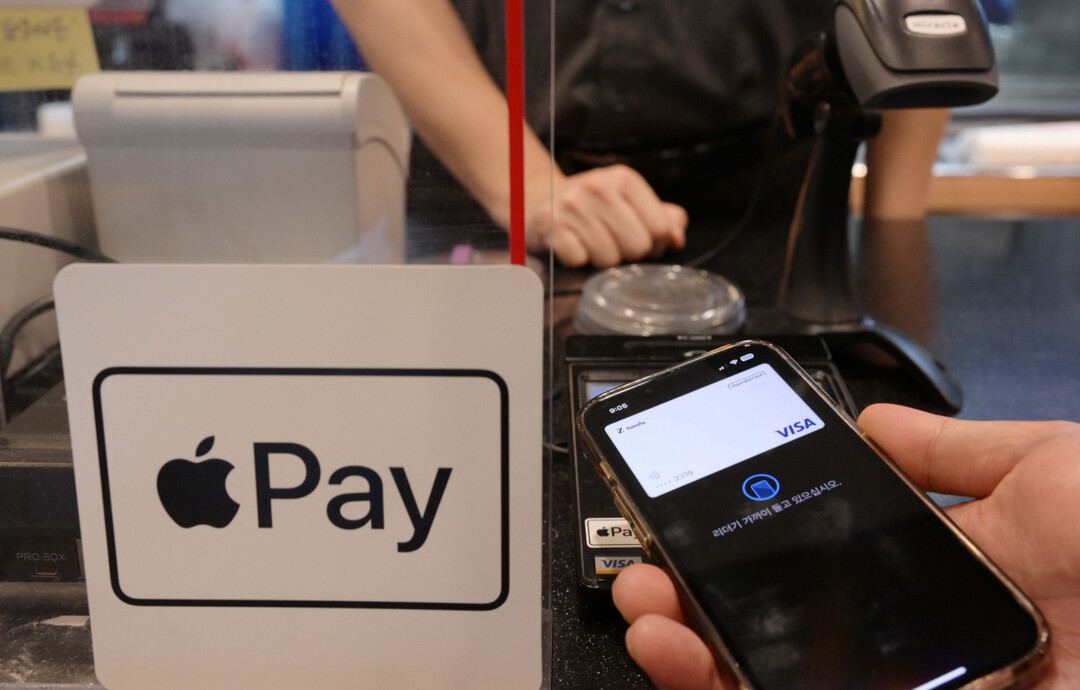
SEOUL — As more South Korean financial institutions move to adopt Apple Pay, industry insiders are warning that rising transaction fees could eventually erode consumer card perks—and potentially push rival Samsung Pay to abandon its long-standing free-use policy.
On November 16, internet-only lender KakaoBank began supporting Apple Pay for its debit cards and youth-focused "mini" cards. The move ends Hyundai Card’s three-year, eight-month exclusivity since Apple Pay first launched in South Korea in March 2023. With major players like Shinhan Card, KB Kookmin Card, and Toss Bank also reportedly exploring integration, Apple Pay’s domestic footprint is set to grow rapidly.
Convenience for Users, Deposit Growth for Banks
For iPhone users—particularly teenagers unable to obtain credit cards—the expansion removes the hurdle of having to sign up for a Hyundai Card just to use mobile tap-to-pay. Customers aged 14 and older can now link their KakaoBank cards directly to Apple Wallet.
For KakaoBank, the partnership offers a strategic advantage: attracting new account openings and boosting low-cost deposits, as users must maintain balances in their linked bank accounts to use debit services.
The Hidden Cost of Tap-to-Pay
While consumers and merchants pay no extra fees when using Apple Pay instead of a physical card, financial firms face steep backend costs. Hyundai Card reportedly pays Apple a commission of roughly 0.15% per transaction.
The math is particularly tight for small-merchant transactions and debit cards:
Credit Cards: At small merchants (annual revenue under 300 million won), card issuers collect a 0.4% merchant fee—400 won on a 100,000-won purchase. Handing 150 won (0.15%) to Apple eats up nearly 38% of that revenue.
Debit Cards: Issuers only earn a 0.15% merchant fee at small businesses, meaning Apple’s cut effectively wipes out the entire transaction fee.
Tokenization Fees: Card companies must also pay international networks like Visa and Mastercard roughly 2 cents (about 30 won) per transaction for security token processing. Based on Apple Pay’s 2023 average transaction size of 13,343 won, that fixed 30-won fee translates to an additional 0.22% cost—heavier than Apple’s own commission for micro-payments.
Because Apple Pay is heavily used for small-ticket purchases, profitability remains elusive. A study led by Hansung University economics professor Kim Sang-bong found that while Hyundai Card’s overall credit card spending rose by about 4 trillion won in the second quarter of 2023 following Apple Pay's launch, the statistical impact on net profit growth was negligible once other variables were accounted for.
Will Samsung Pay Follow Suit?
A broader concern across the financial sector is how Samsung Electronics will respond. Samsung Pay currently charges domestic card issuers zero fees, maintaining its free policy even after Apple Pay entered the market in 2023. However, industry observers note that if financial firms willingly pay fees to Apple, Samsung could demand similar terms on grounds of fairness.
If Samsung Pay monetizes its service, the financial strain would hit every major card issuer in the country. Professor Kim’s research team estimated that applying a 0.15% fee across 89.2 trillion won in domestic mobile manufacturer payments in 2024 would cost card firms 133.7 billion won annually—with Samsung Pay accounting for roughly 99.7 billion won, equivalent to about 4% of the combined net profit of South Korea's eight standalone credit card companies.
Consumer Benefits on the Line
When approving Apple Pay in 2023, South Korea’s Financial Services Commission barred financial firms from passing related fees directly onto consumers or merchants. Yet analysts warn that issuers facing margin compression could quietly scale back indirect perks, such as slashing interest-free installment periods or discontinuing high-reward credit cards—similar to when rising funding costs prompted card firms to cut six-month interest-free installments down to three months in late 2022.
Ultimately, whether Apple Pay’s wider rollout proves to be a net win for South Korean consumers will depend not just on checkout convenience, but on how financial institutions absorb the mounting cost of mobile payments.
[Copyright (c) Global Economic Times. All Rights Reserved.]