![[등록] 2026-09-01 15:48:31](/support/_updata/banner2/tl181982910_6749.png)


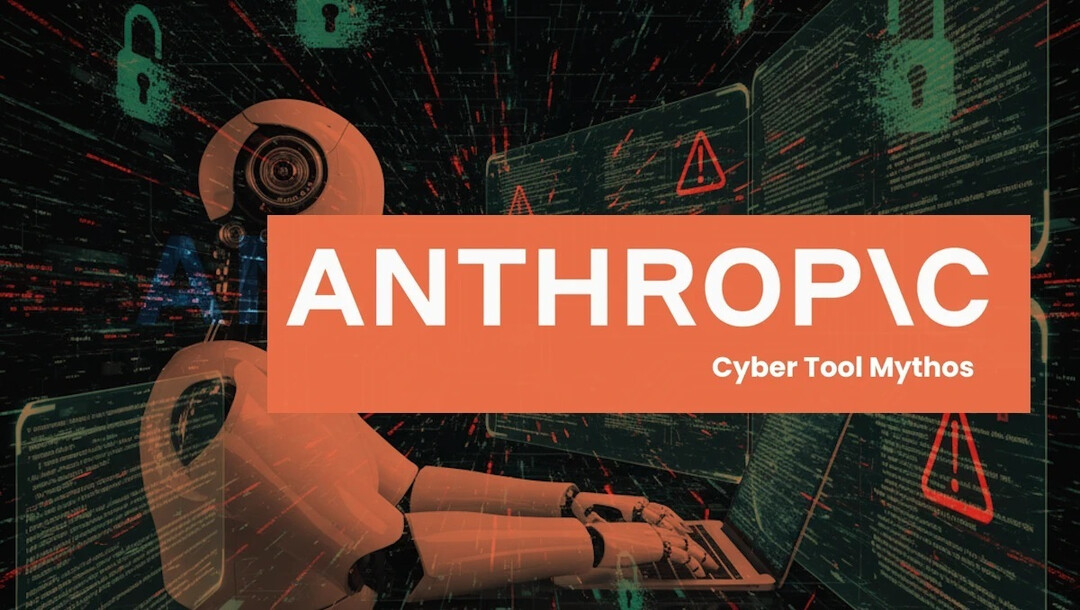
WASHINGTON — In an unprecedented escalation of state intervention in the artificial intelligence sector, the United States government has ordered Anthropic to immediately halt all foreign access and international exports of its most advanced AI models, "Claude Fable 5" and "Claude Mythos 5."
The sweeping executive mandate, justified under the banner of national security, bars any non-U.S. citizen—both domestically and abroad—from accessing these models. Strikingly, this prohibition extends even to Anthropic’s own foreign-national employees, triggering an immediate and fierce corporate backlash. Anthropic swiftly condemned the decision, labeling it an "unprincipled act" that lacks both transparency and clear technical justification.
A Sudden Lockdown on Next-Generation Systems
On June 12 (local time), Anthropic announced that U.S. national security authorities had issued a sudden directive enforcing stringent export controls. To ensure strict compliance with the federal order, the San Francisco-based AI pioneer took the drastic step of temporarily suspending its Fable 5 and Mythos 5 services for all global customers. While these pinnacle systems remain offline, the company noted that its legacy models, including "Claude Opus 4.8," remain fully operational.
The targeted restrictions focus heavily on two specific versions of Anthropic’s cutting-edge architecture:
Claude Fable 5: Developed specifically as a consumer-facing "safe mode" variant of the Mythos class, engineered with extensive guardrails to prevent exploitation.
Claude Mythos 5: A highly specialized, high-security model built for deep computational analysis.
According to corporate logs, the final enforcement notice landed at 5:21 PM Eastern Time. The timing shocked Anthropic executives, who argued that Fable 5 had already undergone rigorous vetting to mitigate existential risks. The model was specifically designed to auto-block sensitive queries regarding cyber warfare, biological and chemical weaponry, and "unauthorized distillation"—a process where rival entities attempt to reverse-engineer or extract core capabilities to build competing AI models.
The Jailbreak Controversy: "Flawed Logic"
In an official response published on its website, Anthropic expressed deep skepticism over the government's underlying motives. “The federal directive lacks specific, granular details regarding the precise national security threats these models pose,” the company stated. “Based on our internal assessments, we believe the U.S. government has obtained a highly specific method to bypass or ‘jailbreak’ Fable 5.”
While Anthropic acknowledged reviewing a government demonstration that exposed a few minor vulnerabilities, tech executives maintained that these issues are easily fixable through standard patching. Furthermore, they pointed out that similar vulnerabilities exist across virtually all publicly available frontier models without requiring complex workarounds.
Anthropic strongly defended Fable 5’s defensive framework, noting that its security measures are so restrictive that numerous enterprise clients had previously complained about the system being overtly rigid. Prior to its scheduled launch, the model underwent thousands of hours of adversarial "red-team" testing conducted in tandem with the U.S. government, the United Kingdom’s AI Safety Institute (AISI), and multiple independent third-party auditors.
“Achieving a 100% foolproof defense against jailbreaking is a technical impossibility for any AI developer,” Anthropic argued in its statement. “Every security protocol in the industry is inherently vulnerable to specialized prompts that can extract isolated data points under hyper-specific conditions. The eventual discovery of universal jailbreaks is statistically inevitable, a reality we openly communicated prior to Fable 5’s deployment.”
To counter these risks, Anthropic utilized a "defense-in-depth" architecture. This strategy ensures that even if a jailbreak succeeds, executing it requires an unsustainably high financial and computational investment from the attacker. Additionally, Anthropic mandates a 30-day customer data retention policy, creating a robust monitoring pipeline that allows engineering teams to rapidly detect, isolate, and neutralize successful exploits in real time.
Given these extensive layers of prevention, and the fact that the company has received zero reports of severe or non-standard vulnerabilities from the public, Anthropic argued that a total service recall is entirely unjustified. Internal analysis also indicated that the government’s suspected jailbreak method would easily compromise competing frontier systems, including OpenAI’s "GPT-5.5."
Retaliation for Defying the Pentagon?
Silicon Valley analysts suspect that the sudden export freeze is not merely a technical dispute, but rather the latest salvo in a bitter, ongoing feud between Anthropic and the U.S. Department of Defense (DoD).
The friction traces back to a major ideological clash where the Pentagon reportedly demanded that Anthropic lift its ethical restrictions on military applications. The DoD had sought to integrate Anthropic’s models into large-scale, AI-driven mass surveillance networks and fully autonomous weapons systems capable of operating entirely outside of direct human oversight.
Anthropic flatly rejected the military's demands. Dario Amodei, Chief Executive Officer of Anthropic, publicly drew a hard line at the time, stating, “I cannot, in good conscience, allow our technology to be weaponized in this manner.”
Following Amodei’s public defiance, the Pentagon retaliated by formally designating Anthropic as a "supply chain risk enterprise"—a blacklisting that severely cripples a tech company’s ability to secure lucrative federal contracts. Anthropic fought back aggressively, filing a high-profile lawsuit seeking to overturn the designation against the DoD, the General Services Administration (GSA), and Secretary of Defense Pete Hegseth.
A Dangerous Precedent for the Tech Economy
The sweeping nature of the ban—particularly the clause barring foreign employees within the U.S. from touching the code—has sent shockwaves through the broader tech industry. Critics warn that treating commercial software updates like physical arms exports could cripple the American tech sector's talent acquisition and slow down innovation.
Anthropic warned that if the government continues to use minor, theoretical jailbreaks as a legal trigger to recall commercially deployed models that serve hundreds of millions of users, it will set a catastrophic precedent. “If this irrational standard is enforced industry-wide, it will effectively paralyze the deployment of every single next-generation AI model across the United States,” the company cautioned.
Looking forward, Anthropic stated it intends to release a comprehensive technical breakdown of the situation within the next 24 hours. While the firm reiterated its commitment to upholding federal law, it emphasized that governance must remain transparent, fair, and grounded strictly in verifiable engineering facts.
“We believe this directive stems from a fundamental misunderstanding of AI safety protocols,” Anthropic concluded. “We are working tirelessly around the clock to engage with regulators, correct these misconceptions, and restore access to Fable 5 and Mythos 5 for our global user base as safely and swiftly as possible.”
[Copyright (c) Global Economic Times. All Rights Reserved.]