As urban transit networks expand at breakneck speed across Southeast Asia, cities face a consequential economic fork in the road. Metropolises from Bangkok to Manila must continually upgrade their mass transit capacity to service millions of daily commuters. To meet this insatiable demand, regional governments are increasingly forced to grapple with a fundamental strategic question: should they rely on proven, imported rolling stock from established global giants, or double down on domestic manufacturing through aggressive industrial policy?
While importing from industry heavyweights—such as China’s CRRC, Japan, South Korea, or European conglomerates—guarantees tried-and-tested performance, robust after-sales support, and seamless technical integration, a growing faction of regional policymakers wants more. Countries like Indonesia and Malaysia have sought to foster home-grown rail manufacturing to capture long-term economic value, generate high-skilled local employment, and retain technological expertise. However, recent developments across the region underscore that state intervention is no silver bullet. Without rigorous execution, the ambition of domestic industrial self-reliance risks throwing public transit networks off the rails.
The Indonesian Experiment: INKA Under the Microscope
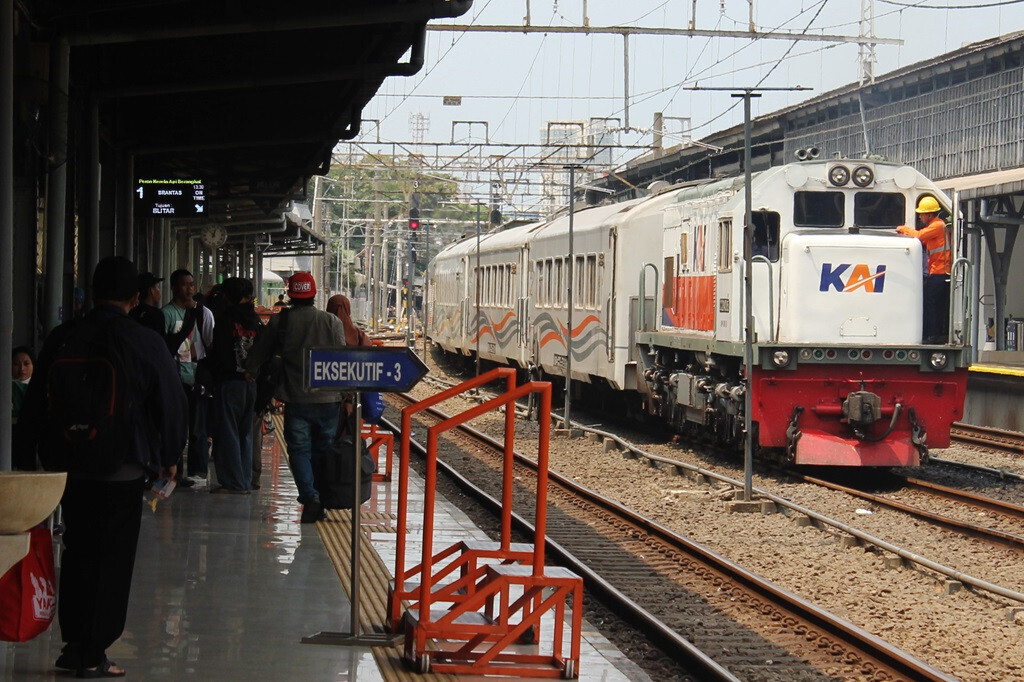
Indonesia stands as Southeast Asia’s most prominent case study in rail industrial policy. Through state-owned manufacturer INKA, the government has long sought to build an indigenous supply chain. INKA’s primary domestic partner and customer, railway operator KAI—with which INKA is currently pursuing a merger—has historically relied on the manufacturer for intercity Java trains and transit systems alike. The state has actively tilted the playing field in INKA’s favor, mandating local procurement and restricting foreign competition to give domestic capabilities time to mature.
Yet, this protectionist breathing room comes with steep performance expectations. For industrial policy to justify its costs, state-backed champions must eventually deliver reliable products on schedule and demonstrate mastery over increasingly complex manufacturing techniques.
Recent events suggest INKA is falling short of these benchmarks. In 2023, rolling stock deployed for the Greater Jakarta LRT was hit with a barrage of electrical and mechanical glitches, requiring immediate retrofits. While early-stage growing pains can sometimes be excused as part of a learning curve, recent weeks have brought far more alarming failures. Commuter rail networks in Jakarta have experienced severe disruptions as INKA-built trains suffered from malfunctioning doors and structural undercarriage weaknesses, prompting the recall of multiple cars. Amid mounting public scrutiny and commuter frustration, KAI has been forced to seek special governmental clearance to import used rolling stock from Japan simply to maintain operational continuity.
A Regional Pattern of Hurdles
Indonesia’s trials are far from isolated. Across Southeast Asia, attempts to incubate indigenous rail manufacturing have frequently encountered severe turbulence.
A decade ago, Malaysia’s Scomi secured a lucrative half-billion-ringgit contract to supply trainsets for the Kuala Lumpur monorail. The venture was plagued by chronic delivery delays, safety concerns, and performance failures that ultimately culminated in protracted legal battles and the eventual corporate dissolution of Scomi. These historical precedents illustrate that breaking into the high-stakes, capital-intensive rolling stock market is fraught with systemic risk.
Compounding the pressure on incumbent local players, intra-ASEAN competition is heating up rapidly. Vietnam’s private sector heavyweight, Vingroup, recently announced a high-profile joint venture with French rail titan Alstom. Under a technology licensing agreement, the partnership aims to co-produce 200 trainsets for the Hanoi metro. While Vingroup is renowned for taking massive strategic gambles that occasionally face hurdles, this venture signals a structural escalation in Vietnam’s industrial ambitions, raising the stakes for regional competitors like INKA.
The Bottom Line: Trains Must Run
Ultimately, the core tension of Southeast Asia’s rolling stock dilemma boils down to a hard operational reality. State support, protectionist tariffs, and nationalist industrial strategies can successfully buy time and nurture infant industries, but they cannot permanently mask deep-seated production failings.
When structural defects strand commuters on overcrowded platforms and paralyze urban productivity, the theoretical economic justifications for import substitution quickly evaporate. For domestic manufacturers aiming to lead the ASEAN market, the message from the public and policymakers alike is clear: state-backed momentum can open doors, but local firms must ultimately deliver the goods.
[Copyright (c) Global Economic Times. All Rights Reserved.]