![[등록] 2026-09-01 15:48:31](/support/_updata/banner2/tl181982910_6749.png)


SEOUL – Amid stalled follow-up tariff negotiations between South Korea and the U.S., the American decision to impose high tariffs on cars from Mexico has caused concern in the automotive industry. The move has particularly heightened fears of a performance decline for Kia, which produces 400,000 vehicles annually in Mexico. In response, Kia is strengthening its strategy to expand its presence in Latin America by increasing local production.
For years, Mexico has been a prime export hub for global automakers, benefiting from tariff-free access to the U.S. under the U.S.-Mexico-Canada Agreement (USMCA) and low labor costs. However, this has changed following the Mexican government's failure to secure a tariff reduction deal with the U.S. Currently, the U.S. levies a 25% tariff on Mexican-made cars. Even vehicles using more than 75% of U.S.-made parts are subject to a 15% tariff.
Despite the heightened tariff risk, Kia is increasing its production volume in Mexico. This move is seen as a way to offset the anticipated decline in exports to the U.S. and to sustain its strong performance in the region by expanding domestic sales within Latin America.
Both Kia's local production and domestic sales in Mexico have shown steady growth, hitting record highs. According to data from the National Institute of Statistics and Geography (INEGI) in Mexico, Kia produced a total of 190,000 vehicles at its Monterrey plant from January to August of this year, a 9.2% increase year-on-year. The plant's operating rate also rose significantly, from 67.7% last year to 80.4% in the first half of this year.
Currently, Kia exports 75% of its Mexican production to overseas markets, including the U.S., with the remaining 25% sold domestically. New model launches have helped drive a record-high sales performance, with local sales reaching over 72,000 units from January to August—the highest level since 2020.
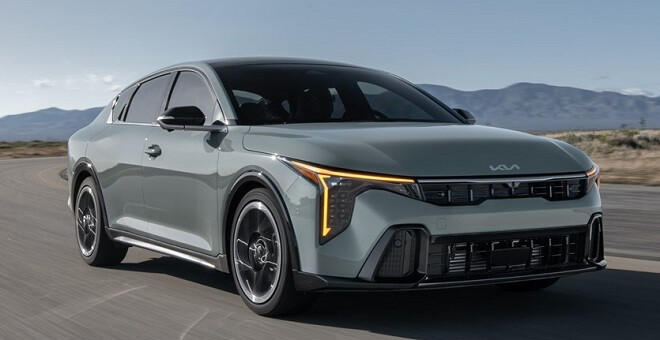
Kia plans to accelerate its push into the Latin American market with the K4, a new compact sedan. The K4, the successor to the European-market Ceed, was first introduced to the Mexican market in August 2024. Unlike the Ceed, the K4 was developed as a global strategic model, and its production has been moved from Žilina, Slovakia, to Mexico.
With its competitive pricing and performance, the K4 has achieved strong sales since its launch, with an average of 15,000 units sold per month. This makes it the second-highest-selling single model produced at an overseas plant.
The size of the Mexican market is another key reason for Kia's focus. Mexico is the second-largest new car market in Latin America, after Brazil. In 2024, total vehicle sales in the country reached 1.4 million units, marking a 9.9% growth from the previous year.
Recognizing this growth potential, other global automakers are also increasing production in Mexico. General Motors (GM) saw its production rise by 1.8% to 580,000 units from January to August, while Japan's Nissan produced 450,000 units, a 1.6% increase. Toyota, a major competitor to Kia, saw a remarkable 40.5% increase in production to 210,000 units during the same period, and China’s Changan Automobile saw a 23% rise to 20,000 units.
Industry analysts believe that Kia's production expansion, combined with the strong sales of the K4, will help it gain a larger market share in Latin America. An industry official noted, "As the U.S. started imposing high tariffs on Mexican goods, Kia has intensified its focus on Latin America to compensate for the reduction in exports and revenue. The K4 is steadily solidifying its position with consistent sales success."
The official added, "Although Kia has increased the operating rate of its Mexican plant, it is still one of the lowest among its global factories. This leaves significant room for future production expansion, which is expected to support further growth in local sales."
[Copyright (c) Global Economic Times. All Rights Reserved.]