![[등록] 2026-09-01 15:48:31](/support/_updata/banner2/tl181982910_6749.png)


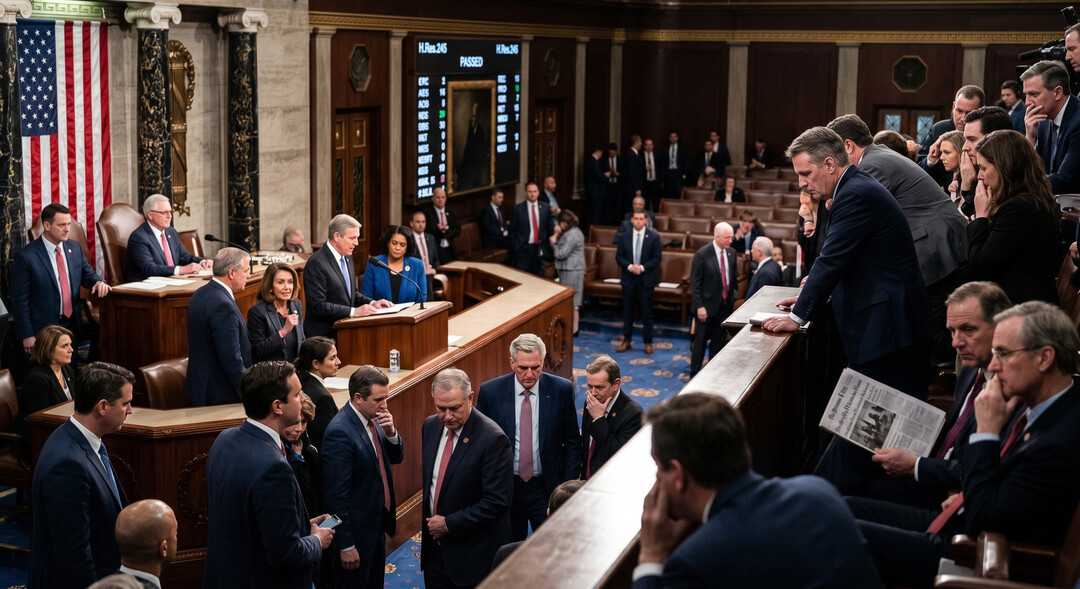
The recent news from Washington regarding the U.S. House of Representatives passing a resolution to limit war powers against Iran goes beyond a mere opportunistic political skirmish. It must be interpreted as a clear expression of the legislature's will to check the chief executive's unilateralism and the fatigue over prolonged conflict, transcending the routine tug-of-war for initiative between the executive and legislative branches. What particularly merits attention is the fact that despite being led by the opposition Democratic Party, defections occurred within the ruling Republican Party. The fact that even members of his own party cast votes in favor proves that cracks are beginning to form from within the unilateral foreign military line that the President has pursued.
In response to this congressional move, President Donald Trump immediately expressed fierce and furious anger. Through social media, he defined the resolution as 'unpatriotic' and did not hesitate to use extreme language toward the Democratic Party, calling them 'forces that wish for America's failure.' Going a step further, he criticized members of his own party who strayed from the party line as 'attention seekers' and even brought up moral shame. Such radical language vividly reflects the depth of the internal sense of crisis faced by the supreme leader. Although this resolution still faces the legal barrier of a presidential veto even if it passes the Senate, the phenomenon of anti-war sentiment spreading even within his core support base is dealing a significant blow to the political legitimacy of the Trump administration.
To break through this political deadlock head-on, the President appears to be further consolidating his hardline foreign stance. He declared that if the U.S. military is harmed, swift and immediate military action will be taken, attempting to secure the legitimacy of resuming war in advance. The sparks of this hardline policy flew beyond Iran to Cuba. President Trump pointed at Cuba as a 'failed state' and sharpened his edge, while the U.S. Department of the Treasury abruptly announced new sanctions targeting Cuban President Díaz-Canel and the Castro family, the core of his power. This can be viewed as a classic political tactic aimed at dispersing external threats outward and promoting internal unity. It is a typical manifestation of the politicization of diplomacy, creating an external enemy to shift the political phase.
However, with negotiations with Iran deadlocked in a long-term stalemate without finding a breakthrough, it remains uncertain whether such multifaceted pressure cards will be effective. America's foreign diplomacy strategy is interacting with internal political division, acting as a powerful mutual constraint. Congress's attempt to limit war powers results in weakening the President's diplomatic bargaining power and is enough to instill doubts about the consistency of U.S. policy among foreign actors. There are clear limits to untangling the complex threads of international relations through hardline sanctions and military threats alone. This means that it is difficult to achieve desired outcomes on the multilateral diplomatic stage through unilateral executive decisions alone.
The current situation vividly exposes the side effects that can occur when foreign policy is combined with domestic political interests. While the method of unconditionally wielding the blade of power may rally the immediate support base, it is difficult to contribute to long-term national interests and the establishment of peace. The message delivered by the passage of the U.S. House resolution is grave. It is a signal that 'checks and balances,' the core value of democracy, are still functioning, and a serious warning against arbitrary military adventurism.
The Trump administration must move away from temporary expedients such as anger and additional sanctions. It has reached a point where it must restore communication with Congress and seek more multifaceted and realistic diplomatic solutions. This is because the legitimacy of foreign policy stems from internal consensus. Furthermore, the international community must also keenly watch the impact that this internal American strife will have on the future global security landscape. This is because the wavering diplomatic leadership of the sole superpower could become a fuse that amplifies global uncertainty.
[Copyright (c) Global Economic Times. All Rights Reserved.]