• 2026.01.20 (Tue)
  • All articles
  • LOGIN
  • JOIN
Global Economic Times
APEC2025KOREA가이드북
  • Synthesis
  • World
  • Business
  • Industry
  • ICT
  • Distribution Economy
  • Well+Being
  • Travel
  • Eco-News
  • Education
  • Korean Wave News
  • Opinion
  • Arts&Culture
  • Sports
  • People & Life
  • Column
    • Cho Kijo Column
    • Lee Yeon-sil Column
    • Ko Yong-chul Column
    • Cherry Garden Story
  • Photo News
  • New Book Guide
MENU
 
Home > Industry

World's Largest Hydrogen Fuel Cell Power Plant to be Built in Gyeongju

Desk / Updated : 2024-11-30 06:16:59
  • -
  • +
  • Print


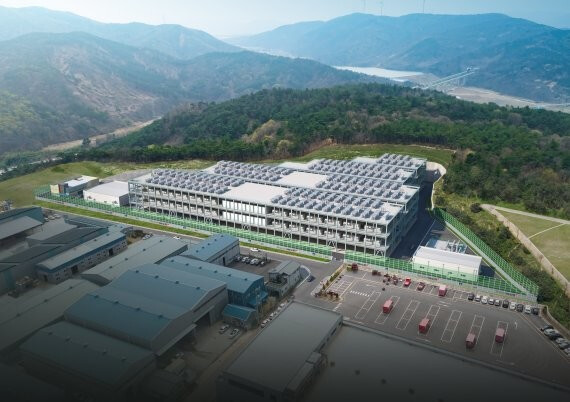
Gyeongju, South Korea – Gyeongbuk Province announced on November 28th that the "Gangdong Hydrogen Fuel Cell Power Plant" project has been selected as the fourth project of the government's Regional Revitalization Investment Fund.

The project will see the construction of a 107.9 MW hydrogen fuel cell power plant in the Gangdong General Industrial Complex in Gyeongju, making it the world's largest of its kind. Once completed, the plant will be capable of supplying electricity to approximately 270,000 households.

The project has been given a substantial boost by the Regional Revitalization Investment Fund, a 3 trillion won fund established through contributions from the government, the Regional Extinction Response Fund, and the Industrial Bank of Korea.

Construction is set to begin in March 2024, with commercial operations expected to commence in March 2028.

Key Features and Benefits:

Clean Energy: Hydrogen fuel cell power plants generate electricity through a chemical reaction between hydrogen and oxygen, producing minimal emissions.
Stable Power Generation: Unlike solar or wind power, hydrogen fuel cells can generate electricity consistently, regardless of weather conditions.
Quiet Operation: The plants are relatively quiet, making them suitable for both industrial and residential areas.
Distributed Power: They can provide a stable power supply without the need for large-scale transmission infrastructure.
Economic Benefits: The project is expected to create 1,200 jobs and generate 733 billion won in corporate taxes.
Regional Development: The plant will provide a stable power supply to nearby industrial complexes, attracting new investments and stimulating economic growth.
Government Support:

The Gyeongbuk provincial government is enthusiastic about the project, seeing it as a model for regional development and a catalyst for attracting investment in advanced industries. Governor Lee Cheol-woo emphasized that the project aligns with the government's energy transition policies and will serve as a starting point for connecting energy policies with advanced industrial investment policies.

[Copyright (c) Global Economic Times. All Rights Reserved.]

  • #globaleconomictimes
  • #koyongchul
  • #cherrylee
  • #seoulkorea
  • #periodicoeconomico
  • #글로벌이코노믹타임즈
  • #GET
  • #GETtv
  • #liderdel
Desk
Desk

Popular articles

  • KFTC Fines Korean Air and Asiana KRW 6.46 Billion for Capacity Reduction Violations

  • Euisun Chung’s ‘Innovative Leadership’ Proven by String of Guinness World Records

  • "2026 is the Year of K-Stock Revival": Ultra-High-Net-Worth Individuals Bet on 'K.O.R.E.A.'

I like it
Share
  • Facebook
  • X
  • Kakaotalk
  • LINE
  • BAND
  • NAVER
  • https://globaleconomictimes.kr/article/1065561374180872 Copy URL copied.
Comments >

Comments 0

Weekly Hot Issue

  • “$3.20 for Coffee, 15 Cents for the Cup”: New Pricing Policy Leaves Café Owners Exhausted
  • “HBM Semiconductor Tech Stolen”: China Remains Top Destination for South Korea’s Leaked Technology
  • KOSPI Hits Historic 4,900 Mark After 12-Day Rally; Hyundai Motor Soars to 3rd in Market Cap
  • S. Korea Braces for Longest, Most Intense Cold Wave of the Season: Feels-like Temps to Plummet to -20°C
  • Trump Escalates Atlantic Tensions with ‘Greenland Tariffs’ Targeting European Allies
  • Wealthy Individuals Value Time Over Money: Insights into the "Rich Mindset"

Most Viewed

1
“The Answer Lies in the Field”... Incheon Superintendent Do Seong-hun Bets on ‘Educational Innovation’ for 2026
2
Territorial Plundering in the 21st Century: The Catastrophe Awaited by Trump’s ‘Order Through Force’
3
From 'Maduro Gray' to 'Hwang Hana Parka': Why Negative News Drives Fashion Consumption
4
Actress Goo Hye-sun Fast-tracks Master’s Degree at KAIST, Eyes Doctorate Next
5
South Korean Rebar Defies 50% Tariffs: A Strategic Pivot to the U.S. Amid Domestic Stagnation
광고문의
임시1
임시3
임시2

Hot Issue

KOSPI Hits Historic 4,900 Mark After 12-Day Rally; Hyundai Motor Soars to 3rd in Market Cap

“HBM Semiconductor Tech Stolen”: China Remains Top Destination for South Korea’s Leaked Technology

Hyundai’s ‘Atlas’ Shakes Up CES 2026: A Formidable Rival to Tesla’s Optimus

Long Queues in Sub-zero Temperatures: Hello Kitty Meets Jisoo as MZ Generation Flocks to Pop-up Store

Let’s recycle the old blankets in Jeju Island’s closet instead of incinerating them.

Global Economic Times
korocamia@naver.com
CEO : LEE YEON-SIL
Publisher : KO YONG-CHUL
Registration number : Seoul, A55681
Registration Date : 2024-10-24
Youth Protection Manager: KO YONG-CHUL
Singapore Headquarters
5A Woodlands Road #11-34 The Tennery. S'677728
Korean Branch
Phone : +82(0)10 4724 5264
#304, 6 Nonhyeon-ro 111-gil, Gangnam-gu, Seoul
Copyright © Global Economic Times All Rights Reserved
  • 에이펙2025
  • APEC2025가이드북TV
  • 독도는우리땅
Search
Category
  • All articles
  • Synthesis
  • World
  • Business
  • Industry
  • ICT
  • Distribution Economy
  • Well+Being
  • Travel
  • Eco-News
  • Education
  • Korean Wave News
  • Opinion
  • Arts&Culture
  • Sports
  • People & Life
  • Column 
    • 전체
    • Cho Kijo Column
    • Lee Yeon-sil Column
    • Ko Yong-chul Column
    • Cherry Garden Story
  • Photo News
  • New Book Guide
  • Multicultural News
  • Jobs & Workers