• 2026.11.20 (Fri)
  • All articles
  • LOGIN
  • JOIN
Global Economic Times
한인동포뉴스(상단)
  • Synthesis
  • World
  • Business
  • Industry
  • ICT
  • Distribution Economy
  • Well+Being
    • Pet Life
    • Halal Horizon
  • Travel
  • Eco-News
  • Education
  • Korean Wave News
  • Opinion
  • Arts&Culture
  • Sports
  • People & Life
    • International Student Report
    • With Ambassador
  • Column
    • Cho Kijo Column
    • Cherry Garden Story
    • Ko Yong-chul Column
    • Kim Bong-seon's Photo Column
    • Kim Seul-Ong Column
    • Lee Yeon-sil Column
    • Professor Lee Soo-young’s Life Essays
  • Photo News
  • New Book Guide
MENU
 
Home > Synthesis

Tragic Death of Top Law Exam Scorer Exposes Cracks in South Korea’s ‘Test-Obsessed’ Culture in the AI Era

Desk / Updated : 2026-11-20 05:47:24
  • -
  • +
  • Print


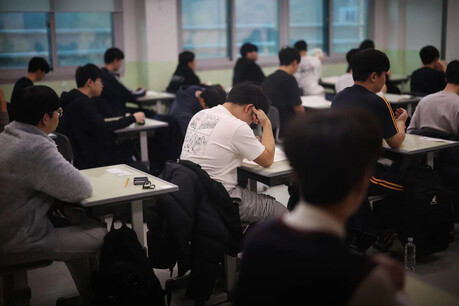
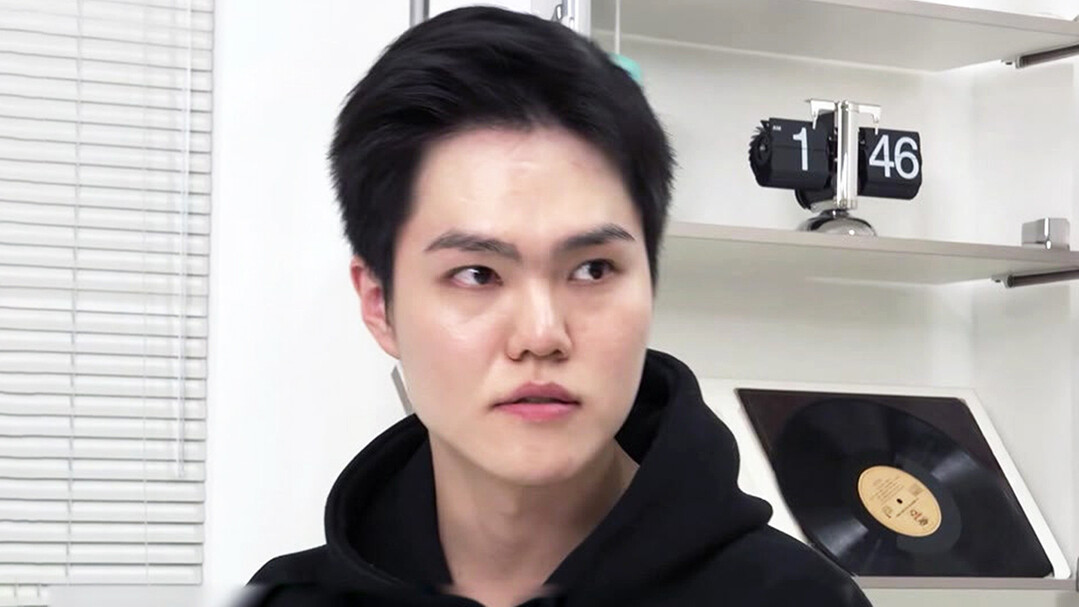
SEOUL — The sudden death of a man who achieved the first-ever perfect score on South Korea’s Legal Education Eligibility Test (LEET)—amid mounting allegations of cheating—has sparked a nationwide reckoning over the country’s hyper-competitive testing culture and the obsolescence of traditional exams in the age of artificial intelligence.

According to police and local reports on Friday, the 32-year-old test-taker, surnamed Lee, was found dead in a motel in eastern Seoul on Thursday—coinciding with the nation’s annual college entrance exam (Suneung). Lee had previously pledged to prove his innocence through a public verification test after suspicions arose regarding his unprecedented score, but he abruptly disappeared prior to the event. Investigators recovered a note at the scene indicating severe mental and physical exhaustion.

From university admissions to professional licensing exams for lawyers and accountants, standardized test scores in South Korea heavily dictate an individual's social standing and career trajectory. Sociologists say this tragedy underscores the urgent need to dismantle a system that equates a person's worth strictly with numerical results.

The Psychological Toll of Hyper-Competition

Experts point to South Korea’s unforgiving, winner-takes-all social structure as a primary driver behind such extreme pressures.

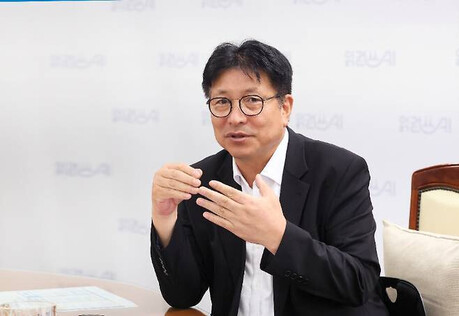
Choi Hang-sub, a sociology professor at Kookmin University, characterized the incident as a textbook case of "anomic suicide"—a concept introduced by French sociologist Émile Durkheim describing a state of normlessness where individuals lose their moral bearings. Choi noted that in a "survival-of-the-fittest" environment where minor setbacks are harshly penalized, individuals often come to view passing high-stakes exams as their only means of survival. When the gap between a fabricated public persona of perfection and internal reality becomes unsustainable, it can lead to devastating psychological collapse.

Similarly, Koo Jeong-woo, a sociology professor at Sungkyunkwan University, criticized society's fixation on idolizing a tiny fraction of top scorers. "A climate that refuses to tolerate failure and reserves opportunities exclusively for a select few has produced a distorted hero in the AI era," Koo remarked, urging a shift toward evaluating a candidate's long-term character, substance, and personal journey rather than a single test score.

Rethinking Assessment and Security in the Age of AI

Beyond cultural reform, the rapid advancement of artificial intelligence is forcing educators to question the fundamental validity of current testing methods.

Professor Choi argued that traditional exams, which focus solely on identifying correct answers rather than assessing the reasoning behind them, are ill-suited for an era where AI can effortlessly solve standardized problems. To genuinely measure human intellect and adaptability, he advocated for expanding essay-based evaluations and oral examinations that scrutinize a candidate’s thought process.

Yoon In-jin, a sociology professor at Korea University, echoed this sentiment, calling for new test designs that prioritize critical thinking, creativity, independent judgment, and problem-finding skills over rote memorization.

At the same time, Yoon emphasized the need to modernize exam administration and security. Relying solely on human proctors and visual inspections is no longer sufficient to deter increasingly sophisticated, tech-driven cheating methods. He recommended investing in advanced detection hardware and software alongside specialized personnel—while ensuring these heightened security measures do not subject honest test-takers to undue stress or inconvenience.

[Copyright (c) Global Economic Times. All Rights Reserved.]

  • #Cherry Garden
  • #HalalFood
  • #Halal
  • #Petlife
  • #Halalhorizone
  • #Hormuz Impasse
  • #Joseon
  • #globaleconomictimes
  • #micore
Desk
Desk

Popular articles

  • Beijing Demands Washington Deliver on Tariff Cuts to Unlock U.S. Farm Exports

  • HSBC to Review Islamic Fund’s $38M Stake in Palantir Amid British Muslim Backlash

  • Samsung Electronics Acquires Additional Building in Silicon Valley, Doubling Headquarters Size

I like it
Share
  • Facebook
  • X
  • Kakaotalk
  • LINE
  • BAND
  • NAVER
  • https://globaleconomictimes.kr/article/1065559491068431 Copy URL copied.
Comments >

Comments 0

Weekly Hot Issue

  • Human Agency Over Algorithms: Incheon’s Analog Education Model Captivates Global Tech Giants
  • AI Giant Anthropic Hits $2 Trillion Valuation in Record-Breaking Nasdaq Debut Before Pulling Back
  • South Korean Universities Tighten Exam Rules to Curb AI Cheating, Sparking Last-Minute Confusion
  • From Kitchen Staples to Metabolic Tools: Why Science Is Vindicating Vinegar and Animal Fats
  • Chungbuk Bio Industry-University Convergence Institute Supports Cheongju Medical Device Companies’ Entry into the German Market
  • Gangwon Tourism Organization Goes All-Out to Attract Cruise Calls to Sokcho Port at Seatrade Cruise Asia 2026

Most Viewed

1
South Korea and Ethiopia Sign Trilateral MOU to Introduce Liquid-Based Cytology (LBC) Technology for Cervical Cancer Diagnosis
2
Meeting Christmas Early!… Busan Dessert Sales Event "Daldal The Market" Held
3
World Citizens are Flying Directly to Busan... The Era of 4 Million Foreigners is Just Around the Corner
4
Eating 100g of Baechu Kimchi Daily Linked to Lower High-Cholesterol Risks
5
First Snow and Freeze Hit Korea as Winter Officially Begins on 'Ipdeong'
체리가든 스토리
nutri huevos
로타리
동포저널

Hot Issue

Historic US-China-Russia Summit Yields Grand Rhetoric, Few Concrete Results

KOSPI Clings to 5,000-Point Mark Amid Heavy Foreign Selling; Year-End Rally Seen as Unlikely

Commuters Face Potential Delays as Seoul Subway Workers Launch Work-to-Rule Action

Fashion Runway Show 2026

Let’s recycle the old blankets in Jeju Island’s closet instead of incinerating them.

Global Economic Times
korocamia@naver.com
CEO : LEE YEON-SIL
Publisher & Editor : KO YONG-CHUL
Registration number : Seoul, A55681
Registration Date : 2024-10-24
Youth Protection Manager: KO YONG-CHUL
Singapore Headquarters
5A Woodlands Road #11-34 The Tennery. S'677728
Korean Branch
Phone : +82(0)10 4724 5264
#304, 6 Nonhyeon-ro 111-gil, Gangnam-gu, Seoul
Copyright © Global Economic Times All Rights Reserved
  • News K
  • 반달곰 프로젝트
  • 광고문의
Search
Category
  • All articles
  • Synthesis
  • World
  • Business
  • Industry
  • ICT
  • Distribution Economy
  • Well+Being 
    • 전체
    • Pet Life
    • Halal Horizon
  • Travel
  • Eco-News
  • Education
  • Korean Wave News
  • Opinion
  • Arts&Culture
  • Sports
  • People & Life 
    • 전체
    • International Student Report
    • With Ambassador
  • Column 
    • 전체
    • Cho Kijo Column
    • Cherry Garden Story
    • Ko Yong-chul Column
    • Kim Bong-seon's Photo Column
    • Kim Seul-Ong Column
    • Lee Yeon-sil Column
    • Professor Lee Soo-young’s Life Essays
  • Photo News
  • New Book Guide
  • Overseas Koreans
  • Multicultural News