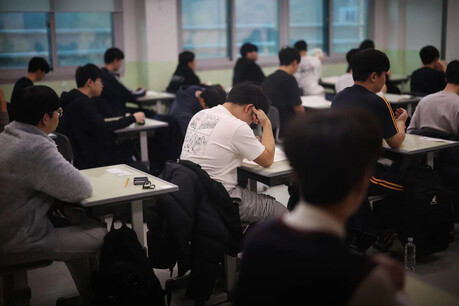
INCHEON, South Korea — As artificial intelligence rapidly reshapes the global landscape, South Korea’s Incheon Metropolitan City Office of Education is championing a seemingly counterintuitive solution for future classrooms: returning to the basics of reading, walking, and writing.
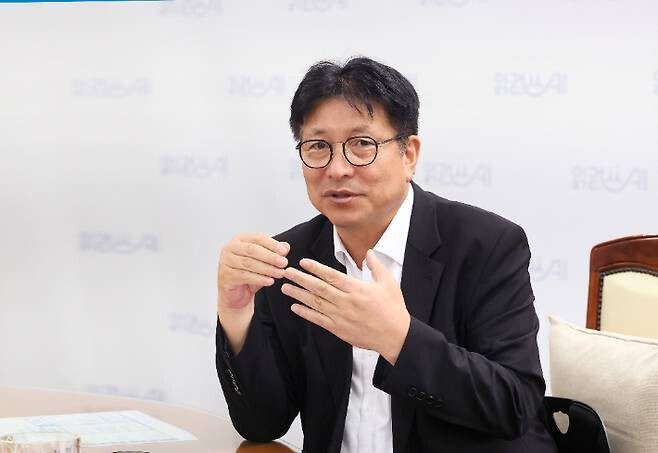
Led by Superintendent Do Seong-hoon, this initiative—dubbed "Read, Walk, Write AI"—asserts that the more advanced technology becomes, the more vital traditional, human-centric learning methods are in preventing the cognitive outsourcing of human thought.
Rather than training students to passively accept plausible answers generated by algorithms, Incheon’s educational framework prioritizes critical questioning and independent judgment. The program operates on a "Human-AI-Human" (H-A-H) model. Students first build foundational knowledge through reading, expand their perspectives by physically walking and experiencing the real world, and finally synthesize their ideas through writing. Within this cycle, AI serves strictly as a subordinate tool for information gathering rather than a substitute for human intellect.
Superintendent Do describes the ideal graduate of this system as "Homo Editor"—individuals capable of curating, editing, and transforming AI-generated outputs into new value through their own discernment. This philosophy is actively practiced in Incheon’s specialized "Gyeoldaero Jaram" (Growing Along One's Grain) schools, which nurture self-directed learning tailored to each student's unique pace and aptitude.
This analog-first approach to the digital age has recently drawn international acclaim from both foreign educational bodies and Silicon Valley giants. Delegations from the United States, Taiwan, and Mongolia have visited Incheon to benchmark the policy. Notably, tech giant Apple recognized a strong alignment between its own corporate ethos and Incheon's human-centered philosophy, inviting the office to present its case study at an upcoming event in Seoul early next year. Furthermore, discussions are underway with a Canadian school board to collaborate on human-centric AI education.
Looking ahead, the Incheon Office of Education plans to dismantle the boundaries between schools and local communities through a "Home Reading Revolution." By launching the "One Book for Our Village" campaign across every neighborhood, the city aims to encourage families to put down their smartphones, form local book clubs, and share cultural content.
Local districts, such as Namdong-gu, have already begun bridging schools with resident autonomy committees to foster neighborhood-wide reading habits. Through these grassroots efforts, Incheon hopes to establish a virtuous cycle where classroom learning seamlessly integrates into community life, ensuring that human intellect remains firmly in the driver's seat of the AI era.
[Copyright (c) Global Economic Times. All Rights Reserved.]