![[등록] 2026-09-01 15:48:31](/support/_updata/banner2/tl181982910_6749.png)


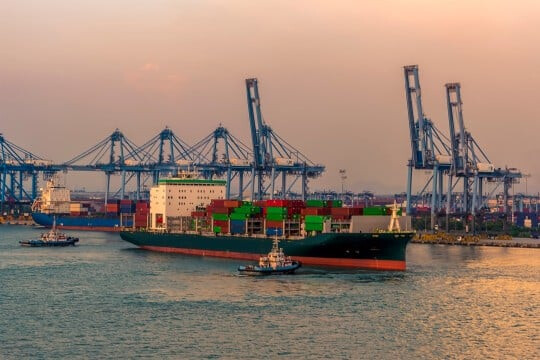
In a geopolitical landscape marked by the crossroads of global trade and the increasing competition among major powers, Singapore, Malaysia, and Indonesia have forged a delicate balance, contributing to regional integration and global stability. The foundation of the stability they have achieved rests on three key pillars: deep economic integration, robust security cooperation, and joint environmental stewardship.
In 2025, Singapore's economy is projected to grow by 2%, while Malaysia and Indonesia are expected to expand by approximately 4.5% and 5%, respectively. This growth underscores the crucial role of these three nations as engines of Asian growth amidst an uncertain global climate and major power rivalry, contributing to an anticipated 4.9% economic growth rate for developing Asia this year.
This paper argues that by combining economic security and environmental strategies, these three nations are creating a equilibrium that strengthens ASEAN's cohesion in the face of increasing global tensions and internal pressures. Digital integration and sustainable financing mechanisms play a critical role in maintaining this balance.
In 2024, trade between Malaysia and Singapore reached an all-time high, with Malaysian exports to Singapore amounting to US$50.45 billion and Singaporean exports to Malaysia totaling US$44.45 billion. This brought the total bilateral trade to over US$94 billion, demonstrating a deep level of mutual economic dependence. Overall, Malaysia's total trade volume is expected to exceed RM3 trillion in 2025, a 5% increase from RM2.879 trillion in 2024, indicating robust growth despite tariffs and uncertainties.
Furthermore, Singapore's non-oil domestic exports increased by 5.4% year-on-year in March 2025, highlighting Singapore's pivotal role in regional value chains. Indonesia's participation in the ASEAN Economic Community (AEC) and the Regional Comprehensive Economic Partnership (RCEP) is projected to boost its GDP by 5% by 2025. This growth will enhance supply chain linkages from Batam's electronics industry to Iskandar Malaysia's manufacturing hub.
Maritime security forms a crucial pillar of this equilibrium, with approximately 94,000 vessels transiting the Straits of Malacca and Singapore annually. These straits account for one-third of the world's oil tanker traffic and half of Asia's maritime trade. Joint patrols under the Malacca Straits Co-operative Mechanism have effectively reduced piracy and armed robbery incidents to 62 in 2024, demonstrating the impact of enhanced intelligence sharing among naval and coast guard forces.
Practically, the Royal Malaysian Navy detected 1,747 vessels and conducted 131 boardings last year, while the Indonesian National Armed Forces confirmed 490 contacts and executed 153 inspections under Joint Operation Malindo, illustrating the scale of their joint efforts. These efforts gained international recognition when Lloyd's of London removed its "war risk" classification for the Malacca Straits in 2006. By enhancing maritime patrols through "Eyes-in-the-Sky" aerial surveillance and establishing real-time information exchange systems, the three nations have established a security architecture that deters non-traditional threats and safeguards vital sea lanes of communication.
Environmental cooperation is the third crucial element of this balance, with haze and climate risks transcending borders. In April 2025, Indonesia recorded 142 fire and land-burning hotspots, an 80% decrease compared to the same period in 2024. This reduction highlights the effectiveness of joint fire prevention measures and real-time satellite monitoring. However, haze remains a potential threat, and Malaysia, as the ASEAN Chair in 2025, is advocating for peatland management reforms and enhanced cross-border information sharing.
Regarding renewable energy, Indonesia aims for a 23% share of renewables in its energy mix by 2025, though it only reached 13.1% in 2023. Achieving this target and reducing carbon emissions requires an investment of US$167 billion. Collaborative initiatives, such as joint mangrove restoration in the Riau Islands and tidal energy pilot projects, further underscore the commitment of the three nations to harmonizing economic growth with ecological resilience.
Despite these achievements, these three nations face complex challenges that threaten this equilibrium. The escalating US-China tensions manifest in tariffs on electronics, apparel, and palm oil. For instance, the US's 32% tariff on Indonesian manufactured goods could reduce Indonesia's economic growth by up to 0.5 percentage points in 2025.
Furthermore, the potential imposition of a 24% US tariff on Malaysian exports risks lowering Kuala Lumpur's growth prospects by nearly 1 percentage point if negotiations are unsuccessful. Meanwhile, Singapore anticipates a GDP growth of 0-2% in 2025, reflecting its vulnerability to global demand shocks.
Domestically, Indonesia's presidential transition introduces uncertainties related to infrastructure and energy reforms, while Malaysia's coalition government must balance populist demands with fiscal prudence. Environmental resilience remains fragile, with seasonal dry spells potentially increasing the recently reduced fire incidents by 80%, leading to a resurgence of haze that threatens public health and the tourism industry. ASEAN's consensus-based model can lead to friction by delaying collective responses due to differing threat perceptions, economic interests, and priorities. Addressing these challenges requires stronger policy coordination and adaptive governance.
Malaysia, Singapore, and Indonesia have demonstrated how middle-sized powers can contribute to a stable regional and global order through interdependence. They have built an economic corridor that generated over US$94 billion in bilateral trade last year, conducted joint maritime and aerial patrols to combat piracy, and coordinated cross-border environmental measures that reduced fire hotspots by 80%.
Their cooperation presents a compelling case for maintaining equilibrium in the region. Amidst increasing geopolitical competition and domestic uncertainties, deeper integration, policy coherence, and proactive leadership will be essential to ensure the enduring relevance of a "transcending borders" vision, not only for the prosperity of Southeast Asia but also for global stability.
[Copyright (c) Global Economic Times. All Rights Reserved.]