![[등록] 2026-09-01 15:48:31](/support/_updata/banner2/tl181982910_6749.png)


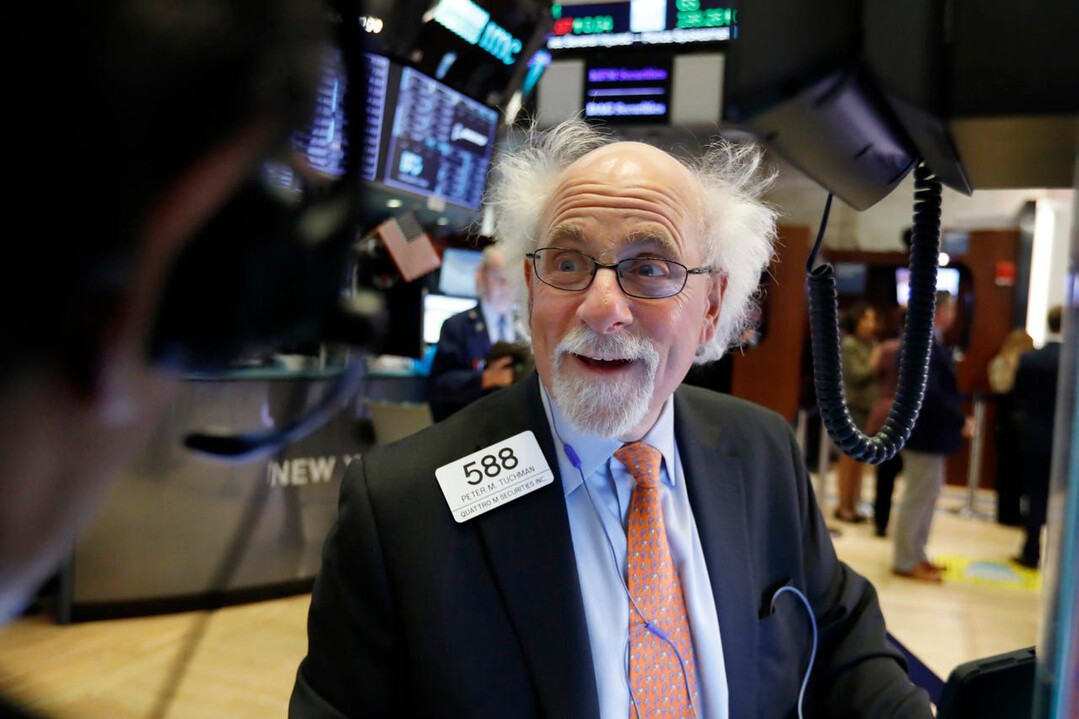
NEW YORK — Amidst the chaotic clatter of the New York Stock Exchange (NYSE) floor, one face remains the undisputed icon of American capitalism. With his trademark wild white hair, thick-rimmed glasses, and a repertoire of expressive facial contortions that have graced every major financial news outlet for decades, Peter Tuchman is more than just a trader—he is the living history of the "Big Board."
Starting his journey in 1985 as a teletype operator, Tuchman has survived the "Black Monday" crash, the haunting silence of post-9/11 trading, the 2008 Lehman Brothers collapse, and the unprecedented volatility of the COVID-19 pandemic. Today, as geopolitical tensions simmer in the Middle East, the man often called the "Einstein of Wall Street" remains remarkably composed.
Beyond the Geopolitical Noise
In an exclusive dialogue regarding the recent escalations between Iran and Israel, Tuchman delivered a diagnosis characterized by his signature brand of realism and optimism. While the world watched the headlines with bated breath, Tuchman asserted that the stock market has already processed the shock.
"The psychological grip of the Iranian conflict on the market has effectively dissolved," Tuchman stated on April 22. "The market hates the 'unknown'—the fog that precedes the first shot. Once the reality of conflict is on the table, it moves from the realm of fear to the realm of analysis."
According to Tuchman, the variable that investors must now track is not the political rhetoric, but its economic byproduct: crude oil prices. He warned that for every $10 increase in the price of oil, there is a potential 1% drag on global GDP. For Tuchman, the "war" is now a math problem centered on energy costs and inflation, rather than a nebulous threat of global instability.
The Discipline of the Floor
Having handled trades exceeding $1 billion in a single day, Tuchman’s longevity is rooted in a strict emotional code. He famously adheres to the mantra: "Never mix emotions with money."
"I’ve seen markets turn into 'worlds of madness' in five minutes because of a single tweet or a sudden headline," he remarked, referencing the hyper-reactive nature of modern trading. "To survive 40 years on this floor, you have to maintain an iron-clad equanimity. I never go to bed angry at the market. When the bell rings at 4:00 PM, the battle is over."
This discipline extends to his disdain for speculative manias. While the digital world is swept up in the fervor of cryptocurrencies, Tuchman remains a staunch defender of tangible value. To him, the NYSE is a "solemn battlefield" where actual dollars exchange hands for the ownership of companies that produce real goods and services. "Forget the crypto noise," he advised. "The weight of a single share of stock, backed by corporate earnings, cannot be replaced by the volatility of a digital ghost."
The Road to S&P 7000
Despite his warnings about oil and speculation, Tuchman is a perennial bull. He is so confident in the upward trajectory of the American economy that he has already commissioned hats embroidered with "S&P 7000." It is a gesture of both arrogance and reverence. Tuchman recalls keeping an "18,000" hat in his desk for over a year, refusing to wear it until the Dow Jones Industrial Average actually hit the mark. "I don’t wear the hat until the number is etched on the scoreboard," he said with a grin. This superstition masks a deep-seated belief in human adaptability and the inherent resilience of the markets.
Looking even further ahead, Tuchman is already eyeing the future of aerospace, mentioning that he has prepared hats for the eventual public listing of SpaceX. His optimism is not a blind hope for luck; it is a calculated trust in the 40-year pattern he has witnessed from the floor—that through every war, every plague, and every crash, the market eventually finds its footing and climbs higher.
As the sun sets over Wall Street, Peter Tuchman remains at his post, waiting for the next record to break. For the "Einstein" of the floor, the secret to wealth isn't just in the numbers—it's in the courage to stay calm when everyone else is running for the exits.
[Copyright (c) Global Economic Times. All Rights Reserved.]