![[등록] 2026-09-01 15:48:31](/support/_updata/banner2/tl181982910_6749.png)


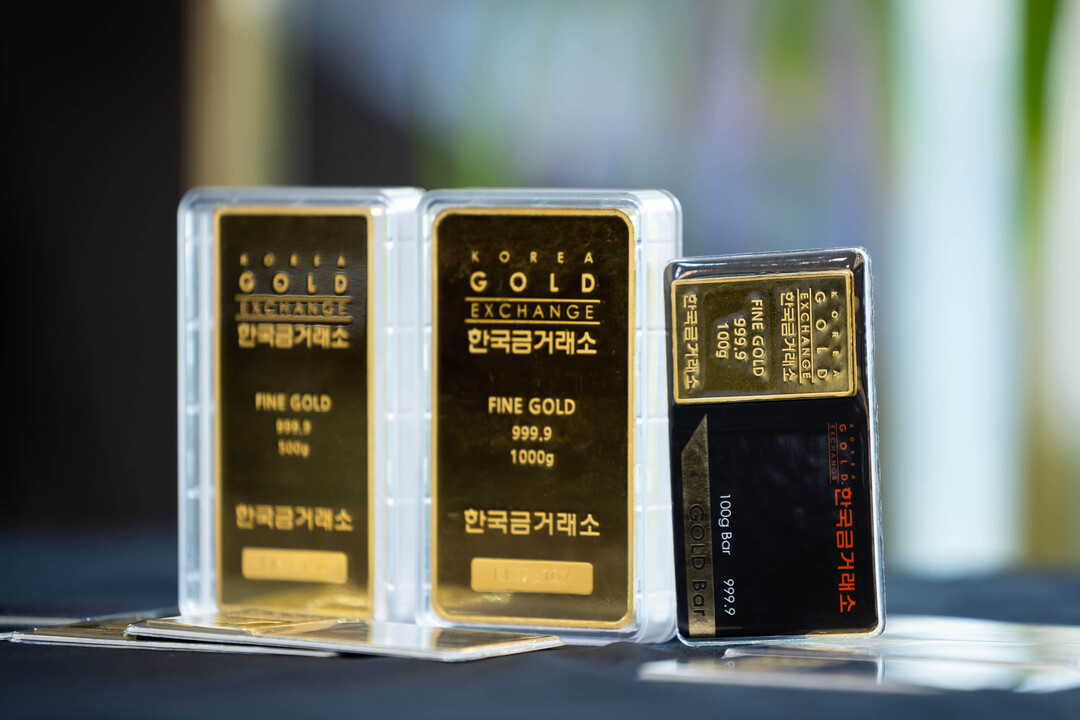
SEOUL — The Bank of Korea (BOK) has officially shifted its long-held conservative reserve management strategy, announcing a return to gold buying for the first time in 13 years. Spurred by escalating geopolitical risks and a global trend among central banks to diversify away from the U.S. dollar, the BOK plans to gradually rebuild its bullion reserves through both domestic and international channels.
According to the central bank on Monday, a collaborative framework has been established with domestic gold producers, the Korea Exchange (KRX), and the Korea Securities Depository (KSD) to facilitate the acquisition of domestically refined gold.
The move marks a significant departure from the central bank’s cautious stance maintained since 2013, when it last purchased 20 tons of physical gold. For over a decade, the BOK refrained from further gold accumulation, citing the asset's lack of yield, storage expenses, and poor liquidity during foreign exchange emergencies. Furthermore, painful memories of a sharp market correction right after the central bank aggressively acquired 90 tons of gold between 2011 and 2013 kept policymakers on the sidelines.
Historical performance also justified that reluctance: from March 2013 to March 2024, the MSCI World Index yielded 281% (including dividends), comfortably outperforming gold’s 196% return over the same period.
However, shifting global dynamics have reshaped the central bank's cost-benefit calculations. Rising geopolitical fragmentation, sustained central bank demand worldwide, Korea’s low proportion of gold relative to its total reserves, and recent price pullbacks have created a compelling entry point.
The strategic turn took concrete shape under the leadership of BOK Governor Rhee Chang-yong. "While the decision was finalized after Governor Rhee took office, gold policy has been under continuous review and long-term analysis," explained Jung Hee-sun, Director General of the BOK’s Reserve Management Group.
As an initial step toward building exposure, the BOK quietly acquired a small allocation of overseas-listed gold spot ETFs during the second quarter of this year. While ETF holdings are legally classified as securities rather than physical gold in official reserve statistics, the BOK views the move as its functional return to the gold market after 13 years.
Officially, South Korea's physical gold reserves remain unchanged at 104.4 tons, valued at $4.79 billion as of late June—accounting for a modest 1.1% of its total foreign exchange reserves.
Domestic Sourcing and Minimal Market Impact
To expand physical holdings going forward, the BOK will leverage the trading, settlement, and custody infrastructure of the KRX gold market. The central bank plans to buy gold intended for export from major domestic refiners at prevailing international market prices, settling transactions in Korean Won (KRW).
South Korea's gold refining landscape is dominated by two primary industrial players: LS MnM and Korea Zinc, which extract gold as a byproduct of copper and zinc smelting. Together, they produce roughly 40 to 45 tons of gold annually, with approximately 4 to 5 tons designated for overseas export after satisfying domestic demand.
The BOK’s strategy specifically targets this export-bound volume to prevent supply disruptions or price distortions in the local commercial market. Transactions will be executed via off-hours block trades at pre-agreed prices and volumes, ensuring minimal impact on exchange order books.
Sourcing gold domestically in local currency offers key macroeconomic advantages:
Preserving Foreign Reserves: Buying bullion in Korean Won allows the BOK to expand reserve assets without expending foreign currency.
Exchange Rate Neutrality: Because transactions do not require purchasing foreign currencies on foreign exchange markets, pressure on the KRW/USD exchange rate remains negligible.
Geographical Diversification: Custody will be handled domestically, helping decentralize Korea's physical holdings, which are currently concentrated at the Bank of England (BoE) in London.
Central bank officials emphasized that domestic procurement is just one part of a multi-pronged approach. "Establishing a domestic channel does not mean we are closing off international avenues," noted Director General Jung. "We will select the most advantageous execution method at any given time. If domestic volumes fall short, we will utilize overseas channels."
The exact timing and volume of the first physical purchase remain flexible as the KSD completes the necessary vaulting and operational infrastructure. Rather than setting rigid annual targets or fixed allocations, the BOK plans a measured, long-term accumulation strategy tailored to market conditions.
"This program will proceed at a very gradual pace," said Cho Seok-hwan, head of the BOK's reserve management planning division. "Rather than mechanical buying, our focus is on steadily raising our gold reserve ratio over the medium to long term."
[Copyright (c) Global Economic Times. All Rights Reserved.]