![[등록] 2026-09-01 15:48:31](/support/_updata/banner2/tl181982910_6749.png)


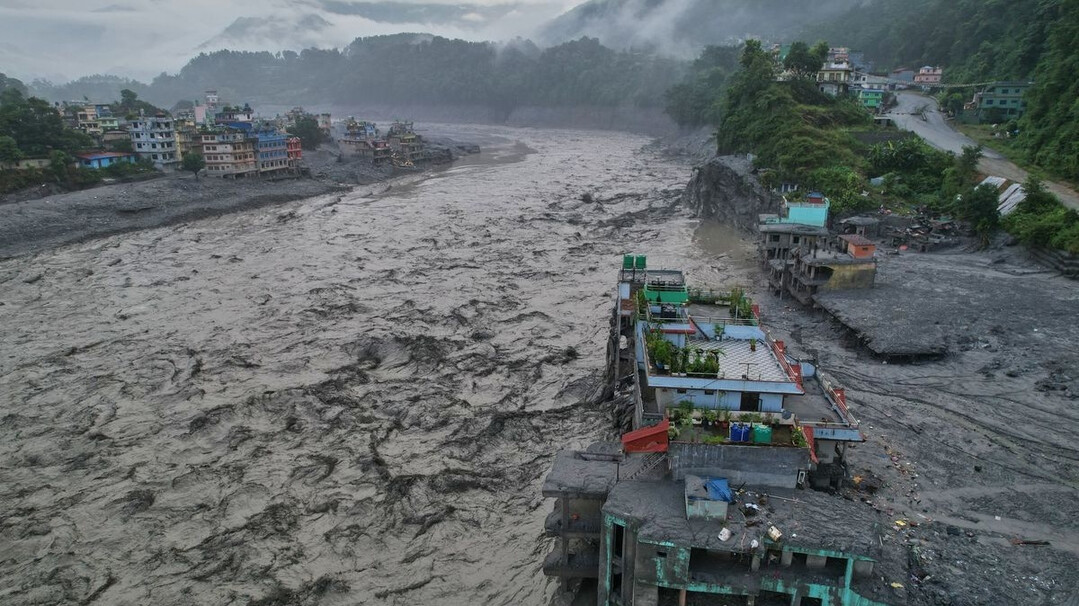
Nepal, which suffered through landslides last time, is now paying a heavy price with floods. It is truly heartbreaking. Seeing the bridge on the screen reminds me of the "Mugling region" I saw when I visited Nepal. Mugling is located in central Nepal, where the Trishuli River and the Marsyangdi River meet.
The Mugling Bridge connects Nepal's capital, Kathmandu, and Pokhara, the country's second-largest city and a world-renowned tourist destination. While passing over the Mugling Bridge in a minibus, I once wondered, "Why is the bridge named Mugling?" There is a theory that it comes from "Mugulan," a Nepali word meaning a rural or unfamiliar area, but that is not certain either. Whenever I visit a specific region in any country, I tend to look into how such place names came to be and what their historical backgrounds are.
Even during the Mughal Empire era, many Aryans must have migrated to Nepal, which shares borders with India to the east, west, and south. Back then, at this transportation hub—where today's Mugling Bridge stands—their destinies likely changed. Some must have chosen the road to Kathmandu, while others likely chose the path to Pokhara.
I even thought that people who came from the Mughal Empire might have created that place name as a commemoration. Back then, with no means of transportation, I heard that people walked, eating and sleeping on the road, taking at least a week to travel back and forth between Kathmandu and Pokhara. People still walked until the 1970s. Nowadays, domestic flights also operate. Nepal is a unique and special country unlike any other in the world, and I sincerely hope no more natural disasters occur.
[Copyright (c) Global Economic Times. All Rights Reserved.]