• 2026.06.06 (Sat)
  • All articles
  • LOGIN
  • JOIN
Global Economic Times
fashionrunwayshow2026
  • Synthesis
  • World
  • Business
  • Industry
  • ICT
  • Distribution Economy
  • Well+Being
  • Travel
  • Eco-News
  • Education
  • Korean Wave News
  • Opinion
  • Arts&Culture
  • Sports
  • People & Life
    • International Student Report
    • With Ambassador
  • Column
    • Cho Kijo Column
    • Cherry Garden Story
    • Ko Yong-chul Column
    • Kim Seul-Ong Column
    • Lee Yeon-sil Column
  • Photo News
  • New Book Guide
MENU
 
Home > Synthesis

South Korea Imposes Tougher Penalties for Animal Cruelty

Global Economic Times Reporter / Updated : 2024-11-05 04:10:31
  • -
  • +
  • Print


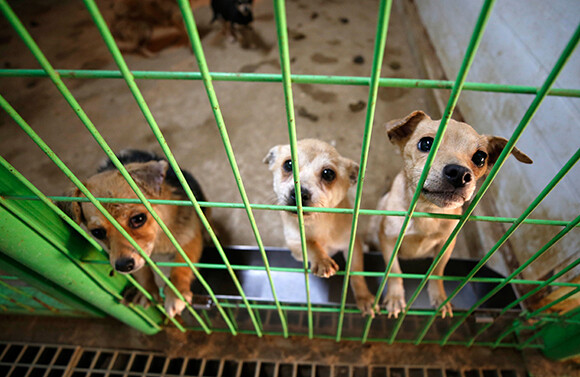
The Supreme Court of Korea has established new sentencing guidelines that could result in up to three years of imprisonment for individuals who repeatedly commit acts of cruelty against multiple animals. This move comes in response to growing public concern over lenient punishments for animal cruelty offenses.

The Supreme Court's sentencing commission announced on [date] that it had adopted new sentencing guidelines for violations of the Animal Protection Act. Sentencing guidelines provide judges with a reference point when determining appropriate sentences, helping to ensure consistency in sentencing and reduce disparities.

In June, the commission had established a framework for sentencing guidelines for animal cruelty offenses, dividing them into two categories: acts that result in the death of an animal and acts that cause pain or injury. The latest guidelines provide more specific details on how to determine sentences within these categories.

For acts that result in the death of an animal, the guidelines recommend a basic sentence of between four months and one year in prison, or a fine ranging from 3 million to 12 million won. For acts that cause pain or injury, the recommended basic sentence is between two and ten months in prison, or a fine between 1 million and 10 million won.

Aggravating factors, such as harming multiple animals or committing repeated offenses, will result in harsher penalties. Mitigating factors, such as a remorseful offender or restitution, may lead to reduced sentences.

Under the new guidelines, the maximum sentence for causing the death of an animal has been increased to three years in prison or a fine of 30 million won. For causing pain or injury, the maximum sentence is now two years in prison or a fine of 20 million won.

The guidelines are expected to have a significant impact on cases of animal cruelty. For example, a man in his 20s who was convicted of killing 11 animals that he had adopted could face up to three years in prison under the new guidelines.

[Copyright (c) Global Economic Times. All Rights Reserved.]

Global Economic Times Reporter
Reporter Page

Popular articles

  • Hyundai Motor Group Bets $700 Million on Mexico Amid Trade Policy Volatility

  • IRANIAN STATE MEDIA DEMONSTRATES ASSAULT RIFLES ON-AIR, TARGETING UAE FLAG AMID RISING REGIONAL PRESSURES

  • Tesla Model Y Becomes First to Pass Grueling New U.S. Autonomous Safety Tests

I like it
Share
  • Facebook
  • X
  • Kakaotalk
  • LINE
  • BAND
  • NAVER
  • https://globaleconomictimes.kr/article/1065553760237493 Copy URL copied.
Comments >

Comments 0

Weekly Hot Issue

  • L&F Plus Secures KRW 220 Billion from National Growth Fund to Anchor South Korea’s First Mass LFP Cathode Production
  • Nvidia CEO Jensen Huang to Arrive in South Korea for "Sam-So" Meeting with Tech Tycoons
  • Samsung Electronics Super-Enterprise Union Loses Majority Status Amid Backlash Over Bonus Disparities
  • Samsung to Embed Vital Signs and Heart Health Scores in Upcoming Galaxy Watch9 Lineup
  • Apple Honors Digital Excellence: 12 Exceptional Apps and Games Celebrated at the 2026 Design Awards
  • Nexon Revamps Signature Youth Coding Competition into AI-Driven 'Nexon Young Programmers Cup'

Most Viewed

1
From a moment of collective sacrifice to a moment of collective democracy: The Timing of the Election in Ethiopia and Korea
2
U.S. Holds Off on Immediate Comprehensive Semiconductor Tariffs, but Pressure Mounts for Samsung and SK Hynix to Accelerate Domestic Investments
3
[Interview] "Halal is Not a Religious Regulation, but a 'Trust Infrastructure'… Creating a Premium 'K-Halal' Centered on Data and Platforms"
4
‘600 Million Won Bonus’ at Samsung Electronics Triggers Deep Sense of Relative Deprivation Among Korean Workers
5
Musk’s SpaceX Secures Space Hegemony with Flawless Starship V3 Recovery Ahead of Historic IPO
광고문의
임시1
임시3
임시2

Hot Issue

Murata Unveils Next-Gen Resin Electrode MLCC for Automotive Applications

Samsung to Embed Vital Signs and Heart Health Scores in Upcoming Galaxy Watch9 Lineup

L&F Plus Secures KRW 220 Billion from National Growth Fund to Anchor South Korea’s First Mass LFP Cathode Production

Samsung Electronics Super-Enterprise Union Loses Majority Status Amid Backlash Over Bonus Disparities

Fashion Runway Show 2026

Global Economic Times
korocamia@naver.com
CEO : LEE YEON-SIL
Publisher : KO YONG-CHUL
Registration number : Seoul, A55681
Registration Date : 2024-10-24
Youth Protection Manager: KO YONG-CHUL
Singapore Headquarters
5A Woodlands Road #11-34 The Tennery. S'677728
Korean Branch
Phone : +82(0)10 4724 5264
#304, 6 Nonhyeon-ro 111-gil, Gangnam-gu, Seoul
Copyright © Global Economic Times All Rights Reserved
  • 에이펙2025
  • APEC2025가이드북TV
  • 반달곰 프로젝트
Search
Category
  • All articles
  • Synthesis
  • World
  • Business
  • Industry
  • ICT
  • Distribution Economy
  • Well+Being
  • Travel
  • Eco-News
  • Education
  • Korean Wave News
  • Opinion
  • Arts&Culture
  • Sports
  • People & Life 
    • 전체
    • International Student Report
    • With Ambassador
  • Column 
    • 전체
    • Cho Kijo Column
    • Cherry Garden Story
    • Ko Yong-chul Column
    • Kim Seul-Ong Column
    • Lee Yeon-sil Column
  • Photo News
  • New Book Guide
  • Multicultural News
  • Jobs & Workers