![[등록] 2026-09-01 15:48:31](/support/_updata/banner2/tl181982910_6749.png)


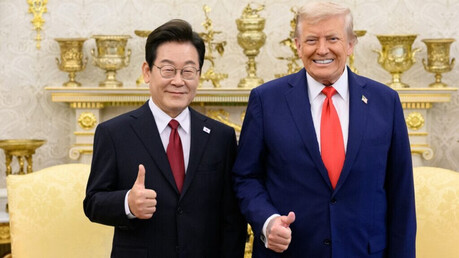
It has been exactly five weeks since the United States and Israel launched airstrikes against Iran on February 28. Despite the volatility in the global energy market—driven by Iran’s potential control over the straits and discussions regarding transit fees—the United Nations Security Council (UNSC) remains unable to reach any decisions. The UNSC operates on a principle of unanimity among its permanent members (the U.S., UK, France, China, and Russia), where a veto by any one of them halts action. A significant issue is that parties involved in a conflict are not recused from the voting process.
On February 24, 2022, Russia launched a full-scale invasion of Ukraine, and the war has now dragged on for 1,502 days. Much of Ukraine’s infrastructure has been destroyed, leaving citizens to endure days of cold, hunger, and darkness. Because Russia, the aggressor, sits on the Security Council and opposes resolutions, it cannot be sanctioned by the UN; instead, the U.S. has applied pressure through economic sanctions. However, with the recent Iran crisis leading to a loosening of gas sales, Russia has found a new lease on life. North Korea is also profiting from this war, earning money and importing technology at the cost of bloodshed. Consequently, voices of criticism are rising, claiming the UN is utterly powerless and cannot continue in this state.
In his "Theory of Social Change Cycles," Ibn Khaldun argued that just as it is difficult for wealth to last three generations, societies and nations that were built with great effort eventually self-destruct through luxury and waste. He called the initial, powerful sense of collective solidarity and cohesion "Asabiyyah," noting that it is difficult to maintain when it is handed down without effort. George Friedman and many other futurists have pointed out that China is in a precarious position due to its lack of Asabiyyah.
Observing current world events, there are growing concerns over a clash between the U.S. and China. China’s persistent efforts to replace or destroy the U.S. dollar as the key currency are relentless. The "Chinese Dream"—the ambition to establish the Middle Kingdom as the center of the world through the "Belt and Road Initiative"—is vast. However, China is a one-party dictatorship. Private property is restricted, and freedoms of the press and human rights are limited. Its citizens live under constant surveillance. It is a time bomb waiting for discontent to explode. Even solid ice can be cracked by the prick of a thin needle. China has already been impacted by the situations in Venezuela and Iran, making oil imports and the Belt and Road Initiative increasingly difficult. The development of advanced semiconductors and a potential invasion of Taiwan are being delayed or becoming impossible. Experts suggest that even the "Nine-Dash Line" in the South China Sea will not go as China intends.
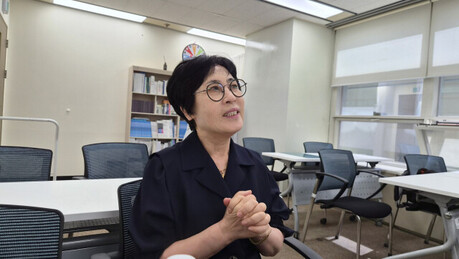
Korean futurist Dr. Heo Shin-haeng predicts that the new revolution following the Industrial Revolution is not the "Fourth Industrial Revolution," but rather the "One-body Revolution." He suggests that through innovative developments in ICT, the world will become a "One-body Society." A One-body Society is characterized by an open world, a transparent society, and electronic government. It envisions a single global market where the era of infinite competition and "winner-takes-all" transitions into an era of sharing. In this society, politics would move toward direct democracy, and the separation of powers would expand from three branches to six. The economy would enter an era of "one-person manufacturing," management would shift from vertical to horizontal, and labor-management relations would move from collective to individual agreements. Education would be creatively customized, and the global village would become a "one-day life zone." Dr. Heo believes this One-body Society began around 2010.
Furthermore, he argues that South Korea—a nation at the center of such technology—should lead the effort to transform the incompetent UN into a "Global Government." This government would maintain true world peace by possessing a powerful military and police force to prevent conflicts. He believes South Korea is fully capable of achieving this. By transforming the UN into a strong Global Government, the world could end wars, reduce nuclear weapons, overcome the climate crisis, solve problems of hunger, disease, poverty, and refugees, eliminate drugs and organized crime, and prevent dictatorships, ensuring freedom and democracy for all people.
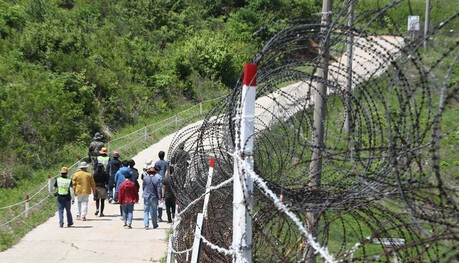
When the public debate on converting the UN into a Global Government begins, Dr. Heo proposes a logic for reunification: both North and South Korea should disarm and refrain from political retaliation. By introducing private land ownership and a free-market system to the North, reunification would occur naturally. He suggests that it is fitting for the headquarters of the Global Government to be located at Mount Kumgang. Upon reunification, the population would reach 85 million—surpassing Germany—and its economic and military power would rank among the top five in the world, leading to even further development.
Korea is seen as the ideal location because it is a place where various religions coexist, it is a country neither too large nor too small, its people have complexions neither too white nor too dark, and it experiences the rotation of four distinct seasons. It is a beautiful land of mountains, seas, and plains that harmonizes the philosophies and thoughts of both East and West. Moreover, with its high level of science, technology, and culture, it is a nation admired by many—a land of Hongik Ingan (devotion to the welfare of humanity). It may seem like a dream, but dreams must be dreamt for them to come true.
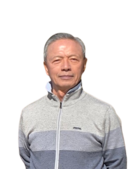
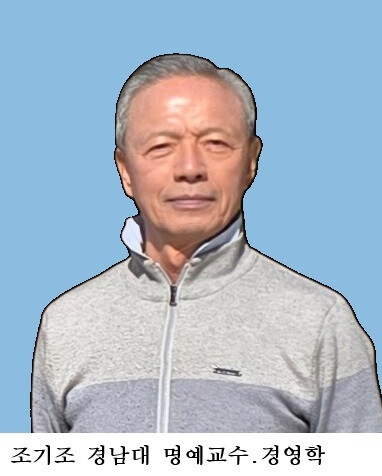
Cho Ki-jo, Professor Emeritus at Kyungnam University (Business Administration)
[Copyright (c) Global Economic Times. All Rights Reserved.]