![[등록] 2026-09-01 15:48:31](/support/_updata/banner2/tl181982910_6749.png)


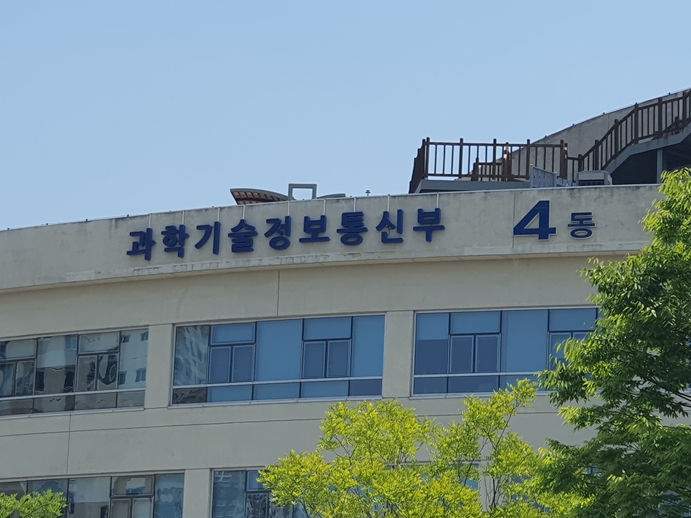 |
| ▲ Ministry of Science and ICT |
The Ministry of Science and ICT announced that it held the 37th New Technology and Service Deliberation Committee on October 17 and designated a total of 15 regulatory special cases.
First, the Deliberation Committee designated a special special case for the 'real-time call-based fraud call detection service (KT + National Forensic Service (hereinafter referred to as National Forensic Service))' to prevent fraud calls (voice phishing), which are becoming more sophisticated and sophisticated day by day. . By combining artificial intelligence technology with actual fraud phone call data, detection accuracy can be increased compared to when analyzing based on letters (documents).
To this end, the Ministry of Science and ICT and the Personal Information Protection Committee, together with KT and the National Forensic Service, have prepared strengthened safety measures to minimize infringement on the rights of information subjects, and plan to periodically inspect the safety and effectiveness of this service in the future. This special case is expected to be an opportunity to find a way to solve social problems through new technology while protecting personal information, and is expected to safely protect the daily lives of the general public from crimes to which anyone can be exposed.
Subsequently, two new services were designated as empirical special cases to check the medical records of patients in hospitals through mobile devices using linked information (CI) instead of resident registration numbers. By using linked information, individuals can be accurately identified even without using their resident registration number, making safe data transmission possible. Through this empirical special case, patients can quickly and conveniently receive medical records through mobile devices without having to visit the hospital where they received treatment again.
The ‘Unmanned Mail and Logistics Reception Unmanned Terminal Service’, which measures the weight and volume of mail through an unmanned terminal and processes it at the post office, also passed the review committee. This service is expected to allow users to easily mail mail while saving travel time and costs even in areas with low post office accessibility.
In addition, the same or similar tasks, such as shared lodging using empty houses in rural areas, rental of urban personal lockers (self-storage), and services that apply electronic methods to residential maintenance projects, were also designated as empirical special cases.
Meanwhile, these same or similar tasks are expected to be designated as empirical special cases more quickly when the “Partial Amendment to the Special Act on Promotion and Convergence of Information and Communications Act” recently passed by the National Assembly is implemented. The response period for review results from related organizations will be shortened from 30 days to 15 days, and an expert committee will be established in the deliberation committee to make decisions. In addition, the revised law includes exemptions for proactive administration and the basis for awarding awards and rewards, which is expected to enable those involved in regulatory deferral work, such as the deliberation committee and related ministries, to promote active administration.
Minister of Science and ICT Yoo Sang-im, who presided over the Information and Communication Technology Regulatory Sandbox Deliberation Committee for the first time since taking office, said, “We protect the core values of public safety and regulation, but encourage active participation and challenges from the private sector by improving overly rigid and outdated regulations.” He said, “We ask for your interest so that the regulatory deferral system can serve as an important testing ground to improve and develop the future regulatory environment.”
[Copyright (c) Global Economic Times. All Rights Reserved.]