![[등록] 2026-09-01 15:48:31](/support/_updata/banner2/tl181982910_6749.png)


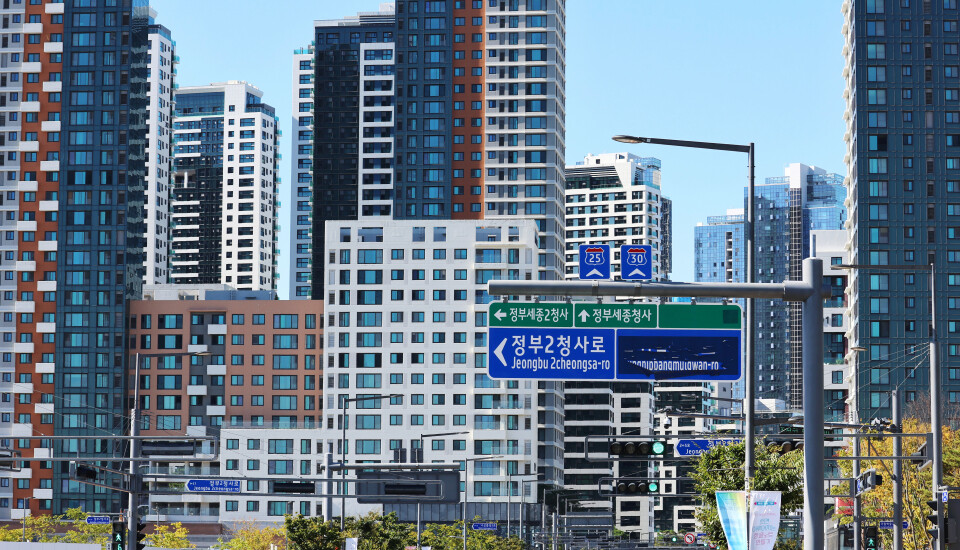
Sejong City's real estate market is experiencing a notable surge, particularly in its apartment sector, as discussions surrounding the potential relocation of the Presidential Office from Seoul to Sejong gain momentum ahead of the anticipated early presidential election in June. According to KB Kookmin Bank's real estate statistics, apartment prices in Sejong have reversed their downward trend for the first time in 70 weeks. Notably, a rebound in housing prices is being observed, especially in smaller unit sizes.
The latest data from KB Real Estate's "Weekly Apartment Market Trends," released on the 18th, indicates that Sejong's apartment prices rose by 0.03% in the week ending April 14th. This marks the first increase in Sejong's apartment values after a prolonged period of decline, stretching back 70 weeks to November 20, 2023.
This upward shift in Sejong's apartment market contrasts sharply with the overall national trend. During the same period, the average apartment price nationwide remained stagnant at 0.0% for the third consecutive week. Furthermore, when compared to the five major metropolitan cities (excluding Incheon), which collectively recorded a -0.06% decrease, Sejong City's apartment market demonstrates a distinct and robust upward trajectory.
The recent buoyancy in Sejong's apartment market is largely attributed to the significant influence of political discourse. With the upcoming presidential election looming, key contenders from the opposition Democratic Party have consistently pledged to relocate the Presidential Office to Sejong if elected. This promise has injected considerable optimism into the local real estate market.
According to political sources, Lee Jae-myung, the Democratic Party's leading presidential candidate, reiterated his commitment on social media, stating his intention to transform the Chungcheong region, the heart of balanced national development, into an administrative and science capital. He specifically vowed to facilitate the construction of the National Assembly's Sejong branch and the Presidential Office in Sejong within his term. Similarly, other prominent Democratic Party candidates, including Kim Kyoung-soo and Kim Dong-yeon, have also announced platforms centered on completing the administrative capital in Sejong, including the relocation of key government functions.
Interestingly, the idea of relocating the Presidential Office to Sejong has also found support within the ruling People Power Party. Han Dong-hoon, the former leader of the party, had previously unveiled plans for the relocation of both the National Assembly and the Presidential Office to Sejong. This cross-party discussion has further fueled speculation and anticipation within the Sejong real estate market.
As the discourse surrounding the Presidential Office relocation intensifies, actual real estate transactions in Sejong City are on the rise. Data from the Ministry of Land, Infrastructure and Transport's real transaction price disclosure system reveals notable increases in apartment sales. For instance, a 59 square meter unit in the "Garak Village 6 Complex (Jungheung S-Class Pradium)" in Goun-dong was sold for 380 million won on April 15th. This represents a significant increase of 31 million won in just over a month, compared to a similar transaction at 349 million won on March 8th.
Similarly, a 59 square meter apartment in the "Gaon Village 8 Complex (The H East)" in Dajeong-dong was sold for 455 million won on April 14th. This price reflects a 40 million won increase compared to a transaction of 415 million won in January of this year. These recent transactions underscore the growing demand and rising prices in Sejong's apartment market.
However, some analysts caution that relying solely on the anticipation of the Presidential Office relocation for sustained price growth may be overly optimistic. Kim In-man, director of the Kim In-man Real Estate Economy Research Institute, pointed out that Sejong City still faces challenges related to the supply of new apartments and unsold inventory in neighboring Daejeon and South Chungcheong Province. He also noted that the overall apartment market is currently in a 조정 (adjustment) phase, making it unlikely that Sejong will experience the kind of explosive price surge seen in 2020 and 2021.
Further Considerations and Potential Impacts
Beyond the immediate price fluctuations, the potential relocation of the Presidential Office to Sejong carries significant implications for the city's long-term development and its role within South Korea's administrative landscape.
Economic Growth and Infrastructure Development: The influx of government personnel and related industries could stimulate significant economic growth in Sejong. This would likely necessitate further investment in infrastructure, including transportation networks, public services, and commercial facilities, potentially leading to a more vibrant and self-sufficient urban environment.
Balanced National Development: The relocation initiative is rooted in the broader goal of achieving balanced national development by decentralizing administrative functions away from the Seoul metropolitan area. This could help alleviate population density and economic concentration in Seoul, fostering growth and opportunity in other regions.
Social and Cultural Shifts: The arrival of a significant number of new residents, including government officials and their families, could lead to social and cultural shifts within Sejong. Integrating these new populations and fostering a cohesive community will be crucial for the city's long-term success.
Challenges and Opposition: While the relocation has gained traction, it is not without its challenges and potential opposition. Logistical complexities, the cost of relocation, and potential resistance from those who prefer the concentration of government functions in Seoul could pose hurdles to the full implementation of the plan. Public opinion and the political landscape following the June election will also play a crucial role in determining the fate of this initiative.
International Precedents: Examining international precedents of capital city relocation, such as the move from Rio de Janeiro to Brasilia in Brazil or the ongoing development of Nusantara in Indonesia, could provide valuable insights into the potential benefits and challenges associated with such large-scale projects. These examples highlight the long-term planning, investment, and political will required for successful capital city transitions.
Conclusion:
The Sejong City apartment market is currently experiencing a surge driven by the escalating discussions surrounding the potential relocation of the Presidential Office. While this anticipation has led to a notable increase in housing prices and transaction volumes, the long-term sustainability of this growth will depend on various factors, including the outcome of the upcoming presidential election, broader economic conditions, and the effective management of new housing supply in the region. The potential relocation represents a significant opportunity for Sejong's development, but it also presents considerable challenges that will need to be carefully navigated to ensure its successful implementation and long-term benefits for the nation. The coming months will be critical in shaping the future of Sejong and its role as a potential administrative heart of South Korea.
[Copyright (c) Global Economic Times. All Rights Reserved.]