![[등록] 2026-09-01 15:48:31](/support/_updata/banner2/tl181982910_6749.png)



In the face of an increasingly volatile international order, a new report from the NEAR Foundation has proposed a comprehensive "Four-Pillar Strategy" for South Korea. As the traditional security umbrella provided by the U.S. alliance undergoes fundamental changes, experts argue that Seoul must move beyond passive reliance and actively secure its strategic autonomy.
A Shifting Paradigm: Beyond Automatic Protection
The report, titled "Order in Chaos, Axis of Leap: South Korea’s National Strategy," synthesizes insights from a roundtable of 21 leading experts in foreign affairs, security, and economics. It identifies a harsh new reality: the era when the U.S. alliance automatically guaranteed protection is over. With the U.S. increasingly acting as a "transactional superpower" focused on its own national interests, Korea faces the dual challenge of contributing more to the alliance while simultaneously carving out space for its own survival.
"The conversion of the international order does not offer a single answer to Korea," the report states. "Strengthening the U.S. alliance alone cannot eliminate economic risks from China, nor can improving relations with China solve North Korean nuclear issues or supply chain crises."
The Four Pillars of National Strategy
To navigate this "order in chaos," the foundation proposes a four-pronged national strategy:
Alliance (U.S. Relations): While maintaining the U.S.-ROK alliance as the cornerstone of national security, the report emphasizes that Seoul must leverage its growing contributions to the alliance to negotiate key assets. Specifically, it calls for securing cooperation on nuclear-powered submarines, advanced nuclear technology, the transition of Wartime Operational Control (OPCON), and expanded access to critical intelligence and high-end technology.
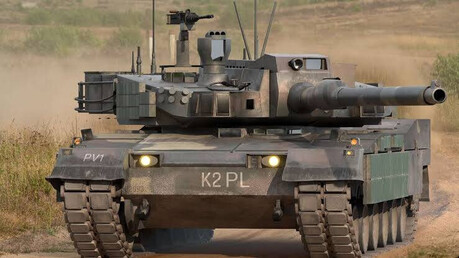
Self-Reliance (Autonomous Capability): The strategy demands a significant upgrade in defense capabilities to ensure resilience without external support during crises. This includes reinforcing Intelligence, Surveillance, and Reconnaissance (ISR), C4I (Command, Control, Communications, Computers, and Intelligence), precision strike capabilities, and an robust logistical base for munitions and maintenance. Crucially, this pillar also integrates economic and technical self-sufficiency, such as energy stockpiling and secure supply chains for critical minerals.
Solidarity (Middle-Power Cooperation): Given the limitations of individual strength, the report urges Seoul to build issue-specific cooperative networks with middle powers such as Japan, Canada, Australia, New Zealand, and European nations. This "solidarity" would focus on diversifying supply chains, maritime security, cyber governance, and artificial intelligence norms to mitigate the risk of over-reliance on any single nation.
Inclusivity (Strategic Engagement): Korea must maintain a pragmatic, inclusive approach toward nations with different values or systems, including a long-term management strategy for relations with China and Russia. It also advocates for expanding trade and energy cooperation with the "Global South" to avoid entrapment in rigid, bipolar bloc politics.
Integration: The Need for a Unified Command
The report concludes that these tasks cannot be managed in departmental silos, as individual policies would inevitably conflict. It strongly recommends that the Presidential National Security Office take the lead in integrating and coordinating North Korean affairs, U.S.-China relations, and economic diplomacy into a single, cohesive national grand strategy.
As South Korea stands at this historic juncture, the NEAR Foundation’s report serves as a roadmap for transforming from a passive participant in the international order to a proactive player capable of securing its future in an era of uncertainty. By balancing its foundational alliance with self-reliant strength, diverse solidarity, and inclusive engagement, Korea aims to turn current global chaos into an opportunity for a "leap forward."
[Copyright (c) Global Economic Times. All Rights Reserved.]