• 2026.06.09 (Tue)
  • All articles
  • LOGIN
  • JOIN
Global Economic Times
fashionrunwayshow2026
  • Synthesis
  • World
  • Business
  • Industry
  • ICT
  • Distribution Economy
  • Well+Being
  • Travel
  • Eco-News
  • Education
  • Korean Wave News
  • Opinion
  • Arts&Culture
  • Sports
  • People & Life
    • International Student Report
    • With Ambassador
  • Column
    • Cho Kijo Column
    • Cherry Garden Story
    • Ko Yong-chul Column
    • Kim Seul-Ong Column
    • Lee Yeon-sil Column
  • Photo News
  • New Book Guide
MENU
 
Home > World

Middle East Conflict Hits Pharma Supply Chains: Oral and Low-Cost Meds Under Fire

Ana Fernanda Reporter / Updated : 2026-04-23 22:02:17
  • -
  • +
  • Print


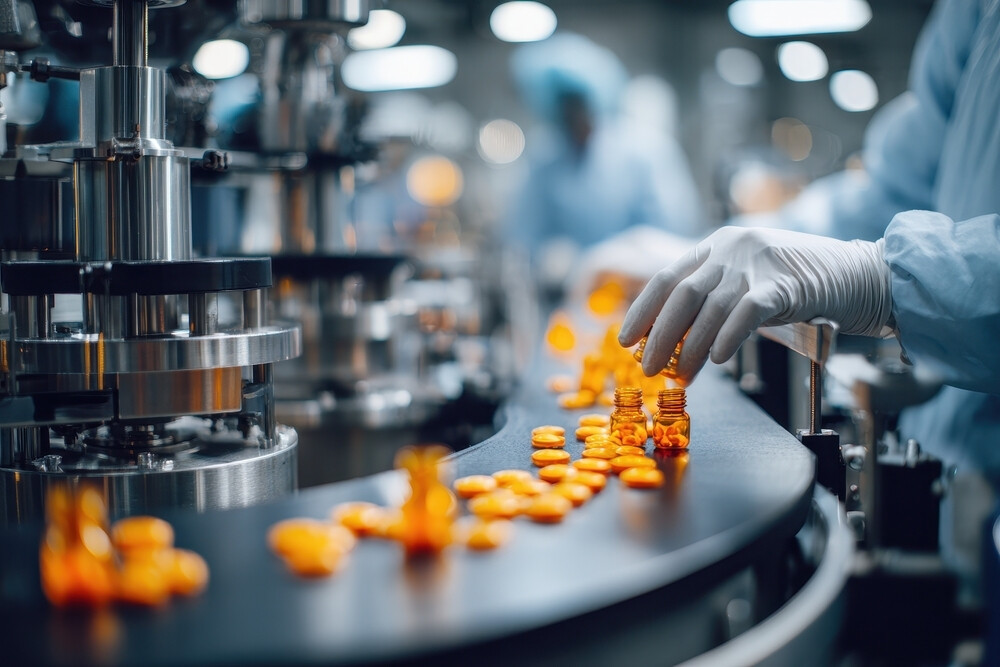
The war between the U.S. and Iran has triggered a surge in petrochemical prices, leading to a massive increase in pharmaceutical manufacturing costs. Since government regulations make it difficult to raise the price of essential drugs, the industry is struggling to absorb the rising costs of oral medications and low-cost pharmaceuticals, sparking fears of a profitability crisis and potential supply shortages.

1. The Surge in Packaging Costs

Domestic pharmaceutical companies have been notified of 30-50% price hikes by packaging suppliers. These increases affect essential items like blister packs, syrup bottles, and vial caps. Due to the limited number of suppliers in the market, pharmaceutical companies have little leverage in price negotiations.

2. Raw Material Volatility T

he price of Low-Density Polyethylene (LDPE), a staple in medical packaging, has nearly doubled in two months—rising from 2 million KRW to 3.9 million KRW per ton. Both large and mid-sized firms are feeling the squeeze as production overhead continues to climb.

3. Supply Shortage Concerns

To mitigate losses, some companies are planning to prioritize the production of high-margin drugs over low-cost essentials. This shift in production strategy raises concerns about the stable supply of basic medicines, which could eventually impact public health.

4. Long-term Outlook

Experts warn that the crisis will not be resolved quickly. Due to the time lag between raw material price changes and finished packaging costs, it is expected to take at least six months for the market to stabilize even after the geopolitical situation improves.

[Copyright (c) Global Economic Times. All Rights Reserved.]

  • #Hormuz Impasse
  • #globaleconomictimes
  • #micorea
  • #mykorea
  • #nammidonganews
  • #singaporenewsk
  • #Samsung
  • #Daewoo
  • #Hyos
Ana Fernanda Reporter

Popular articles

  • U.S. to Fast-Track Acquisition of 10,000 Low-Cost Cruise Missiles to Replenish War-Depleted Stocks

  • Wall Street Retreats as Sticky Inflation and Middle East Tensions Blunt AI Momentum; Samsung Labor Dispute Rattles Seoul

  • Putin Expected in Beijing Following Trump’s Departure: Sino-Russian Summit Imminent This Month

I like it
Share
  • Facebook
  • X
  • Kakaotalk
  • LINE
  • BAND
  • NAVER
  • https://globaleconomictimes.kr/article/1065618062910980 Copy URL copied.
Comments >

Comments 0

Weekly Hot Issue

  • From Streaming to Playing: Nexon and Naver Unveil Revolutionary Cross-Platform Integration for 'FC Online' on Chzzk 
  • Daewoong Pharmaceutical’s ‘Envlo’ Demonstrates Consistent Blood Glucose-Lowering Efficacy Across Multinational Patients
  • Hyundai AutoEver and KOFAC Launch 'Youth Robotics Challenge' to Nurture Future Digital Talent
  • Neowiz Appoints 'Lies of P' Mastermind Sung-joon Park as New Co-CEO 
  • MyRealTrip CTO Selected as Key Speaker for Anthropic’s Global Developer Conference in Tokyo
  • SKT and Nvidia Join Forces to Build Gigawatt-Scale 'AI Factories' Across Asia, Starting in Korea by 2027

Most Viewed

1
From a moment of collective sacrifice to a moment of collective democracy: The Timing of the Election in Ethiopia and Korea
2
Opening a 'New Horizon' for Korea-Pakistan Economic Cooperation… Exchange Event Successfully Held in Changwon
3
[Interview] "Halal is Not a Religious Regulation, but a 'Trust Infrastructure'… Creating a Premium 'K-Halal' Centered on Data and Platforms"
4
Business Sentiment Hits 43-Month High as Supply Chains Ease and Exports Surge
5
'30 Times the Minimum Wage': Samsung Semiconductor Compensation Sparks Nationwide Debate Over Wealth Gap and 'Relative Deprivation'
광고문의
임시1
임시3
임시2

Hot Issue

SKT and Nvidia Join Forces to Build Gigawatt-Scale 'AI Factories' Across Asia, Starting in Korea by 2027

Daewoong Pharmaceutical’s ‘Envlo’ Demonstrates Consistent Blood Glucose-Lowering Efficacy Across Multinational Patients

LG and NVIDIA Forge Strategic 'Physical AI' Alliance to Transform Manufacturing, Robotics, and Data Centers 

MyRealTrip CTO Selected as Key Speaker for Anthropic’s Global Developer Conference in Tokyo

Fashion Runway Show 2026

Global Economic Times
korocamia@naver.com
CEO : LEE YEON-SIL
Publisher : KO YONG-CHUL
Registration number : Seoul, A55681
Registration Date : 2024-10-24
Youth Protection Manager: KO YONG-CHUL
Singapore Headquarters
5A Woodlands Road #11-34 The Tennery. S'677728
Korean Branch
Phone : +82(0)10 4724 5264
#304, 6 Nonhyeon-ro 111-gil, Gangnam-gu, Seoul
Copyright © Global Economic Times All Rights Reserved
  • 에이펙2025
  • APEC2025가이드북TV
  • 반달곰 프로젝트
Search
Category
  • All articles
  • Synthesis
  • World
  • Business
  • Industry
  • ICT
  • Distribution Economy
  • Well+Being
  • Travel
  • Eco-News
  • Education
  • Korean Wave News
  • Opinion
  • Arts&Culture
  • Sports
  • People & Life 
    • 전체
    • International Student Report
    • With Ambassador
  • Column 
    • 전체
    • Cho Kijo Column
    • Cherry Garden Story
    • Ko Yong-chul Column
    • Kim Seul-Ong Column
    • Lee Yeon-sil Column
  • Photo News
  • New Book Guide
  • Multicultural News
  • Jobs & Workers