![[등록] 2026-09-01 15:48:31](/support/_updata/banner2/tl181982910_6749.png)


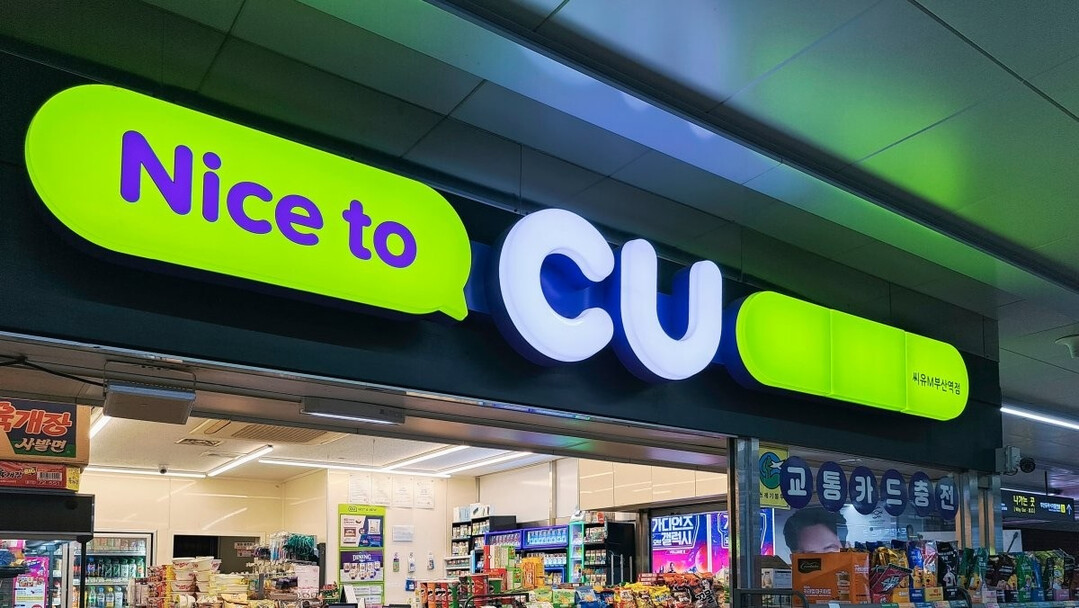
BGF Retail (CEO Min Seung-bae)'s convenience store brand, CU, is set to elevate its status as a global company by becoming the first Korean convenience store chain to enter the Hawaiian market in the United States. Starting with the opening of its first Hawaiian store this October, CU plans to target the local market with K-Food and advanced retail technology, aiming to continue the success story of Korean convenience stores in the world's largest market, the U.S.
Rooting in the Birthplace of Convenience Stores: The United States
On May 26th (local time) in Hawaii, USA, BGF Retail signed a Master Franchise Agreement (MFC) with CU Hawaii LLC, a newly established convenience store specialized corporation of its Hawaiian partner, WKF. This agreement is particularly significant as it was made in the United States, the birthplace of convenience stores—where the world's first convenience store was born in Dallas, Texas in 1927—and the world's largest market. Key officials, including BGF Retail CEO Min Seung-bae and CU Hawaii LLC CEO Robert Kurisu, attended the signing ceremony.
A Master Franchise Agreement grants local companies the right to use the brand, open stores, and operate the business, in exchange for royalties. BGF Retail expects that its partner WKF's strong regional network and extensive experience in real estate development will greatly contribute to the stable and sustainable growth of the convenience store business in Hawaii.
The Appeal of the Hawaiian Market: Synergy of Tourists and Asian Population
Hawaii is an attractive market boasting mild year-round weather and a rich demand from approximately 10 million tourists annually. As of 2023, the largest proportion of tourists visiting Hawaii were from the United States (7.5 million), followed by Japan (570,000), Canada (410,000), and South Korea (160,000). As tourist numbers rapidly recover post-pandemic, the average daily expenditure of tourists in Hawaii is about 320,000 won (approximately $235 USD), with dining expenses accounting for 40% of this, creating a favorable consumption environment for the convenience store business.
Furthermore, reasonably priced convenience store products are emerging as a new consumption alternative for local Hawaiians, showing high demand. In particular, the high proportion of people of Asian descent in Hawaii's total population means a high familiarity and preference for Korean culture, which is expected to positively influence CU's localization strategy. The combined percentage of Asian and mixed-race populations in Hawaii is more than six times higher than on the U.S. mainland, providing an optimal environment for CU to deploy a differentiated strategy utilizing Korean elements.
Capturing Local Consumers with K-Food Killer Items and Retail Tech
CU plans to actively leverage the strengths of Korean convenience stores to rapidly localize in the Hawaiian market. It will implement optimal store layouts considering American consumers' purchasing purposes and lifestyles, and introduce advanced retail technology such as self-checkout zones to provide a convenient shopping experience. This strategy aims to showcase the efficient store operation know-how and digital technology that Korean convenience stores have developed, in the local market.
The biggest differentiator will be the discovery and introduction of K-Food killer items that are currently absent in Hawaii. CU is developing various Korean-style ready-to-eat meals and instant food items, as well as localized menus and unique differentiated products. In particular, it plans to introduce collaboration products featuring Hawaii's signature dishes, Poke and Loco Moco, in partnership with famous local chefs. Additionally, by introducing Gimbap, which is gaining popularity as a healthy food in the U.S., and instant ramen cooking machines, a must-do for Korean tourism, CU aims to provide a Korean culinary experience to both locals and tourists. This is expected to go beyond simple product sales and act as cultural diplomacy, spreading Korean food culture.
CU's Global Expansion Strategy and Future Vision
Starting with this Master Franchise Agreement, CU and CU Hawaii LLC plan to open the first CU store in Hawaii this October and subsequently expand to various commercial areas, spreading the CU brand throughout Hawaii.
BGF Retail's entry into Hawaii is gaining attention as a successful case of globalization for Korean brands, centered on K-Food. It is also expected to be a significant first step in assessing the potential for success in the world's largest convenience store market, the U.S., for the first time in the industry. Currently, the domestic convenience store market is saturated, making overseas expansion essential to secure growth momentum. CU has steadily pioneered overseas markets, starting with its entry into Mongolia in 2018 and then Malaysia. This entry into Hawaii, USA, is expected to be a crucial turning point in CU's global strategy. Especially in the U.S., the birthplace of convenience stores, competition is fierce, but the market size and potential are immense, so CU's challenge could present a new growth model for the Korean convenience store industry.
CU's entry into Hawaii is expected to go beyond merely increasing the number of stores; it will serve as a vanguard in introducing Korean convenience store systems and food culture overseas. The focus is now on whether this will elevate the global status of Korean convenience store brands and further contribute to the spread of K-Culture worldwide.
[Copyright (c) Global Economic Times. All Rights Reserved.]