![[등록] 2026-09-01 15:48:31](/support/_updata/banner2/tl181982910_6749.png)


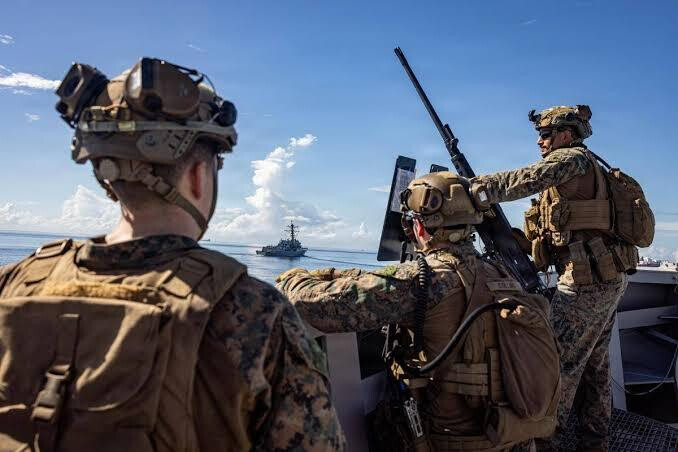
The U.S. Department of Defense has begun deploying approximately 600 Army personnel to Latin America for anti-drug trafficking operations, The New York Times (NYT) reported on the 14th. The NYT noted that this marks the first time the U.S. military has dispatched a force of 600 troops to Latin America for a mission other than war or natural disaster response.
Since taking office in January, the second Trump administration has aggressively conducted maritime strikes against drug transport vessels in the Caribbean Sea. This troop deployment is seen as a signal that the U.S. military intends to escalate to ground offensives against Latin American drug cartels. General Francis Donohue, commander of the U.S. Southern Command overseeing Latin America, recently expressed intentions to expand attacks on drug vessels to ground operations. Furthermore, the second Trump administration emphasized the eradication of Latin American cartels through the new National Security Strategy (NSS) and National Defense Strategy (NDS) released in December and January, respectively.
However, critics point out that rather than delivering a substantive blow to drug trafficking organizations, these military operations are devolving into the Trump administration's "showy performativeism."
10th Mountain Division Battalion Moves to Panama Jungle Training Base
According to the NYT, a battalion of about 600 troops from the 10th Mountain Division, stationed at Fort Drum in New York, is moving to a jungle training base in Panama. They plan to train alongside local military forces in Colombia and Honduras. In particular, they are expected to be deployed to support U.S. special operations forces that assist local militaries in attacking drug trafficking organizations. While the troop deployment is currently temporary, the NYT projects that permanent stationing remains a possibility.
Additionally, the U.S. Department of Defense recently established a new organization to oversee military activities responding to drug cartels. Several "MQ-9 Reaper" drones have also been recently relocated from Africa to Colombia and Ecuador. Dubbed the "Sky Assassin," these unmanned aerial vehicles are considered core assets of the U.S. military.
According to the NYT, the U.S. military has launched at least 71 attacks on suspected drug vessels in Latin America since the inauguration of the second Trump administration. These strikes have resulted in at least 239 deaths.
However, experts point out that U.S. anti-drug vessel strikes have had little impact on the overall cocaine supply within the United States. Warnings also persist that U.S. attacks constitute an illegal violation of sovereignty against major Latin American nations.
Under these conditions, if ground warfare against drug organizations intensifies, the possibility of massive casualties and destruction of social infrastructure cannot be ruled out. While vessel strikes occur far out at sea, ground operations run the risk of inflicting severe damage on schools, roads, and civilian residential areas during combat engagements. Critics also warn that the U.S. military, already overburdened by the prolonged war in Iran and strategic competition with China, could become further entangled in combat in yet another region without a clear withdrawal plan.
Cocaine Seizures in Europe Surge 471% Over a Decade
Meanwhile, amidst the Trump administration's hardline crackdown, Latin American drug cartels have expanded their reach into Europe, making the continent a major global drug market, the Wall Street Journal (WSJ) and Britain’s The Guardian reported on the 14th.
According to The Guardian, cocaine seizures in Europe in 2024 increased by 471% compared to a decade ago in 2014. Experts estimate that actual distribution volumes have risen far beyond this figure.
Data from the United Nations Office on Drugs and Crime (UNODC) indicates that European cocaine users account for about 22% of the global total. Brazil's largest criminal syndicate, the First Capital Command (PCC), is known to operate in 16 European countries, including the UK, Switzerland, and Sweden. Mexico's Sinaloa Cartel, Colombia's Gulf Clan, and Venezuela's Tren de Aragua are also expanding their influence across at least 12 European countries, including Spain, the Netherlands, and France.
Hitherto, Latin American cocaine primarily flowed into Europe through regions with large container ports along the Mediterranean and North Sea coasts, such as Spain, Portugal, and Belgium. Recently, however, it is being rapidly distributed centering on Eastern European nations like Romania and Bulgaria.
Increased supply has also driven down cocaine prices. Once commanding $45,000 (approx. 60 million KRW) per kilogram in Europe, the price of cocaine has plummeted to one-third of that level, at $16,000 (approx. 21 million KRW).
Global cocaine production for 2024 is estimated at 3,800 to 4,700 tons—more than four times the scale of 2014. Over the same period, South America’s land area cultivated for coca raw materials tripled, reaching 385,000 hectares.
[Copyright (c) Global Economic Times. All Rights Reserved.]