
• 2026.06.05 (Fri)
  • All articles
  • LOGIN
  • JOIN
Global Economic Times
fashionrunwayshow2026
  • Synthesis
  • World
  • Business
  • Industry
  • ICT
  • Distribution Economy
  • Well+Being
  • Travel
  • Eco-News
  • Education
  • Korean Wave News
  • Opinion
  • Arts&Culture
  • Sports
  • People & Life
    • International Student Report
    • With Ambassador
  • Column
    • Cho Kijo Column
    • Cherry Garden Story
    • Ko Yong-chul Column
    • Kim Seul-Ong Column
    • Lee Yeon-sil Column
  • Photo News
  • New Book Guide
MENU
 
Home > Synthesis

Hyundai Motor Group Expands Mandatory Vehicle Rotation System to Bolster National Energy Conservation Efforts

Hwang Sujin Reporter / Updated : 2026-03-27 21:05:59
  • -
  • +
  • Print
- Major subsidiaries to transition from 10-day to 5-day rotation system
- Prioritizing EVs and hydrogen vehicles for business fleets
- Accelerating the adoption of high-efficiency facilities and renewable energy infrastructure
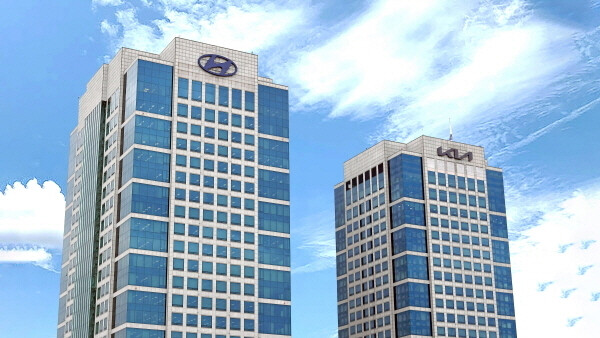


In a decisive move to align with the South Korean government’s recent energy conservation initiatives, Hyundai Motor Group (HMG) announced today a comprehensive expansion of its vehicle rotation policy across its key subsidiaries. The group aims to significantly reduce its carbon footprint and lead by example in the corporate sector’s transition toward a more energy-efficient operational model.

Strengthening the Vehicle Rotation Policy
Effective immediately, Hyundai Motor Group is broadening the scope of its mandatory vehicle rotation system. While Hyundai Motor Company and Kia Corporation have already been operating under a 5-day rotation system (where vehicles are restricted from driving one day a week based on the last digit of their license plate), this policy will now encompass other major affiliates.

Key subsidiaries, including Hyundai Steel, Hyundai Kefico, and Hyundai AutoEver, will transition from their previous 10-day rotation (10-bu-je) to the more rigorous 5-day rotation (5-bu-je). To mitigate potential commuting inconveniences for employees resulting from these restrictions, the group plans to simultaneously expand its corporate shuttle bus networks across major routes.

Transitioning to a Greener Fleet
Beyond employee commuting, the group is overhauling its logistics and administrative operations. HMG has mandated that Electric Vehicles (EVs) and Hydrogen Fuel Cell Electric Vehicles (FCEVs) be prioritized for all business-related travel. Furthermore, the group established a new procurement protocol requiring that any new additions to the corporate fleet must be eco-friendly models, accelerating the phase-out of internal combustion engine (ICE) vehicles within the organization.

Optimizing Industrial Infrastructure
The energy-saving drive extends deep into the group's manufacturing and office infrastructure. Hyundai Motor Group is currently conducting a full-scale audit of its facilities to optimize operational efficiency. Key initiatives include:

System Upgrades: Replacing aging, low-efficiency heating, cooling, and lighting systems with state-of-the-art high-efficiency equipment.
Smart Offices: The Yangjae-dong headquarters for Hyundai and Kia has already implemented an automatic light-extinguishing system to curb unnecessary power consumption during off-hours.
Renewable Energy Expansion: The group is actively reviewing plans to install additional solar power generation arrays at factory sites and employee parking lots.
Grid Efficiency: HMG intends to expand the application of Energy Storage Systems (ESS) to stabilize power demand and maximize the utilization of self-generated renewable energy.

A Leading Voice in Corporate Responsibility
A spokesperson for Hyundai Motor Group stated, "As a leader in the global mobility industry, it is our responsibility to take proactive measures against the energy crisis and climate change. By expanding these policies to our major industrial subsidiaries like Hyundai Steel, we expect to see a substantial and immediate reduction in our total energy expenditure."

Industry analysts suggest that HMG's aggressive stance may set a new benchmark for other large conglomerates (Chaebols) in South Korea, potentially leading to a wider adoption of similar "5-day rotation" policies and green facility investments across the nation's industrial landscape.

[Copyright (c) Global Economic Times. All Rights Reserved.]

  • #Korea
  • #Seoul
  • #Hallyu
  • #USA
  • #Economy
  • #Busoness
  • #Global
  • #World
  • #Consumer
  • #Export
  • #Import
  • #Hanguel
  • #Travel
  • #Tour
  • #Food
Hwang Sujin Reporter

Popular articles

  • SK hynix CEO Kwak Noh-jung Meets Bill Gates and Satya Nadella to Solidify AI Memory Alliance

  • Hyundai Mobis Completes Independent EV 'Heart' Lineup: A Major Leap Toward Global Leadership in Power Electric Systems

  • "Singer of Filial Piety" Hyun Sook: "I Visit the Marginalized to Honor My Mother’s Memory"

I like it
Share
  • Facebook
  • X
  • Kakaotalk
  • LINE
  • BAND
  • NAVER
  • https://globaleconomictimes.kr/article/1065614595532583 Copy URL copied.
Comments >

Comments 0

Weekly Hot Issue

  • Samsung Electronics Super-Enterprise Union Loses Majority Status Amid Backlash Over Bonus Disparities
  • Samsung to Embed Vital Signs and Heart Health Scores in Upcoming Galaxy Watch9 Lineup
  • Apple Honors Digital Excellence: 12 Exceptional Apps and Games Celebrated at the 2026 Design Awards
  • Nexon Revamps Signature Youth Coding Competition into AI-Driven 'Nexon Young Programmers Cup'
  • Tech University of Korea Gathers 200 Game and AI Researchers to Discuss Industrial Expansion
  • Major Korean Telcos Trim Online-Exclusive Plans by Up to 50% Amid Shift to Unified Mobile Tariffs

Most Viewed

1
From a moment of collective sacrifice to a moment of collective democracy: The Timing of the Election in Ethiopia and Korea
2
U.S. Holds Off on Immediate Comprehensive Semiconductor Tariffs, but Pressure Mounts for Samsung and SK Hynix to Accelerate Domestic Investments
3
[Interview] "Halal is Not a Religious Regulation, but a 'Trust Infrastructure'… Creating a Premium 'K-Halal' Centered on Data and Platforms"
4
‘600 Million Won Bonus’ at Samsung Electronics Triggers Deep Sense of Relative Deprivation Among Korean Workers
5
Bomb Attack Targets Moving Train in Pakistan: At Least 29 Dead, 102 Injured
광고문의
임시1
임시3
임시2

Hot Issue

Murata Unveils Next-Gen Resin Electrode MLCC for Automotive Applications

Samsung to Embed Vital Signs and Heart Health Scores in Upcoming Galaxy Watch9 Lineup

L&F Plus Secures KRW 220 Billion from National Growth Fund to Anchor South Korea’s First Mass LFP Cathode Production

Samsung Electronics Super-Enterprise Union Loses Majority Status Amid Backlash Over Bonus Disparities

Fashion Runway Show 2026

Global Economic Times
korocamia@naver.com
CEO : LEE YEON-SIL
Publisher : KO YONG-CHUL
Registration number : Seoul, A55681
Registration Date : 2024-10-24
Youth Protection Manager: KO YONG-CHUL
Singapore Headquarters
5A Woodlands Road #11-34 The Tennery. S'677728
Korean Branch
Phone : +82(0)10 4724 5264
#304, 6 Nonhyeon-ro 111-gil, Gangnam-gu, Seoul
Copyright © Global Economic Times All Rights Reserved
  • 에이펙2025
  • APEC2025가이드북TV
  • 반달곰 프로젝트
Search
Category
  • All articles
  • Synthesis
  • World
  • Business
  • Industry
  • ICT
  • Distribution Economy
  • Well+Being
  • Travel
  • Eco-News
  • Education
  • Korean Wave News
  • Opinion
  • Arts&Culture
  • Sports
  • People & Life 
    • 전체
    • International Student Report
    • With Ambassador
  • Column 
    • 전체
    • Cho Kijo Column
    • Cherry Garden Story
    • Ko Yong-chul Column
    • Kim Seul-Ong Column
    • Lee Yeon-sil Column
  • Photo News
  • New Book Guide
  • Multicultural News
  • Jobs & Workers













