![[등록] 2026-09-01 15:48:31](/support/_updata/banner2/tl181982910_6749.png)


- Initial market gaps inevitable due to regulatory hurdles in the EU and China
CUPERTINO — Apple has officially thrown down the gauntlet in the hyper-competitive artificial intelligence (AI) landscape by unveiling its long-awaited 'Siri AI' after a two-year hiatus. Having repeatedly delayed the rollout of its next-generation voice assistant, the tech giant has completely overhauled Siri into a conversational AI agent. Notably, Apple has signaled a major strategic shift away from its traditionally closed ecosystem by actively integrating external AI models, such as Google’s Gemini.
However, market reactions have been sharply divided. While some experts view the announcement as a meaningful step forward, critics point out that many of the newly introduced features merely match services already offered by competitors, raising questions about Apple's technological innovation.
The Evolution of Siri: From Simple Commands to Contextual AI Agents
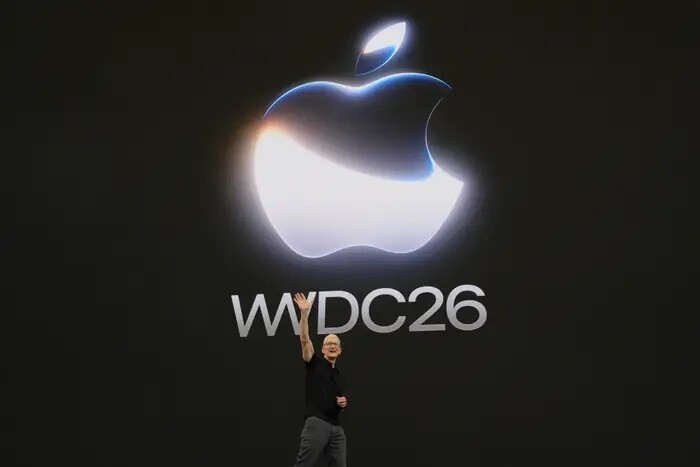
At its annual Worldwide Developers Conference (WWDC) 2026, held on June 8 (local time) at Apple Park in Cupertino, California, the undisputed protagonist of the event was 'Siri AI'.
Unlike the legacy Siri, which was confined to basic tasks like checking the weather or setting timers, the newly engineered Siri AI deeply understands the user’s personal data and context. This allows it to execute complex, multi-layered tasks across various native and third-party applications. Furthermore, unlike standalone AI chatbots like ChatGPT, Siri AI operates natively within the iOS architecture without requiring a separate application.
The most striking pivot in Apple's presentation was its openness to external AI infrastructure. Historically, Apple has leveraged its end-to-end control over hardware and software as a primary competitive advantage. Confronted with the immense bottleneck of in-house AI development, however, the company chose to partner with its fierce rival, Google.
The two tech titans co-developed the Apple Foundation Model based on Google's Gemini technology. This collaboration enables the integration of third-party AIs directly into Siri, allowing users to select and utilize their preferred AI models seamlessly.
Platform Strategy via External Partnerships vs. Lack of Breakthrough Innovation
Industry analysts interpret Apple's strategic shift as a calculated move to bridge the technology gap quickly. Instead of funneling billions of dollars into building proprietary frontier models and massive computing infrastructure—a path taken by firms like Google and Anthropic—Apple aims to rapidly catch up by onboarding verified external AI systems.
This mirrors the historic App Store strategy: by positioning the iPhone as a central hub where diverse AI services converge, Apple intends to secure ecosystem hegemony in the generative AI era.
Despite these grand ambitions, industry and consumer feedback remains lukewarm. Critics argue that most of the unveiled functions are already standard features in competing devices, such as Samsung Electronics’ Galaxy series, suggesting that Apple is merely playing catch-up.
Mark Gurman, a prominent Apple expert and columnist at Bloomberg, sharply criticized the announcement on social media, stating, "Apple is showcasing features that should have been implemented a decade ago, framing them as monumental achievements."
Geopolitical Hurdles: Exclusion of EU and China Triggers Initial Market Gaps
Compounding these criticisms is the restricted geographical scope of the initial rollout. While Apple announced that Siri AI will officially launch this autumn, the company explicitly stated that the European Union (EU) and China would be excluded from the initial release phase.
In the EU, stringent data privacy and antitrust regulations have posed significant regulatory bottlenecks regarding user privacy and security. Meanwhile, China enforces strict independent licensing requirements for generative AI services, making it impossible for Apple to meet the autumn deadline. Consequently, Apple faces an inevitable vacuum in two of its most critical international markets.
Investor sentiment mirrored this skepticism. Apple's stock price reversed its gains during the WWDC keynote speech, closing down 1.89% at $301.54. Weighing in on the market downturn, Walter Piecyk, an analyst at the media and technology research firm LightShed Partners, stated during a CNBC appearance that "the market's cold reaction was entirely accurate," reflecting Wall Street's underlying anxieties over Apple's AI strategy.
[Copyright (c) Global Economic Times. All Rights Reserved.]