• 2026.03.06 (Fri)
  • All articles
  • LOGIN
  • JOIN
Global Economic Times
fashionrunwayshow2026
  • Synthesis
  • World
  • Business
  • Industry
  • ICT
  • Distribution Economy
  • Well+Being
  • Travel
  • Eco-News
  • Education
  • Korean Wave News
  • Opinion
  • Arts&Culture
  • Sports
  • People & Life
    • International Student Report
    • With Ambassador
  • Column
    • Cho Kijo Column
    • Cherry Garden Story
    • Ko Yong-chul Column
    • Kim Seul-Ong Column
    • Lee Yeon-sil Column
  • Photo News
  • New Book Guide
MENU
 
Home > Arts&Culture

Houaphanh Province to Recognize Pa Bum Sauce and Tai Daeng Singing as Cultural Heritage

Hwang Sujin Reporter / Updated : 2024-12-27 20:58:20
  • -
  • +
  • Print

Vientiane, Laos – Houaphanh Province will officially recognize Pa Bum sauce and Tai Daeng traditional singing as part of its cultural heritage on December 30th, according to the provincial governor.

Located in northern Laos, Houaphanh Province borders Vietnam, Xiengkhouang Province, and Luang Prabang. The province is home to a diverse population, including the Khmu, Hmong, Lao Theung, and Tai Daeng ethnic groups.

In Houaphanh, traditional practices passed down through generations are deeply valued by local communities. Residents actively preserve their cultural heritage as a symbol of identity, recognizing the significance of traditions like Tai Daeng singing and Pa Bum sauce in representing the unique character of Houaphanh to visitors.

Pa Bum Sauce: A Culinary Treasure

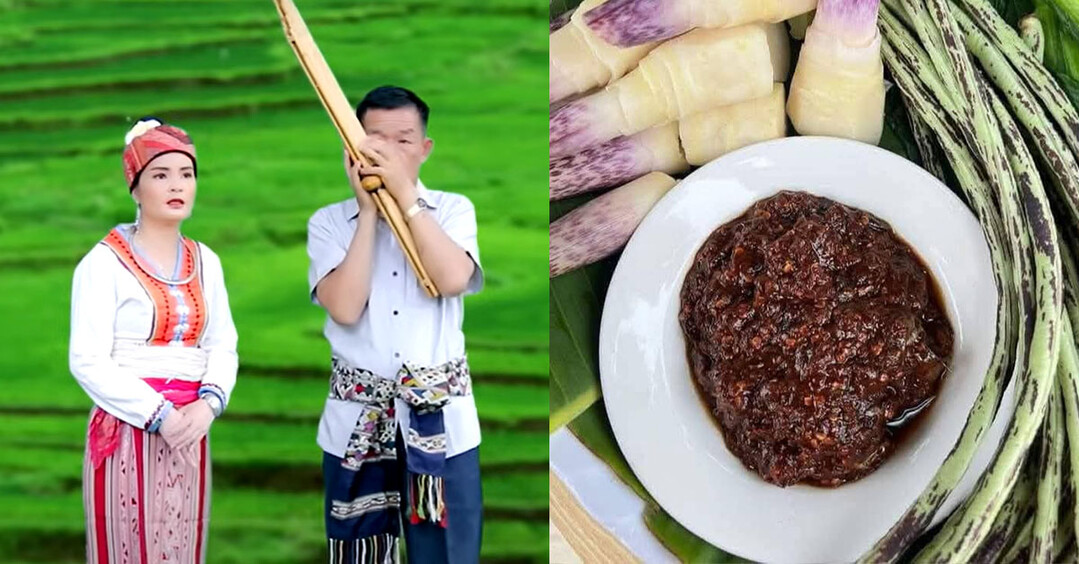
Pa Bum Sauce, also known as "Jeo Pa Bum Sam Neua," is a cornerstone of the region's culinary tradition. This cherished recipe, handed down through generations, combines fish, chilies, garlic, Sichuan pepper, and various seasonings. The mixture is then fermented in a jar or wrapped in a wooden stick.

Pa Bum Sauce is typically enjoyed with sticky rice and boiled vegetables such as bamboo shoots, apple gourds, and cabbage, complementing other staple Lao dishes.

Tai Daeng Singing: A Harmonious Tradition

Tai Daeng singing is a unique musical tradition of the Tai Daeng ethnic group. It features a harmonious blend of traditional Lao instruments, including the Khaen, flute, and pipe, accompanied by the human voice.

The music encompasses four distinct styles: Khub Oiy, Khub Aun, Khub Soy Vai, and Khub E Dou Num Nae, each with its own unique sound and performance method.

Tai Daeng singing is typically performed during important ceremonies, prayers, and traditional celebrations, such as weddings.

Preserving Cultural Heritage

This recognition of Pa Bum sauce and Tai Daeng singing follows a similar move in November 2022, where Houaphanh Province officially recognized the tradition of Khub Sam Neua and the knowledge of silk fabric weaving as local cultural heritage.

These initiatives demonstrate the province's commitment to preserving and promoting its rich cultural tapestry.

[Copyright (c) Global Economic Times. All Rights Reserved.]

  • #globaleconomictimes
  • #koyongchul
  • #cherrylee
  • #seoulkorea
  • #periodicoeconomico
  • #글로벌이코노믹타임즈
  • #GET
  • #GETtv
  • #liderdel
Hwang Sujin Reporter

Popular articles

  • Jinju’s ‘Worasan Woodland’ Honored as Top-Tier National Forest Education Hub by Korea Forest Service

  • Tzuyang Reveals Massive Expenses: $33,000 Annual Delivery Bill and "Luxury Car" Monthly Income

  • Court Rules Sequence of Medical Procedures is a Matter of Physician Judgment, Not Patient Choice

I like it
Share
  • Facebook
  • X
  • Kakaotalk
  • LINE
  • BAND
  • NAVER
  • https://globaleconomictimes.kr/article/1065614199130398 Copy URL copied.
Comments >

Comments 0

Weekly Hot Issue

  • The Illusion of a "Stress-Relieving" Smoke: Study Finds Smokers More Prone to Depression
  • From Table to Space: Japan Unveils Edible Spoons Made of Cookies
  • Luckin Coffee Shakes Up Global Market with Blue Bottle Acquisition
  • U.S. Private Sector Hiring Hits 7-Month High in February, ADP Reports
  • Self-Employed Loan Delinquency Rates Double in a Decade Amid Economic Headwinds
  • Multi-Homeowner Loan Balance Hits 103 Trillion Won; Half Concentrated in Seoul and Gyeonggi

Most Viewed

1
Adwa’s Echo in Korea: A Shared Story of Dignity and Freedom
2
2026, The Grand Year of Hangeul Celebration — The River of History Where Five Streams Converge
3
A New Milestone for Ukraine’s Post-War Reconstruction: The Birth of ISVP
4
Mexican currency and the powerful history behind its designs
5
Revised and Expanded Edition of ‘Failure of Negotiations with North Korea: Truth and Solutions’ Published
광고문의
임시1
임시3
임시2

Hot Issue

South Korean Markets Shaken by "Iran Shock": KOSPI Suffers Historic Rout Amid Soaring Oil and FX Rates

Self-Employed Loan Delinquency Rates Double in a Decade Amid Economic Headwinds

U.S. Private Sector Hiring Hits 7-Month High in February, ADP Reports

Industrial Output Dips in January Amid Semiconductor Adjustments; Middle East Tensions Loom as Wild Card

Let’s recycle the old blankets in Jeju Island’s closet instead of incinerating them.

Global Economic Times
korocamia@naver.com
CEO : LEE YEON-SIL
Publisher : KO YONG-CHUL
Registration number : Seoul, A55681
Registration Date : 2024-10-24
Youth Protection Manager: KO YONG-CHUL
Singapore Headquarters
5A Woodlands Road #11-34 The Tennery. S'677728
Korean Branch
Phone : +82(0)10 4724 5264
#304, 6 Nonhyeon-ro 111-gil, Gangnam-gu, Seoul
Copyright © Global Economic Times All Rights Reserved
  • 에이펙2025
  • APEC2025가이드북TV
  • 독도는우리땅
Search
Category
  • All articles
  • Synthesis
  • World
  • Business
  • Industry
  • ICT
  • Distribution Economy
  • Well+Being
  • Travel
  • Eco-News
  • Education
  • Korean Wave News
  • Opinion
  • Arts&Culture
  • Sports
  • People & Life 
    • 전체
    • International Student Report
    • With Ambassador
  • Column 
    • 전체
    • Cho Kijo Column
    • Cherry Garden Story
    • Ko Yong-chul Column
    • Kim Seul-Ong Column
    • Lee Yeon-sil Column
  • Photo News
  • New Book Guide
  • Multicultural News
  • Jobs & Workers