![[등록] 2026-09-01 15:48:31](/support/_updata/banner2/tl181982910_6749.png)



Last Friday, six Americans were detained by local police on the coast of Ganghwa Island, Incheon, South Korea, while attempting to send anti-North Korea leaflets. They reportedly tried to send approximately 1,300 PET bottles containing rice, one-dollar bills, and Bibles to North Korea.
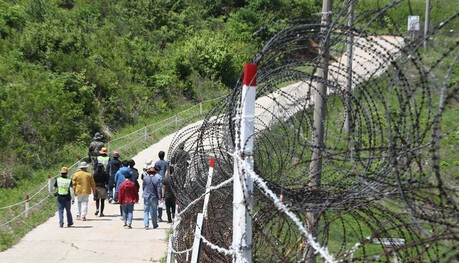
The incident occurred in a restricted access area on the coast of Ganghwa Island, located about 50 km west of Seoul. This area has been closed to the public since November of last year for security reasons. Yonhap News reported that the police responded to a report from a military unit patrolling the area, and the suspects were confirmed to be in their 20s to 50s.
They may be investigated for violating South Korea's Framework Act on the Management of Disasters and Safety. However, the police determined that the situation did not warrant issuing an arrest warrant and released them for now, intending to continue the investigation without detention.
Police investigations revealed that the detained Americans were not affiliated with any registered civic or religious organizations in the Incheon area. The police are continuing to investigate whether they are linked to other domestic or international organizations.
Repeated Anti-North Korea Leaflet Drops: A Stumbling Block in Inter-Korean Relations
The act of sending rice, dollars, Bibles, or leaflets criticizing the North Korean regime to North Korea using PET bottles or balloons has been consistently carried out by some defector groups. The North Korean authorities have strongly denounced these actions as infringements on their sovereignty, consistently creating tension in inter-Korean relations.
In the past, leaflet drops have been a major cause of escalating military tensions between the two Koreas. North Korea has defined leaflet distribution as "an insult to its supreme dignity," warning of strong countermeasures, and has indeed taken actual retaliatory measures, such as resuming loudspeaker broadcasts and blowing up the inter-Korean joint liaison office in Kaesong. Such conflicts have acted as a stumbling block to inter-Korean dialogue and negatively impacted the peace process on the Korean Peninsula.
South Korean Government's Response and Future Outlook
The Yoon Suk Yeol administration has stated its intention to deal more decisively with the issue of anti-North Korea leaflet drops since its inauguration. This is interpreted as part of its policy to improve North Korea relations and ease tensions on the Korean Peninsula. The current government intends to take legal and administrative measures, such as restraining such acts and punishing those responsible, considering their negative impact on inter-Korean relations.
In fact, cases like this, where foreigners are detained for attempting to send anti-North Korea leaflets, are rare. This suggests that the South Korean government is signaling a strict application of the law regarding the leaflet issue, not only to its citizens but also to foreigners.
However, anti-North Korea leaflet drops are also intertwined with complex human rights issues, such as freedom of expression and the right of North Korean citizens to know, making them a subject of debate. Some human rights organizations and defector groups assert the legitimacy of leaflet drops, arguing that it is crucial to deliver external information and publicize human rights conditions to North Korean residents.
This incident involving the attempted anti-North Korea leaflet drop by Americans is likely to once again spark public discussion about the impact of the leaflet issue on inter-Korean relations and the South Korean government's response. The government faces the challenge of finding a balance between improving inter-Korean relations and ensuring the safety of residents in border areas, while also upholding the universal value of freedom of expression. The results of the ongoing police investigation and the final judgment of the South Korean government are awaited with interest.
[Copyright (c) Global Economic Times. All Rights Reserved.]