![[등록] 2026-09-01 15:48:31](/support/_updata/banner2/tl181982910_6749.png)


"May every day be as bountiful as Gae-wit-nal (Chuseok)." This Korean proverb, wishing for a life of comfort and abundance, perfectly captures the spirit of Chuseok, a major harvest and ancestral holiday celebrated under the full moon on the 15th day of the 8th lunar month. Similar festivals, centered on themes of gratitude, harvest, and family reunion, resonate across the globe, each with its own unique customs and flavors.
North America: Thanksgiving Day
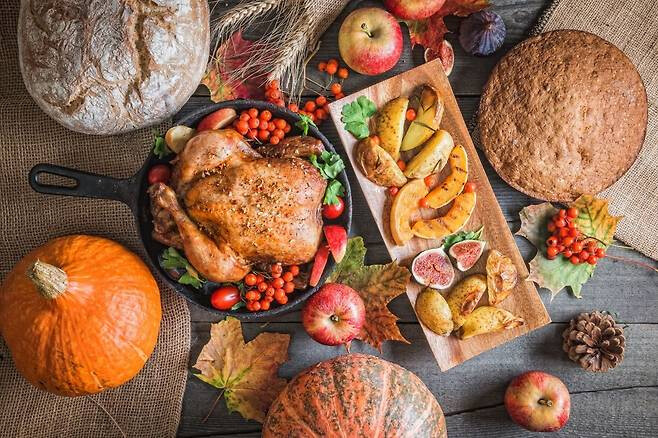
The quintessential American fall holiday, Thanksgiving Day, is celebrated annually on the fourth Thursday of November. It is a time for Americans to express gratitude for the year's harvest and blessings. The tradition, rooted in an early colonial feast of thanks, mandates that families travel across distances to gather for a lavish meal, reinforcing familial bonds.
The centerpiece of the Thanksgiving table is the roast turkey, typically served with cranberry sauce, a savory stuffing (or dressing), mashed potatoes and gravy, and the iconic pumpkin pie for dessert. The holiday also marks the informal beginning of the year-end holiday season, with the following day, Black Friday, kicking off the major shopping rush with massive nationwide sales.
East Asia: Moon Festivals and Ancestral Rites
China: Mid-Autumn Festival (Zhongqiu Jie)
Like Chuseok, China's Mid-Autumn Festival (Zhongqiu Jie, 中秋節) falls on the 15th day of the 8th lunar month. It is a major holiday dedicated to celebrating a bountiful harvest and family unity. Families congregate to gaze at the brightest full moon of the year, a symbol of completeness, and offer prayers for health and happiness.
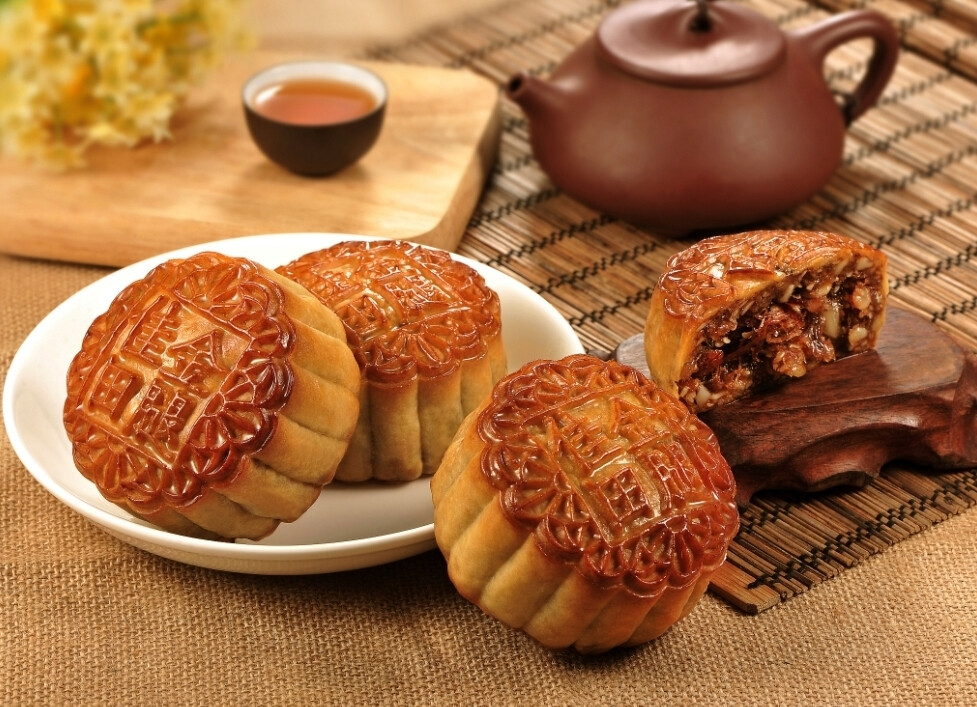
The festival’s signature culinary item is the mooncake (月餅, yuebing), a dense, round pastry whose shape mirrors the full moon and signifies reunion. Mooncakes come with various fillings, including red bean paste, nuts, or even savory meats, and are shared among family and friends. Other traditions include hanging decorative lanterns and enjoying round fruits, such as watermelon (yueguo, 月果), that symbolize unity.
Japan: Obon
Obon (お盆) is Japan's primary ancestral commemoration, usually observed around August 15th of the solar calendar, from the 13th to the 16th. During this period, it is believed that the spirits of ancestors return to their family homes. Families conduct rites, clean graves, and offer prayers to express gratitude and remembrance for their forebears.
The traditional food associated with Obon is dango (rice dumplings). Families prepare omukae dango (welcoming dango) on the 13th, often topped with sweet red bean paste or soy sauce glaze, and simpler okuri dango (farewell dango) on the 16th. Another custom involves creating Shoryoma (精霊馬), small effigies of horses (from cucumber) and cows (from eggplant), to serve as temporary conveyances for the spirits: the horse for a quick journey home, and the cow for a slow, reluctant departure. Village gatherings feature the Bon Odori (traditional folk dance) performed under lit lanterns, fostering community spirit.
Southeast Asia: The Festival of Ancestors
Cambodia: Pchum Ben (Ancestors' Day)
Pchum Ben (បុណ្យភ្ជុំបិណ្ឌ), or Ancestors' Day, is a deeply significant 15-day religious festival in Cambodia, typically occurring in September or October (culminating on the 15th day of the 10th Khmer calendar month). As a Buddhist nation, this holiday emphasizes the connection to the deceased, with people honoring ancestors up to seven generations back.
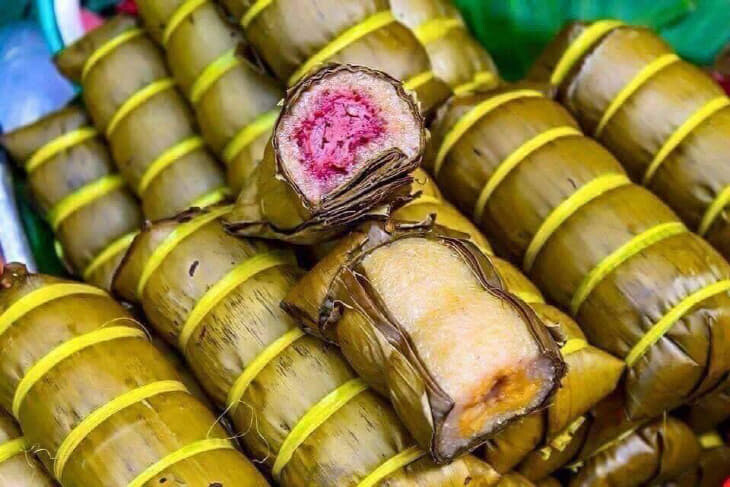
The most characteristic food is Nom Ansom Chrouk (នំអន្សមចេក) or Nom Ansom Chek (banana-filled), a steamed sticky rice cake filled with minced pork, mung beans, or banana, wrapped cylindrically in banana leaves. These cakes are not only shared among family but also offered to monks at the local pagoda, generating 'merit' to benefit the deceased. A unique ritual involves throwing small balls of sticky rice (Ben or Bay Ben) onto the temple grounds before dawn. This is intended to feed spirits—particularly those suffering—who are unable to enter the temple. The festival underscores filial piety and the enduring ties between the living and the departed.
Other Global Harvest Celebrations
The impulse to celebrate the harvest and honor one's lineage is a universal human experience.
Germany observes Erntedankfest (Harvest Thanksgiving) in early October, a religious holiday marked by church services where the altar is adorned with fruits, vegetables, and grain.
In Vietnam, Tết Trung Thu (Mid-Autumn Festival) is celebrated on the same day as the Chinese and Korean holidays, though it is more prominently a Children’s Festival featuring lantern parades and lion dances.
The Jewish holiday of Sukkot (Feast of Tabernacles), celebrated in September or October, commemorates the harvest and the historical journey of the Israelites by building and dwelling in temporary huts called sukkah.
The New Yam Festival is celebrated across West Africa, particularly among the Igbo people of Nigeria, marking the harvest and consumption of the new crop of yams, often with the eldest male partaking of the first yam.
These diverse global observances—from the American turkey feast to the Cambodian rice-ball offerings—all share a common, powerful core: a moment to pause, give thanks for the earth's bounty, and cherish the enduring presence of family, both living and ancestral. They stand as a profound testament to the universal values of gratitude, remembrance, and community that transcend borders and culture.
[Copyright (c) Global Economic Times. All Rights Reserved.]