![[등록] 2026-09-01 15:48:31](/support/_updata/banner2/tl181982910_6749.png)


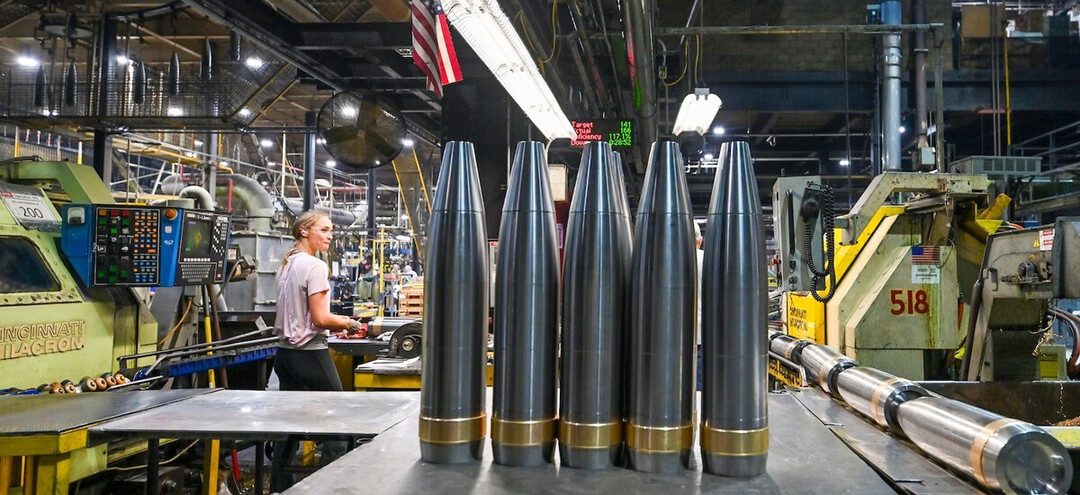
WASHINGTON — In a decisive move aimed at safeguarding national security and reinforcing military readiness, the Trump administration has launched a comprehensive overhaul of the United States defense industrial supply chain. The executive action seeks to systematically dismantle the American defense sector's longstanding reliance on materials and components sourced from China, Russia, North Korea, and Iran, prioritizing domestic production and vetted allied networks.
The stark reality confronting U.S. defense planners has long been an open secret within the Pentagon: even the military’s most sophisticated hardware, such as the fifth-generation F-35 Lightning II stealth fighter, relies on specialized alloys, rare earth elements, and microelectronics manufactured in or processed by China. Defense analysts have repeatedly warned that should Beijing elect to restrict or halt the export of these critical inputs, major lines of U.S. defense manufacturing could grind to a sudden and dangerous halt. The paradox of championing robust national security while remaining covertly reliant on a geopolitical adversary has prompted escalating bipartisan alarm.
A Sweeping Presidential Mandate
To directly address this structural weakness, President Donald Trump signed an executive order titled "Securing America’s Defense Supply Chain and Guaranteeing Domestic Sourcing of Critical Minerals." The directive establishes a rigorous framework designed to force defense contractors to audit, disclose, and systematically replace non-allied inputs across every layer of weapon production.
Effective January 2027, the administration will impose drastically heightened standards for granting waiver exceptions when procuring sensitive defense-related materials from non-allied nations. Under the new guidelines, contractor applications for waivers will face meticulous scrutiny. Companies will no longer be permitted to request exemptions based solely on claims that Chinese components are the cheapest or most readily accessible option.
Instead, primary contractors must fully map out every tier of their multi-stage supply chains, identifying all subcontractors, raw material processors, and sub-assembly vendors involved. To secure an exception, contractors will be required to demonstrate exhaustive, documented proof that they conducted thorough searches for American or allied-sourced alternatives. Crucially, the executive order explicitly warns that any defense vendor attempting to withhold supply chain data or misrepresent component origins will face immediate contract termination and potential regulatory penalties.
Pivoting Toward Allied Resilience
In addition to tightening waiver protocols, the executive order instructs the Secretary of Defense to establish formal rules for comprehensive, end-to-end supply chain tracking for all designated national security procurement items. Defense contractors currently dependent on untrusted foreign suppliers must rapidly formulate and execute transition plans to pivot toward fully compliant alternatives.
Peter Navarro, White House Senior Advisor for Trade and Manufacturing, underscored the strict stance during a press briefing preceding the signing. "Simply claiming 'we tried nothing and we are out of options' will no longer be acceptable," Navarro stated. "While this measure targets reliance on foreign dependencies broadly, we must act decisively to resolve our systemic vulnerabilities as China increasingly and boldly weaponizes its supply chains."
Navarro emphasized that the ultimate objective of the White House is to build a robust, self-sustaining, and highly resilient domestic defense industrial base. However, acknowledging the complex global nature of modern manufacturing, he underscored that the U.S. will work shoulder-to-shoulder with international allies to construct trusted secondary supply corridors.
Addressing Strategic Mineral Bottlenecks
The timing of the presidential order reflects the intensifying geopolitical competition over critical minerals and high-tech inputs. China currently maintains near-monopolistic dominance over global refining and processing capacities for key minerals—such as germanium, gallium, and heavy rare earths—which are indispensable for radar systems, night-vision optics, precision-guided munitions, and aerospace alloys.
Furthermore, as defense manufacturers work frantically to replenish U.S. military stockpiles depleted by regional conflicts, including operations connected to the war with Iran, the urge to prioritize speed over supply chain security has heightened. The administration's order serves as a firm regulatory speed bump, forcing prime contractors to prioritize strategic supply independence alongside production velocity.
Significantly, the administration outlined concrete progress in breaking China's refining bottlenecks. Speaking on strategic materials, Navarro highlighted that the U.S. is on track to expand its domestic refining capacity for germanium—a vital semiconductor mineral used in military infrared sensors and fiber optics—to three times national demand before the end of the year.
"As time progresses and we bolster our infrastructure, the United States will be positioned to export refined germanium to key partners such as South Korea, Japan, and European allies who face similar economic coercion and critical mineral weaponization from China," Navarro added.
[Copyright (c) Global Economic Times. All Rights Reserved.]