• 2026.06.05 (Fri)
  • All articles
  • LOGIN
  • JOIN
Global Economic Times
fashionrunwayshow2026
  • Synthesis
  • World
  • Business
  • Industry
  • ICT
  • Distribution Economy
  • Well+Being
  • Travel
  • Eco-News
  • Education
  • Korean Wave News
  • Opinion
  • Arts&Culture
  • Sports
  • People & Life
    • International Student Report
    • With Ambassador
  • Column
    • Cho Kijo Column
    • Cherry Garden Story
    • Ko Yong-chul Column
    • Kim Seul-Ong Column
    • Lee Yeon-sil Column
  • Photo News
  • New Book Guide
MENU
 
Home > Distribution Economy

South Korean Won Shakes as Exchange Rate Pierces 1,500 Mark Amid Middle East Oil Shock

Desk / Updated : 2026-03-04 18:54:25
  • -
  • +
  • Print


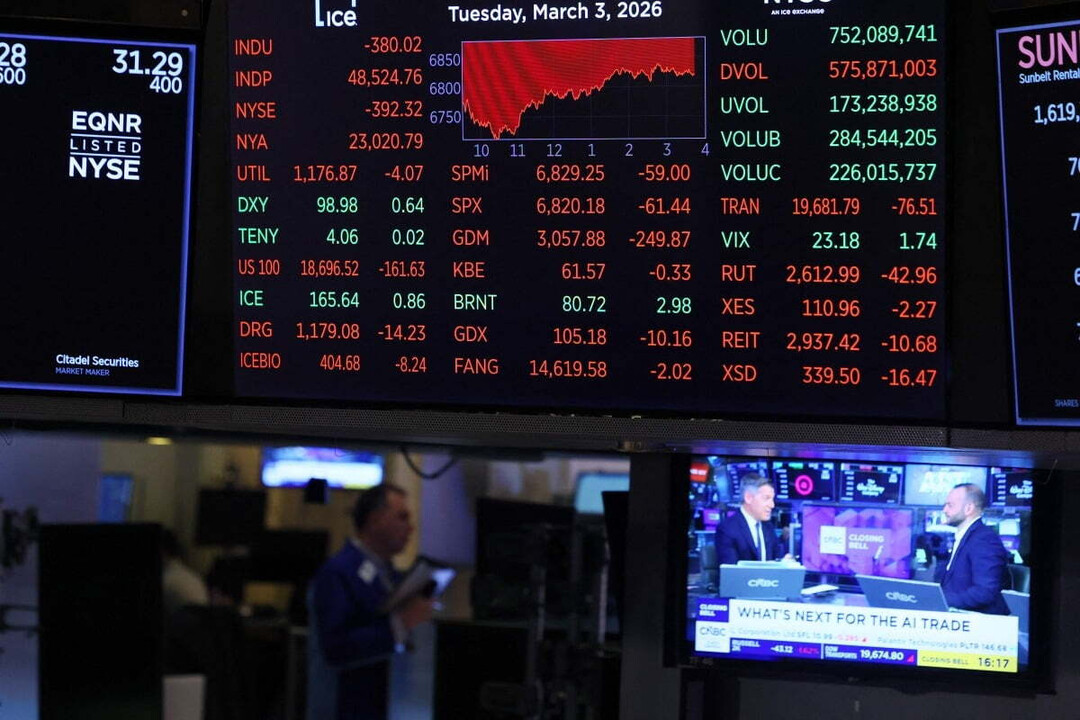
SEOUL — The South Korean won plummeted to its weakest level against the U.S. dollar in nearly 17 years during overnight trading, fueled by a perfect storm of geopolitical instability and a global rush toward safe-haven assets. On March 4, 2026, the won-dollar exchange rate briefly breached the psychologically critical 1,500 won barrier, a level not seen since the height of the 2008-2009 Global Financial Crisis.

A Midnight Surge
According to market data, the won-dollar exchange rate closed at 1,485.7 won during the late-night session in Seoul, marking a staggering 46.0 won jump from the previous day's domestic close. This represents the largest single-day increase in value since November 2008. During the height of the volatility, the rate peaked at 1,506.5 won, sending shockwaves through the Ministry of Economy and Finance and the Bank of Korea.

The Catalyst: Energy Security at Risk
The primary driver behind the won’s weakness is the deteriorating situation in the Middle East. Global markets went into a tailspin following Iran’s decision to blockade the Strait of Hormuz, a vital artery for nearly 20% of the world’s oil consumption. The crisis deepened as Iraq announced a total suspension of production at the Rumaila oil field, the world’s second-largest oil producing site.

The immediate reaction in the energy markets was a vertical spike in prices. West Texas Intermediate (WTI) crude for April delivery surged by more than 9% in a single session. For South Korea, an export-oriented economy that imports nearly 100% of its energy needs, surging oil prices act as a "double whammy"—widening the trade deficit while simultaneously devaluing the local currency.

Safe-Haven Flight to the Greenback
As uncertainty gripped the markets, investors abandoned emerging market currencies in favor of the U.S. dollar. The Dollar Index (DXY), which measures the greenback against a basket of six major currencies, climbed to 99.685.

"We are seeing a textbook flight to quality," said Cho Yong-gu, a senior researcher at Shinyoung Securities. "The blockade of the Strait of Hormuz has created an environment where risk aversion is the dominant theme. This is likely to persist throughout the week, putting sustained upward pressure on the exchange rate."

Economic Implications: Inflation and Interest Rates
The breach of the 1,500 won level is more than just a symbolic number; it carries dire implications for the Korean economy:

Imported Inflation: A weaker won makes essential imports—food, energy, and raw materials—significantly more expensive, potentially pushing CPI (Consumer Price Index) beyond the Bank of Korea's target.
Monetary Policy Dilemma: While a weak won usually helps exporters, the current volatility is so extreme that it may force the Bank of Korea to consider "defensive" interest rate hikes to prevent capital flight, even at the risk of cooling domestic consumption.

Government Response
South Korean financial authorities are reportedly monitoring the markets 24/7. While "fine-tuning" (market intervention) is expected to smooth out extreme volatility, the external nature of the current shock—driven by oil and global geopolitics—means domestic policy tools may have limited impact.

As the morning session opens in Seoul, all eyes remain on the Middle East. If the energy blockade persists, analysts warn that the 1,500 won level could transition from a temporary peak to a new, painful baseline for the South Korean economy.

[Copyright (c) Global Economic Times. All Rights Reserved.]

  • #Korea
  • #Seoul
  • #Hallyu
  • #USA
  • #Economy
  • #Busoness
  • #Global
  • #World
  • #Consumer
  • #Export
  • #Import
  • #Hanguel
  • #Travel
  • #Tour
  • #Food
Desk
Desk

Popular articles

  • Banking War 2.0: South Korean Banks Race to Transition into 'AI-First' Institutions

  • Celltrion’s Zymfentra Sees Explosive 300% Growth, Hits Record Quarterly Prescriptions in the U.S.

  • China’s Foundry Offensive: Chasing Samsung’s No. 2 Spot via ‘Mature Node’ Dominance

I like it
Share
  • Facebook
  • X
  • Kakaotalk
  • LINE
  • BAND
  • NAVER
  • https://globaleconomictimes.kr/article/1065606747170154 Copy URL copied.
Comments >

Comments 0

Weekly Hot Issue

  • Samsung Electronics Super-Enterprise Union Loses Majority Status Amid Backlash Over Bonus Disparities
  • Samsung to Embed Vital Signs and Heart Health Scores in Upcoming Galaxy Watch9 Lineup
  • Apple Honors Digital Excellence: 12 Exceptional Apps and Games Celebrated at the 2026 Design Awards
  • Nexon Revamps Signature Youth Coding Competition into AI-Driven 'Nexon Young Programmers Cup'
  • Tech University of Korea Gathers 200 Game and AI Researchers to Discuss Industrial Expansion
  • Major Korean Telcos Trim Online-Exclusive Plans by Up to 50% Amid Shift to Unified Mobile Tariffs

Most Viewed

1
From a moment of collective sacrifice to a moment of collective democracy: The Timing of the Election in Ethiopia and Korea
2
U.S. Holds Off on Immediate Comprehensive Semiconductor Tariffs, but Pressure Mounts for Samsung and SK Hynix to Accelerate Domestic Investments
3
[Interview] "Halal is Not a Religious Regulation, but a 'Trust Infrastructure'… Creating a Premium 'K-Halal' Centered on Data and Platforms"
4
‘600 Million Won Bonus’ at Samsung Electronics Triggers Deep Sense of Relative Deprivation Among Korean Workers
5
Bomb Attack Targets Moving Train in Pakistan: At Least 29 Dead, 102 Injured
광고문의
임시1
임시3
임시2

Hot Issue

Murata Unveils Next-Gen Resin Electrode MLCC for Automotive Applications

Samsung to Embed Vital Signs and Heart Health Scores in Upcoming Galaxy Watch9 Lineup

L&F Plus Secures KRW 220 Billion from National Growth Fund to Anchor South Korea’s First Mass LFP Cathode Production

Samsung Electronics Super-Enterprise Union Loses Majority Status Amid Backlash Over Bonus Disparities

Fashion Runway Show 2026

Global Economic Times
korocamia@naver.com
CEO : LEE YEON-SIL
Publisher : KO YONG-CHUL
Registration number : Seoul, A55681
Registration Date : 2024-10-24
Youth Protection Manager: KO YONG-CHUL
Singapore Headquarters
5A Woodlands Road #11-34 The Tennery. S'677728
Korean Branch
Phone : +82(0)10 4724 5264
#304, 6 Nonhyeon-ro 111-gil, Gangnam-gu, Seoul
Copyright © Global Economic Times All Rights Reserved
  • 에이펙2025
  • APEC2025가이드북TV
  • 반달곰 프로젝트
Search
Category
  • All articles
  • Synthesis
  • World
  • Business
  • Industry
  • ICT
  • Distribution Economy
  • Well+Being
  • Travel
  • Eco-News
  • Education
  • Korean Wave News
  • Opinion
  • Arts&Culture
  • Sports
  • People & Life 
    • 전체
    • International Student Report
    • With Ambassador
  • Column 
    • 전체
    • Cho Kijo Column
    • Cherry Garden Story
    • Ko Yong-chul Column
    • Kim Seul-Ong Column
    • Lee Yeon-sil Column
  • Photo News
  • New Book Guide
  • Multicultural News
  • Jobs & Workers