• 2026.06.05 (Fri)
  • All articles
  • LOGIN
  • JOIN
Global Economic Times
fashionrunwayshow2026
  • Synthesis
  • World
  • Business
  • Industry
  • ICT
  • Distribution Economy
  • Well+Being
  • Travel
  • Eco-News
  • Education
  • Korean Wave News
  • Opinion
  • Arts&Culture
  • Sports
  • People & Life
    • International Student Report
    • With Ambassador
  • Column
    • Cho Kijo Column
    • Cherry Garden Story
    • Ko Yong-chul Column
    • Kim Seul-Ong Column
    • Lee Yeon-sil Column
  • Photo News
  • New Book Guide
MENU
 
Home > World

Trump’s "Differential Tariff" Doctrine: A New Era of Targeted Protectionism

Ana Fernanda Reporter / Updated : 2026-03-04 18:51:27
  • -
  • +
  • Print

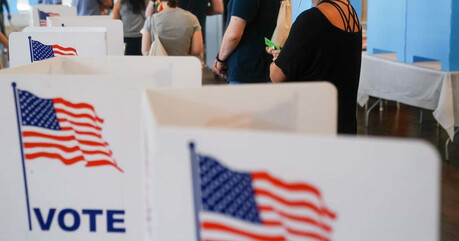
(C) Radio Canada


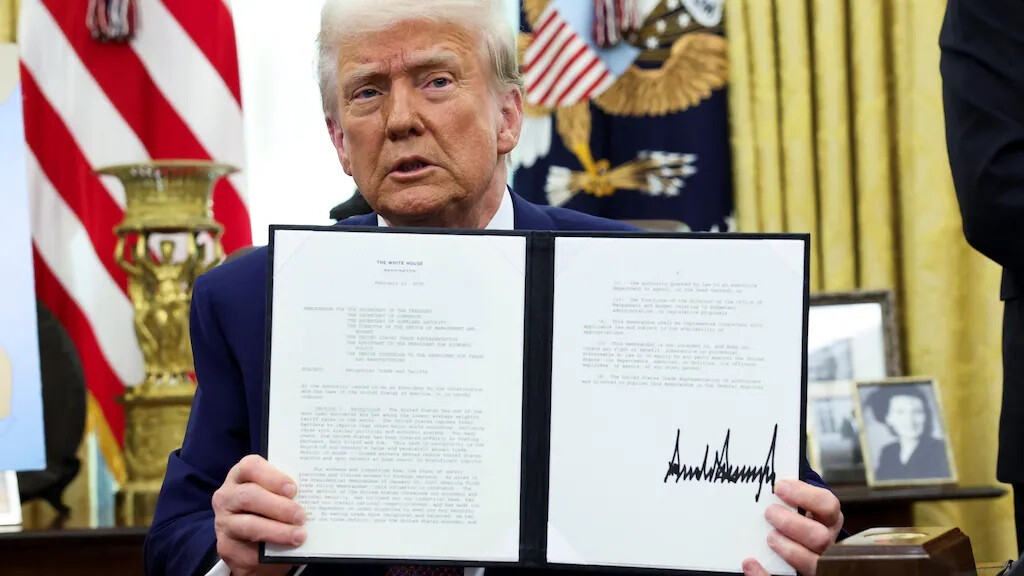
WASHINGTON D.C. — In a move that signals a seismic shift in global trade dynamics, President Donald Trump has officially confirmed a strategy of "Differential Tariffs." By leveraging a complex web of existing U.S. trade laws, the administration aims to bypass recent judicial setbacks and re-establish a high-walled trade fortress, forcing allies and adversaries alike to the negotiating table.

The Legal Maneuver: From Reciprocity to Sections 301 & 232
The strategy follows a high-profile defeat in the U.S. Supreme Court, which struck down the administration’s previous "Reciprocal Trade Act" model. However, rather than retreating, the White House is pivoting to "tried and tested" legal hammers:

Section 122 (Trade Act of 1974): Used as a bridge, this allows a 150-day "emergency" global tariff of up to 15% to address balance-of-payment deficits.
Section 301 (Trade Act of 1974): Enables tariffs to combat "unfair trade practices." This will be the primary tool for "differential" rates—punishing specific countries based on their trade surplus with the U.S.
Section 232 (Trade Expansion Act of 1962): Invokes national security to tax specific commodities like steel, aluminum, and high-tech components.

The "Five-Month Window" Strategy
The administration has set a clear countdown. By implementing a blanket 15% tariff for a five-month window, the U.S. creates a "pressure cooker" environment. Treasury Secretary Scott Bessent’s comments suggest that the administration is confident in the legal resilience of these statutes, noting they have survived thousands of legal challenges.

For the global community, the message is clear: the U.S. is willing to reset the "default" trade setting to a high-tariff environment, offering lower rates only to those who make significant concessions.

Geopolitical Implications: Germany and Beyond
The timing of the announcement—made during a summit with German Chancellor Friedrich Merz—is particularly pointed. As the powerhouse of the Eurozone, Germany’s automotive and machinery exports are directly in the crosshairs of Section 232 and 301 investigations.

Trump’s assertion that "every country wants to stay in their deals" reflects a belief that the U.S. market is an indispensable asset that nations will pay a premium to access. By "adjusting rates upward," the President is essentially taxing the privilege of entering the American consumer market.

 
Expert Analysis: What This Means for Global Markets
Economists warn that "Differential Tariffs" could lead to a fragmented global economy. While the U.S. seeks to reduce its deficit, the cost of imported goods is expected to rise, potentially reigniting inflationary pressures.

Supply Chain Volatility: Companies must now prepare for a world where "Country of Origin" determines the viability of a product.
The "Easy Deal" Fallacy: While Trump claims renegotiation will be "easy," trade experts suggest that retaliatory tariffs from the EU and China could spark a full-scale trade war.
"We are no longer looking at a rules-based order," says one senior trade analyst. "We are looking at a 'transaction-based' order where the U.S. President holds the ultimate remote control over market access."

The Road Ahead
As the USTR and Department of Commerce begin their investigations, the next 150 days will be the most volatile period for international trade in decades. Whether this leads to a "fairer" deal for the U.S. or a collapse in global cooperation remains the trillion-dollar question.

[Copyright (c) Global Economic Times. All Rights Reserved.]

  • #Korea
  • #Seoul
  • #Hallyu
  • #USA
  • #Economy
  • #Busoness
  • #Global
  • #World
  • #Consumer
  • #Export
  • #Import
  • #Hanguel
  • #Travel
  • #Tour
  • #Food
Ana Fernanda Reporter

Popular articles

  • World’s Largest IP Event ‘INTA 2026’ Concludes in London: Discussing AI Transformation and the Future of Intellectual Property

  • "The Beast" Lands in Beijing: Massive Security Detail Precedes Trump’s High-Stakes Visit

  • U.S. to Fast-Track Acquisition of 10,000 Low-Cost Cruise Missiles to Replenish War-Depleted Stocks

I like it
Share
  • Facebook
  • X
  • Kakaotalk
  • LINE
  • BAND
  • NAVER
  • https://globaleconomictimes.kr/article/1065606581343184 Copy URL copied.
Comments >

Comments 0

Weekly Hot Issue

  • Samsung Electronics Super-Enterprise Union Loses Majority Status Amid Backlash Over Bonus Disparities
  • Samsung to Embed Vital Signs and Heart Health Scores in Upcoming Galaxy Watch9 Lineup
  • Apple Honors Digital Excellence: 12 Exceptional Apps and Games Celebrated at the 2026 Design Awards
  • Nexon Revamps Signature Youth Coding Competition into AI-Driven 'Nexon Young Programmers Cup'
  • Tech University of Korea Gathers 200 Game and AI Researchers to Discuss Industrial Expansion
  • Major Korean Telcos Trim Online-Exclusive Plans by Up to 50% Amid Shift to Unified Mobile Tariffs

Most Viewed

1
From a moment of collective sacrifice to a moment of collective democracy: The Timing of the Election in Ethiopia and Korea
2
U.S. Holds Off on Immediate Comprehensive Semiconductor Tariffs, but Pressure Mounts for Samsung and SK Hynix to Accelerate Domestic Investments
3
[Interview] "Halal is Not a Religious Regulation, but a 'Trust Infrastructure'… Creating a Premium 'K-Halal' Centered on Data and Platforms"
4
‘600 Million Won Bonus’ at Samsung Electronics Triggers Deep Sense of Relative Deprivation Among Korean Workers
5
Bomb Attack Targets Moving Train in Pakistan: At Least 29 Dead, 102 Injured
광고문의
임시1
임시3
임시2

Hot Issue

Murata Unveils Next-Gen Resin Electrode MLCC for Automotive Applications

Samsung to Embed Vital Signs and Heart Health Scores in Upcoming Galaxy Watch9 Lineup

L&F Plus Secures KRW 220 Billion from National Growth Fund to Anchor South Korea’s First Mass LFP Cathode Production

Samsung Electronics Super-Enterprise Union Loses Majority Status Amid Backlash Over Bonus Disparities

Fashion Runway Show 2026

Global Economic Times
korocamia@naver.com
CEO : LEE YEON-SIL
Publisher : KO YONG-CHUL
Registration number : Seoul, A55681
Registration Date : 2024-10-24
Youth Protection Manager: KO YONG-CHUL
Singapore Headquarters
5A Woodlands Road #11-34 The Tennery. S'677728
Korean Branch
Phone : +82(0)10 4724 5264
#304, 6 Nonhyeon-ro 111-gil, Gangnam-gu, Seoul
Copyright © Global Economic Times All Rights Reserved
  • 에이펙2025
  • APEC2025가이드북TV
  • 반달곰 프로젝트
Search
Category
  • All articles
  • Synthesis
  • World
  • Business
  • Industry
  • ICT
  • Distribution Economy
  • Well+Being
  • Travel
  • Eco-News
  • Education
  • Korean Wave News
  • Opinion
  • Arts&Culture
  • Sports
  • People & Life 
    • 전체
    • International Student Report
    • With Ambassador
  • Column 
    • 전체
    • Cho Kijo Column
    • Cherry Garden Story
    • Ko Yong-chul Column
    • Kim Seul-Ong Column
    • Lee Yeon-sil Column
  • Photo News
  • New Book Guide
  • Multicultural News
  • Jobs & Workers