As university students increasingly utilize generative AI, Korean universities are grappling with a growing "AI welfare" dilemma. The usage of AI services introduced for student welfare has far exceeded expectations. Some universities have even been forced to suspend support or scale back usage limits due to depleted budgets and credits. Meanwhile, complaints are mounting among students that the current provisions fall woefully short of meeting their learning and research demands.
◇ Universities Declare: "Budgets Are Exhausted"
According to the university community on the 25th, Sogang University has completely suspended its "LLM Hub" service—a generative AI support program for enrolled students that had been running since March of last year. The LLM Hub is a welfare benefit allowing students to use multiple AI models, such as ChatGPT and Claude, for free in one place.
Sogang University officials explained, "We determined that it was no longer feasible to operate the service because credits were depleted much faster than anticipated." Credits are essentially points deducted each time an AI service is used. The university noted that student usage was so high that it surpassed the budget originally secured for credit distribution.
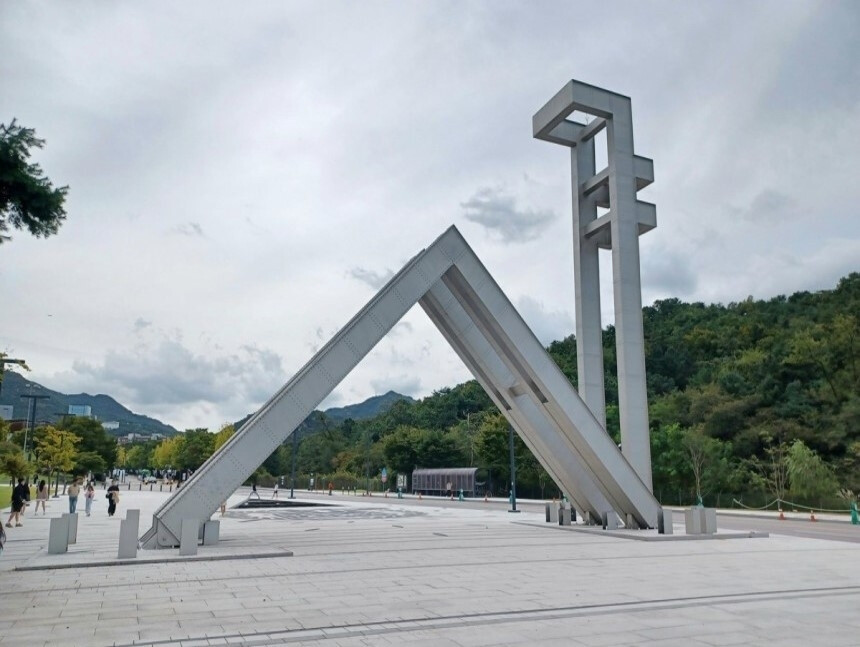
Seoul National University is facing a similar situation. SNU rolled out "ChatGPT Edu" for free to all students in June, but exhausted its entire annual contracted usage volume within just a month. Consequently, the university set a monthly limit of 20,000 credits per person starting in August, and slashed that limit to 7,000 credits last month.
As AI usage far exceeds projections, some universities are setting usage caps right from the implementation stage. When Korea University introduced an integrated service providing over 30 AI models last September, it imposed a monthly limit of 3,000 credits. Sookmyung Women's University and Kyung Hee University have set their respective monthly AI usage limits at 5,000 credits and 4,000 credits.
◇ The Limits of Free Support
Voices of discontent are rising among students who argue that the credits provided by universities are insufficient to keep up with their study and research needs. The monthly average usage limit across 15 major universities offering generative AI services stands at 4,750 credits. Kim (26), an enrolled student at Kookmin University, shared, "Even though I get 4,000 free credits every month, analyzing thesis materials or asking multiple follow-up questions exhausts them in just a few weeks, so I ended up paying for a personal AI subscription out of pocket."
Critics also point out that the features of AI services independently developed or introduced by universities often fall short of student expectations. Noh (31), a graduate student at Sungkyunkwan University, commented on the school's "KingoGPT," saying, "It’s only useful for checking academic administrative information. Because it has limitations for professional research like thesis writing, I spend hundreds of thousands of won every month from my lab budget to subscribe to separate AI services."
As students expand the scope of their AI utilization, universities are also struggling to estimate relevant budgets. High-performance AI models used for complex tasks such as thesis analysis and coding carry relatively high usage costs. Hankuk University of Foreign Studies, which previously promised to "build a platform by the end of the year where users can access multiple AI models in one place," is currently agonizing over the scope of its support. Ewha Womans University is reportedly considering a plan to provide AI services selectively to students enrolled in specific courses rather than universally to all students. Hanyang University and Chung-Ang University are also discussing potential introductions.
An official from one university remarked, "The level of AI support is quietly becoming a new criterion influencing university selection. Each institution is deep in thought over what services and how much of them to provide within a limited budget."
[Copyright (c) Global Economic Times. All Rights Reserved.]