• 2026.11.24 (Tue)
  • All articles
  • LOGIN
  • JOIN
Global Economic Times
한인동포뉴스(상단)
  • Synthesis
  • World
  • Business
  • Industry
  • ICT
  • Distribution Economy
  • Well+Being
    • Pet Life
    • Halal Horizon
  • Travel
  • Eco-News
  • Education
  • Korean Wave News
  • Opinion
  • Arts&Culture
  • Sports
  • People & Life
    • International Student Report
    • With Ambassador
  • Column
    • Cho Kijo Column
    • Cherry Garden Story
    • Ko Yong-chul Column
    • Kim Bong-seon's Photo Column
    • Kim Seul-Ong Column
    • Lee Yeon-sil Column
    • Professor Lee Soo-young’s Life Essays
  • Photo News
  • New Book Guide
MENU
 
Home > Industry

South Korea’s Manufacturing Hubs Face Historic Downturn as Chinese Rivals Advance in Quality and Price

Hee Chan Kim Reporter / Updated : 2026-11-24 18:23:56
  • -
  • +
  • Print

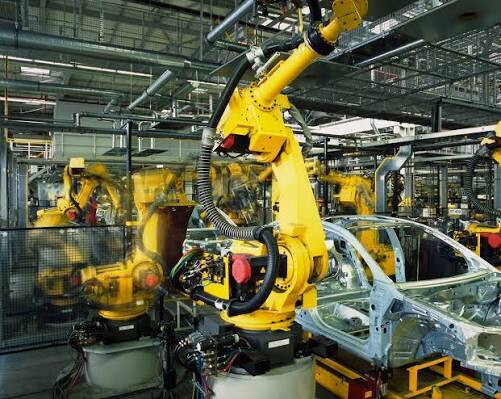
SEOUL — South Korea’s core small and medium-sized manufacturing hubs—including the Namdong, Banwol, and Sihwa national industrial complexes in the greater Seoul metropolitan area—are experiencing a severe contraction, with factory utilization rates dropping to levels not seen since the late-1990s Asian Financial Crisis.

Industry data from the third quarter indicates that machinery sector utilization in the Banwol and Sihwa complexes fell to 68.6% and 68.3%, respectively, mirroring the 67.8% to 68.4% rates recorded during the 1998 economic downturn. Prolonged high interest rates, elevated energy costs, and rising domestic labor expenses have compounded the slowdown, forcing several foundational manufacturers—such as mold-makers, metal processors, and parts suppliers—to scale back operations or shut down altogether.

Shifting Dynamics in Supply Chains

A primary driver behind the slump is the rapid technological advancement of Chinese manufacturers. While Chinese materials, parts, and equipment (SoBuJang) previously competed mainly on lower pricing, domestic industry officials note that Chinese suppliers have closed the quality gap over the past five years.

With Chinese-made molds and automotive components now matching or exceeding local standards while remaining 30% to 40% cheaper, major South Korean conglomerates and tier-1 suppliers have increasingly shifted their procurement to China. Consequently, local subcontractors producing custom industrial tools, hydraulic equipment, and machined parts report sharp declines in domestic orders and growing liquidity pressures.

Employment Contraction and Regulatory Pressures

The downturn has directly impacted the regional labor market. Combined employment across the Namdong, Banwol, and Sihwa complexes declined to 306,107 as of late September—a drop of more than 3,000 jobs year-on-year and over 10,000 compared to 2024.

Business groups and economic researchers point to structural domestic challenges as an additional drag on competitiveness. Bank of Korea data shows that labor costs represent 18.1% of revenue for South Korean SMEs, nearly twice the 9.48% ratio seen at large corporations. Industry advocates argue that minimum wage increases and stricter workplace safety regulations have constrained smaller firms, contrasting sharply with aggressive state subsidies and streamlined regulatory environments supporting Chinese industrial automation.

Divergence Across Sectors

Despite the broader manufacturing slump, market analysts emphasize that performance varies significantly by sector and corporate adaptability. While traditional foundational industries struggle, companies aligned with high-growth sectors continue to expand. In the Sihwa complex, firms tied to the semiconductor supply chain are actively investing in facility expansions, while bio-health hubs such as the Osong complex are seeing steady inflows of medical and cosmetics manufacturers.

[Copyright (c) Global Economic Times. All Rights Reserved.]

  • #Cherry Garden
  • #HalalFood
  • #Halal
  • #Petlife
  • #Cats
  • #Dogs
  • #Halalhorizone
  • #Hormuz Impasse
  • #Joseon
  • #globaleconomicti
Hee Chan Kim Reporter

Popular articles

  • Andong Launches Inaugural Heritage Film Festival to Blend Local Culture with CinemaA nine-day celebration kicks off on November 7, featuring independent films, cultural exhibitions, and policy forums.

  • How about a World Heritage Kimchi-making trip this weekend? The Pyeongchang Alpine Kimchi Festival runs until November 16.

  • How Did a Once-in-a-Century Grape Become Dirt Cheap?

I like it
Share
  • Facebook
  • X
  • Kakaotalk
  • LINE
  • BAND
  • NAVER
  • https://globaleconomictimes.kr/article/1065604919056560 Copy URL copied.
Comments >

Comments 0

Weekly Hot Issue

  • South Korea’s SB Sunbo Secures Landmark Deal for Two Floating Power Plants with Türkiye’s Karpowership
  • Daejeon Households Squeezed by 'Triple Whammy' of Rising Rents, Rates, and Living Costs
  • South Korea Must Launch 1 Trillion Won Mega-Funds to Rescue Late-Stage Tech Startups, Experts Warn
  • South Korean Finance Experts Call for Shift from Capital Volume to Productivity and Risk-Sharing
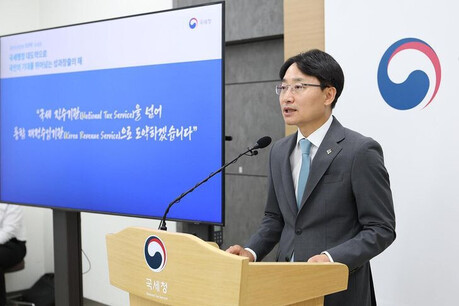
  • NTS Nominee Ahn Deok-soo Vows to Launch Special Task Force to Track Hidden Assets of Habitual Tax Evaders
  • The 2030 AI Perception Gap: Why Tech Insiders See a Radical Future That the Public Doesn’t

Most Viewed

1
South Korea and Ethiopia Sign Trilateral MOU to Introduce Liquid-Based Cytology (LBC) Technology for Cervical Cancer Diagnosis
2
South Korean Burger Chain Lotteria Expands Singapore Footprint with Halal Certification and New Teriyaki Lineup
3
AI Semiconductor Stocks Plummet: Philadelphia Index Drops 5.28% and Micron Plunges 7.59% Amid Executive Shakeup and Export Restrictions
4
"Stay Out, Get Paid, or Have Police Stay With You": Shenzhen Imposes Strict Security Ahead of APEC Summit
5
Taiwan Bans Short-Selling Below Previous Close Starting Nov. 23, Raises Margin Ratio to 150%
체리가든 스토리
nutri huevos
로타리
동포저널

Hot Issue

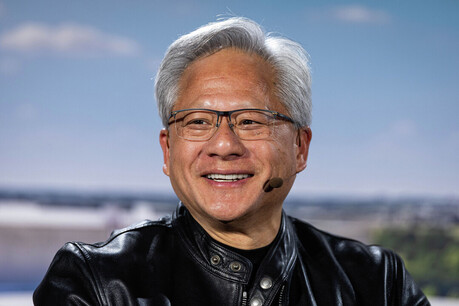
Inside the 11-Day Blitz: How the White House and Tech Titans Engineered Jensen Huang’s Nvidia Comeback

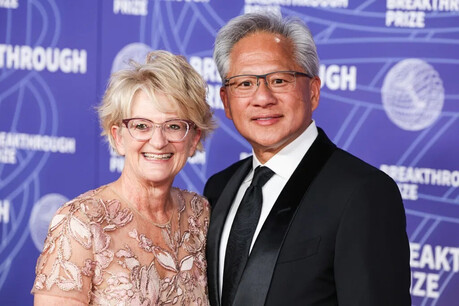
Quiet Power Behind the Chip Giant: Lori Huang Co-Steers $109 Billion Nvidia Fortune Amid Company Turmoil

Fading Hype and Ethics Scrutiny Shadow Trump’s Second Meme Coin Gala

Fashion Runway Show 2026

Let’s recycle the old blankets in Jeju Island’s closet instead of incinerating them.

Global Economic Times
korocamia@naver.com
CEO : LEE YEON-SIL
Publisher & Editor : KO YONG-CHUL
Registration number : Seoul, A55681
Registration Date : 2024-10-24
Youth Protection Manager: KO YONG-CHUL
Singapore Headquarters
5A Woodlands Road #11-34 The Tennery. S'677728
Korean Branch
Phone : +82(0)10 4724 5264
#304, 6 Nonhyeon-ro 111-gil, Gangnam-gu, Seoul
Copyright © Global Economic Times All Rights Reserved
  • News K
  • 반달곰 프로젝트
  • 광고문의
Search
Category
  • All articles
  • Synthesis
  • World
  • Business
  • Industry
  • ICT
  • Distribution Economy
  • Well+Being 
    • 전체
    • Pet Life
    • Halal Horizon
  • Travel
  • Eco-News
  • Education
  • Korean Wave News
  • Opinion
  • Arts&Culture
  • Sports
  • People & Life 
    • 전체
    • International Student Report
    • With Ambassador
  • Column 
    • 전체
    • Cho Kijo Column
    • Cherry Garden Story
    • Ko Yong-chul Column
    • Kim Bong-seon's Photo Column
    • Kim Seul-Ong Column
    • Lee Yeon-sil Column
    • Professor Lee Soo-young’s Life Essays
  • Photo News
  • New Book Guide
  • Overseas Koreans
  • Multicultural News