![[등록] 2026-09-01 15:48:31](/support/_updata/banner2/tl181982910_6749.png)


(C) WebProNews
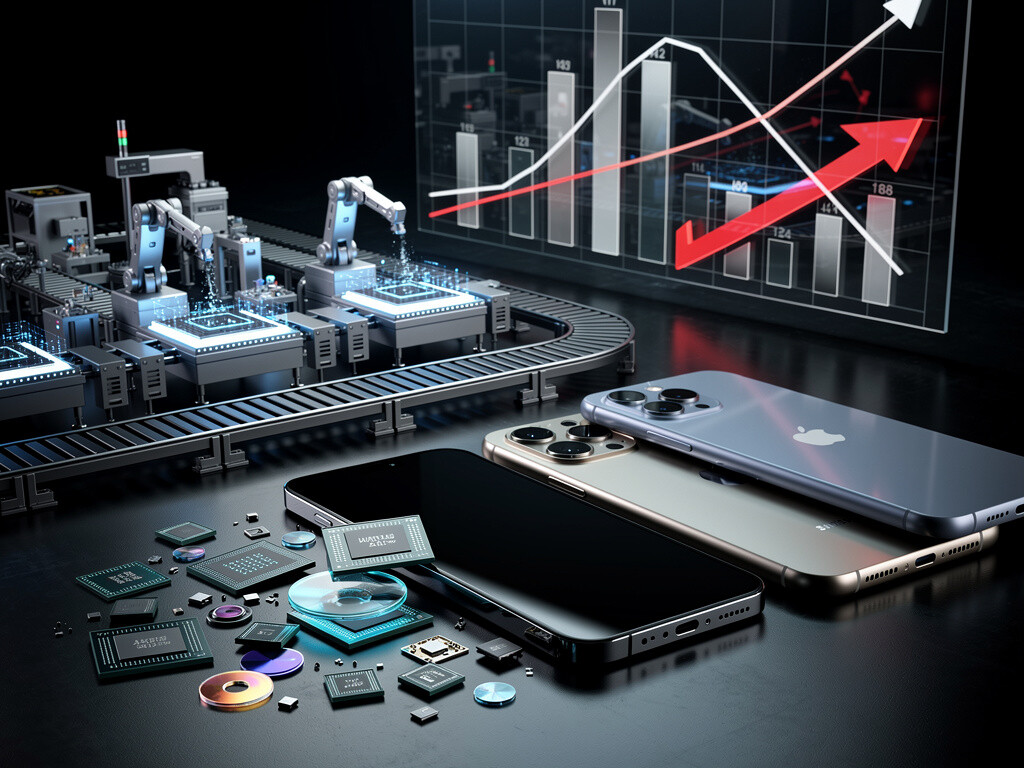
SEOUL — The global semiconductor market is facing a severe supply-demand imbalance as the Artificial Intelligence (AI) boom cannibalizes memory chip production. Industry analysts warn that DRAM prices could skyrocket by up to 60% in the first quarter of 2026, leaving consumer electronics giants like Apple scrambling to secure components.
The "3-to-1" Rule: Why PCs and Smartphones are Starving
The "Big Three" memory manufacturers—Samsung Electronics, SK Hynix, and Micron—are reportedly prioritizing High Bandwidth Memory (HBM) and server-grade DRAM for AI data centers, where profit margins are significantly higher.
This shift has created a production bottleneck known as the "3-to-1 rule." Because HBM occupies significantly more wafer capacity than traditional memory, producing 1 bit of HBM effectively prevents the production of 3 bits of standard DRAM.
As a result, SK Hynix and Micron have reportedly sold out their entire 2026 production capacity, leaving virtually no surplus for the PC, smartphone, or gaming sectors.
Unprecedented Price Hikes
The financial impact is already being felt on the ground. Dean Miller, CTO of the tech startup Juice Labs, recently shared that a 256GB RAM module he purchased for $300 just months ago has seen its market value surge toward $3,000—a tenfold increase.
TrendForce, a leading market research firm, projects that average DRAM prices will jump 50% to 60% this quarter compared to Q4 2025. Tom Shu, an analyst at TrendForce, described the current trajectory as "unprecedented" in the history of the semiconductor industry.
Overcoming the "Memory Wall"
The shortage is fueled by the industry's desperate attempt to scale AI. While Graphics Processing Units (GPUs) have become exponentially faster, they have hit a "Memory Wall." > The Memory Wall: A performance bottleneck where the data transfer speed and capacity of memory cannot keep up with the processing power of the GPU, slowing down Large Language Models (LLMs).
To break through this wall, "Hyperscalers" like Amazon (AWS), Microsoft (Azure), and Google Cloud are stockpiling as much memory as possible, effectively outbidding consumer-facing industries.
Apple Braces for iPhone Production Cuts
The collateral damage of this AI-first strategy is hitting the smartphone market hard. Apple, which historically maintained stable margins through long-term contracts, is facing a difficult second quarter.
Cost Explosion: The cost of memory for the iPhone 17 Pro Max has already doubled compared to the iPhone 15 Pro Max, rising from 5% to over 10% of total component costs.
Supply Constraints: With long-term contracts expiring in Q1, Apple may be forced to buy memory at spot prices, which are expected to be 40% to 70% higher.
Market intelligence firms IDC and Counterpoint Research have revised their forecasts, predicting a 2% to 4% decline in iPhone shipments this year due to these supply constraints.
Record Profits for Chipmakers
While consumer electronics brands struggle, the "Big Three" are seeing record-breaking financials.
Samsung Electronics recently saw quarterly operating profits surpass 20 trillion KRW for the first time.
Micron’s stock has surged 247% over the past year.
SK Hynix is reportedly exploring a listing on the New York Stock Exchange to capitalize on its dominant position in the HBM market.
With production facilities requiring years to expand, experts predict that the "Great Memory Shortage" will remain the defining challenge for the global tech supply chain throughout 2026.
[Copyright (c) Global Economic Times. All Rights Reserved.]