![[등록] 2026-09-01 15:48:31](/support/_updata/banner2/tl181982910_6749.png)


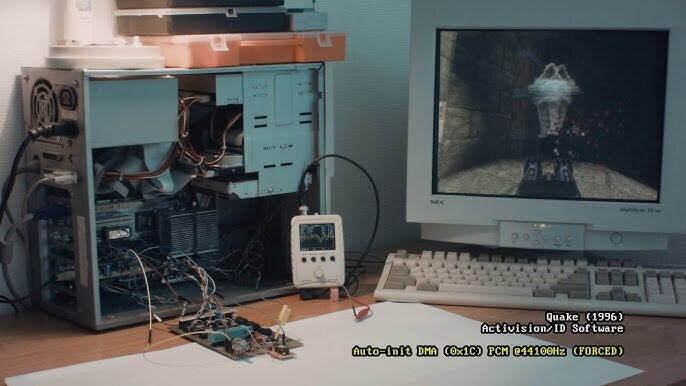
(C) Youtube
SEOUL — For Song Min-su, a 35-year-old resident of Yeongdeungpo District, a dusty computer sitting in his storage unit wasn’t junk—it was a winning lottery ticket.
Last week, Song pulled a 16GB stick of RAM from his decommissioned PC and listed it on a secondhand marketplace. It sold for 110,000 KRW ($82 USD) in less than five minutes.
"I had no idea a computer rolling around in storage would become an emergency fund," Song said. "I heard rumors that older memory prices were skyrocketing due to semiconductor shortages, so I tried my luck. It was gone instantly."
The Rise of ‘Chipflation’
South Korea is currently gripped by "Chipflation"—a portmanteau of chips and inflation. Driven by an insatiable global appetite for Artificial Intelligence (AI) hardware, the cost of standard PC memory has decoupled from traditional market logic, leading to a phenomenon locals call "RAM-tech" (RAM + investment technology).
According to Danawa, a leading South Korean PC price comparison site, the price of a standard Samsung DDR5-5600 (16GB) stick, which hovered around 60,000 KRW in early 2025, surged to over 370,000 KRW ($275 USD) by February 9, 2026—a sixfold increase in a single year.
Even legacy hardware isn't immune. The DDR4-3200 (16GB), a model released over a decade ago in 2014, saw its price jump from 30,000 KRW to roughly 210,000 KRW in the same period. At the high end of the market, a 64GB DDR5 stick now commands a price tag of nearly 2.75 million KRW ($2,050 USD).
"One stick of RAM now equals a round-trip ticket to Europe," joked one user on a popular online tech community.
AI: The Grinch That Stole the PC Market
The root cause of this price explosion lies in the "AI Arms Race." Major semiconductor giants, including Samsung Electronics and SK Hynix, have aggressively pivoted their production lines toward High Bandwidth Memory (HBM)—a specialized, high-margin chip essential for AI accelerators like those produced by NVIDIA.
As fabrication plants prioritize HBM to satisfy big-tech demand, the production of "commodity" DRAM used in everyday laptops and desktops has been drastically throttled. With supply chains bone-dry, the value of existing stock—and even used parts—has reached unprecedented heights.
A New Battlefield for Scrappers
The surging prices have transformed the waste management and secondhand industries. Professional PC refurbishers and even neighborhood "junk collectors" (known locally as nakkama) are changing their business models.
"In the past, we sold scrap computers to junkyards by weight," said Mr. Kim, an intermediary collector in Seongdong District. "Now, we call specialized tech firms and haggle over the price of individual components like RAM before we move the metal."
In Daegu, scrap dealer Jung Kwan-sik (59) noted that inquiries for old computers have quintupled. "People who used to practically give away their old PCs are now calling to check the current unit price for RAM. I started carrying a daily price chart just to show customers I'm being fair."
Ghost Towns in Yongsan
While the secondhand market is white-hot, the traditional heart of Korea’s tech trade, Yongsan Electronics Market, is eerily quiet. Usually bustling ahead of the "back-to-school" season, the market has seen a sharp decline in foot traffic.
The reason is simple: the cost of new hardware has become prohibitive. Laptops that cost 1.2 million KRW last year are now being listed for nearly double that price due to the memory shortage.
"Customers keep asking why laptops are so expensive," said one shop owner in Yongsan. "I eventually got tired of explaining it, so I just taped a sign to the window that says: 'Production Cuts + AI Demand = High Prices.'"
As the AI boom shows no signs of slowing down, South Koreans are holding onto their hardware with "diamond hands," waiting for the peak of the market. For now, the most valuable thing in your home might not be in your jewelry box, but inside that beige tower gathering dust in the corner.
[Copyright (c) Global Economic Times. All Rights Reserved.]