• 2026.07.21 (Tue)
  • All articles
  • LOGIN
  • JOIN
Global Economic Times
fashionrunwayshow2026
  • Synthesis
  • World
  • Business
  • Industry
  • ICT
  • Distribution Economy
  • Well+Being
  • Travel
  • Eco-News
  • Education
  • Korean Wave News
  • Opinion
  • Arts&Culture
  • Sports
  • People & Life
    • International Student Report
    • With Ambassador
  • Column
    • Cho Kijo Column
    • Cherry Garden Story
    • Ko Yong-chul Column
    • Kim Seul-Ong Column
    • Lee Yeon-sil Column
  • Photo News
  • New Book Guide
MENU
 
Home > ICT

AI Shockwaves Hit Private Credit: Software Sector Risks Trigger Market Alarm

Eunsil Ju Reporter / Updated : 2026-02-09 17:38:17
  • -
  • +
  • Print

(C) Qualcomm Ventures


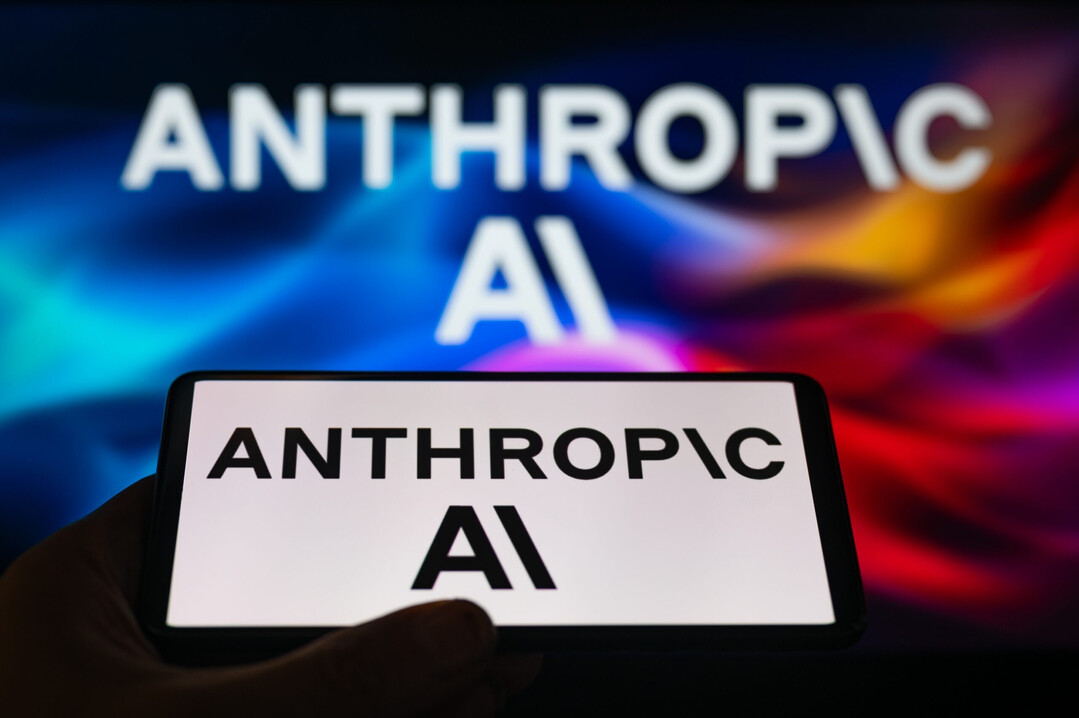
NEW YORK — The $3 trillion private credit market is facing a daunting new wave of uncertainty as the "AI Shock" led by Anthropic’s latest innovations sends ripples through the financial sector. Experts warn that the rapid rise of advanced AI tools, such as 'Claude Co-work,' could disrupt the software industry—a primary borrower group for private debt funds—potentially triggering a spike in default rates.

The Software Connection: A Pillar Under Pressure
According to a report by CNBC, the anxiety stems from the potential for next-generation AI to replace existing enterprise software solutions. This poses a direct threat to the valuations and cash flows of software companies, which have been the "darling" of private credit providers for years.

Data from PitchBook highlights the scale of this exposure:

Sector Dominance: Software companies account for approximately 17% of all loans held by U.S. Business Development Companies (BDCs), making it the second-largest sector after commercial services.
Unitranche Vulnerability: Many of the largest "unitranche" deals—a hybrid loan structure favored by private debt funds—have been concentrated in the technology and software space since 2020.
The market's reaction was swift. Last week, shares of major private credit players plummeted alongside software stocks. Ares Management saw a sharp decline of 12.8%, followed by KKR (-9.7%), Blue Owl Capital (-8.2%), and TPG (-6.6%).

Rising Defaults and the "PIK" Problem
The speed of AI integration is the primary concern. If AI disrupts traditional software business models faster than these companies can adapt, the heavy debt loads they carry could become unsustainable. UBS Group has warned that in an aggressive disruption scenario, default rates in the U.S. private credit market could surge to 13%.

A critical point of failure lies in Payment-in-Kind (PIK) loans. Software and commercial service firms are currently the largest users of PIK structures, which allow borrowers to pay interest with additional debt rather than cash.

"While PIK structures give growing companies breathing room to build cash flow, deferred interest can rapidly escalate into a severe credit crisis if the borrower's financial health deteriorates due to AI competition," noted analysts.

A Layered Risk Environment
Jeffrey Hooke, a senior finance lecturer at Johns Hopkins Carey Business School, suggests that while AI is the new catalyst, the private credit market was already under strain. Issues regarding liquidity, difficulty in liquidating loans, and maturity extensions have been simmering for some time.

"AI-driven industry shifts represent a significant credit risk, but the impact will be bifurcated," said Kenny Tang, head of U.S. Credit Research at PitchBook LCD. "The winners will be those who lead the AI transition, while the laggards will face immediate pressure."

The Call for Transparency
The lack of visibility in private markets remains a major hurdle. Mark Zandi, Chief Economist at Moody’s Analytics, pointed out that the combination of surging AI-related borrowing, high leverage, and a lack of transparency constitutes a "major red flag."

As the "AI Shock" continues to evolve, investors are bracing for a period of intense volatility. The private credit market, once seen as a stable alternative to public bonds, now finds itself at the epicenter of a technological revolution that could redefine corporate solvency in the digital age.

[Copyright (c) Global Economic Times. All Rights Reserved.]

  • #Globaleconomictimes
  • #Korea
  • #Seoul
  • #Samsung
  • #LG
  • #Bitcoin
  • #Meta
  • #Business
  • #Economic
  • #The Woori Bank
  • #Elon Musk
  • #C
Eunsil Ju Reporter
Eunsil Ju Reporter

Popular articles

  • UN Secretary-General Urges AI Industry to Adopt Environmental Transparency Amid Rapid Infrastructure Expansion

  • LG Energy Solution-Honda Joint Venture Commences ESS Battery Cell Mass Production in the U.S.

  • Brain's Secret for Lasting Memories: The Critical Role of Astrocytic Protein 'Ank2'

I like it
Share
  • Facebook
  • X
  • Kakaotalk
  • LINE
  • BAND
  • NAVER
  • https://globaleconomictimes.kr/article/1065602177243358 Copy URL copied.
Comments >

Comments 0

Weekly Hot Issue

  • KCCI Jeju Forum Opens: Chairman Chey Tae-won Urges Businesses to Catch the AI Wave Before It Becomes an Insurmountable Wall
  • AI Drones Take to the Skies in Revolutionary Hunt for Mosquitoes
  • The Gopher Miracle: How a 24-Hour Experiment Transformed a Volcanic Wasteland into a Lush Forest
  • Hyundai Motor Group to Acquire 100% Stake in Boston Dynamics, Accelerating Humanoid and Physical AI Commercialization
  • South Korea to Tighten Rules on Single-Stock Leveraged Products; Minimum Deposit Raised to 30 Million Won
  • TSMC Hits Record $40 Billion in Q2 Revenue Amid AI Boom, Pledges Additional $100 Billion for US Expansion

Most Viewed

1
Foreign Investors Return But Sell Off 'Samsung & Hynix' as Price Target Cuts Fuel KOSPI Peak Concerns
2
[Special Feature] Laying the Foundation for Korea's Informatization: Looking Back at the 1st Administrative Computer Network Project - Part 1
3
Baek Geum-ja Wooriot to Host 'Musical Costume Fashion Gala Show' at DDP
4
South Korea-Mexico High-Level Policy Consultation Held... Discussing Expanded Cooperation in AI, Space, and FTA
5
Hanwha Aerospace Forges Alliance with 49 Partners to Boost South Korea's Aviation Engine Ecosystem
광고문의
임시1
임시3
임시2

Hot Issue

OpenAI Rebounds in Secondary Market as Valuation Surges 20% in Three Months

South Korea to Tighten Rules on Single-Stock Leveraged Products; Minimum Deposit Raised to 30 Million Won

KCCI Jeju Forum Opens: Chairman Chey Tae-won Urges Businesses to Catch the AI Wave Before It Becomes an Insurmountable Wall

Hyundai Motor Group to Acquire 100% Stake in Boston Dynamics, Accelerating Humanoid and Physical AI Commercialization

Fashion Runway Show 2026

Global Economic Times
korocamia@naver.com
CEO : LEE YEON-SIL
Publisher : KO YONG-CHUL
Registration number : Seoul, A55681
Registration Date : 2024-10-24
Youth Protection Manager: KO YONG-CHUL
Singapore Headquarters
5A Woodlands Road #11-34 The Tennery. S'677728
Korean Branch
Phone : +82(0)10 4724 5264
#304, 6 Nonhyeon-ro 111-gil, Gangnam-gu, Seoul
Copyright © Global Economic Times All Rights Reserved
  • 향기네무료급식
  • BCB부천방송
  • 반달곰 프로젝트
Search
Category
  • All articles
  • Synthesis
  • World
  • Business
  • Industry
  • ICT
  • Distribution Economy
  • Well+Being
  • Travel
  • Eco-News
  • Education
  • Korean Wave News
  • Opinion
  • Arts&Culture
  • Sports
  • People & Life 
    • 전체
    • International Student Report
    • With Ambassador
  • Column 
    • 전체
    • Cho Kijo Column
    • Cherry Garden Story
    • Ko Yong-chul Column
    • Kim Seul-Ong Column
    • Lee Yeon-sil Column
  • Photo News
  • New Book Guide
  • Multicultural News
  • Jobs & Workers