![[등록] 2026-09-01 15:48:31](/support/_updata/banner2/tl181982910_6749.png)


(C) Hong Moon Hwa
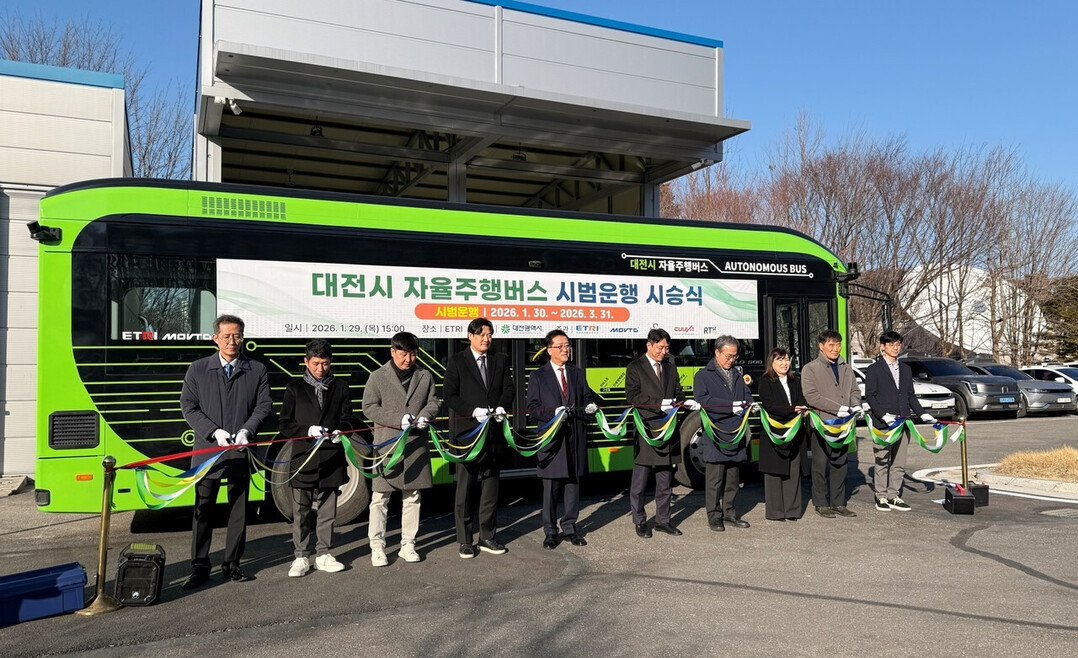
Autonomous driving technology, which has long been confined to laboratories, has finally been deployed on the Bus Rapid Transit (BRT) routes connecting downtown Daejeon and Sejong City. The Electronics and Telecommunications Research Institute (ETRI) and Daejeon Metropolitan City held a ceremony on the 29th to commemorate the "Autonomous Driving Pilot Zone Passenger Transport Service," announcing that full-scale pilot operations for citizens will begin on the 30th.
This project was initiated to establish a unique autonomous driving ecosystem centered on the Daedeok Research and Development Special Zone and to preemptively secure a metropolitan autonomous transportation system for the Chungcheong region. Beyond a mere demonstration of technology, it serves as a "living testbed" to prove its value as a practical means of transportation for citizens in complex urban road environments.
50km/h in Cities, 80km/h on BRT... Performance On Par with Regular Buses
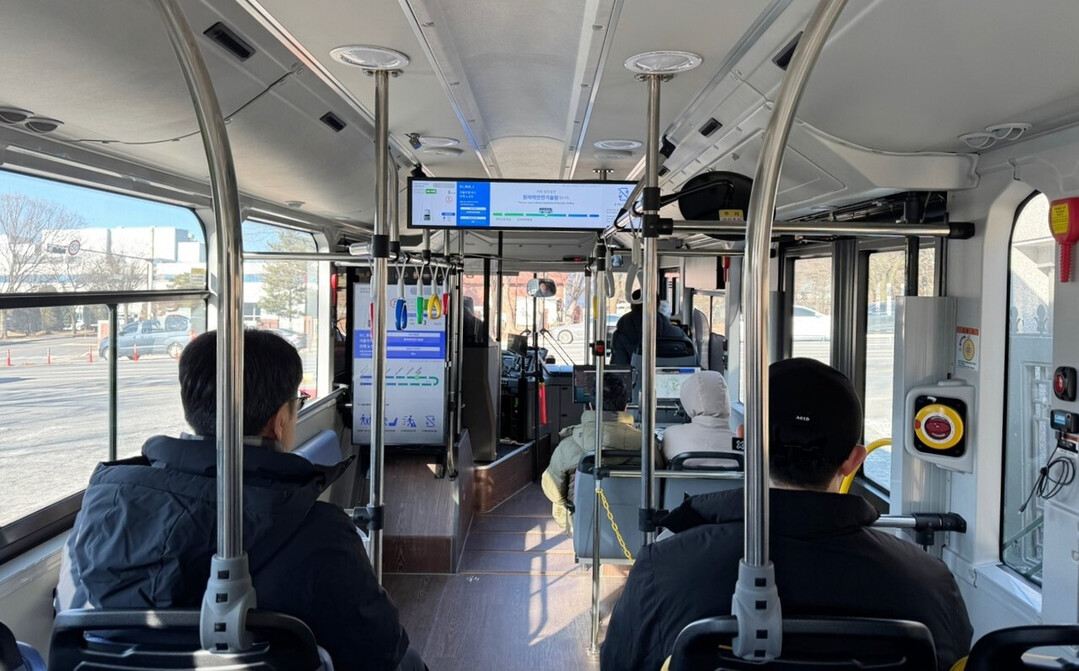
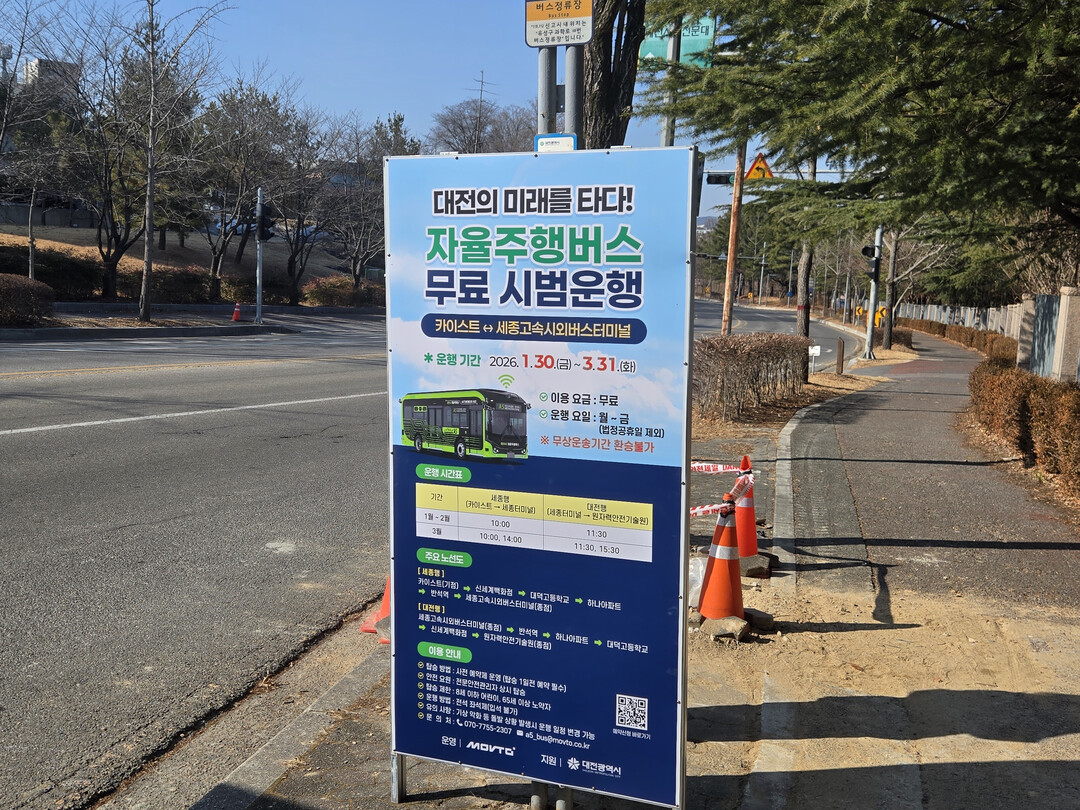
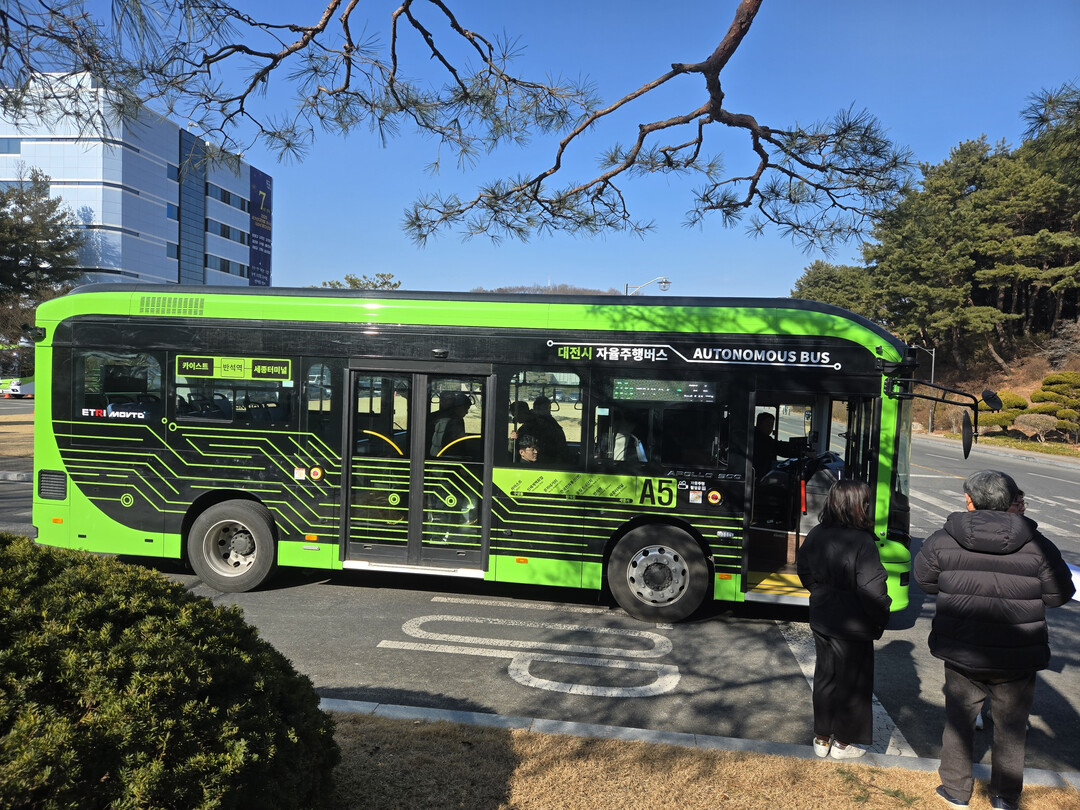
The pilot route covers a total of 26.9km, starting from KAIST and passing through Shinsegae Department Store, Daedeok High School, and Banseok Station before arriving at Sejong Terminal. While the exterior closely resembles a standard electric city bus, the interior is packed with ETRI's state-of-the-art autonomous driving solutions.
The autonomous bus (Vehicle No. A5) is equipped with an omnidirectional surveillance system consisting of six LiDARs, eight cameras, and four radar sensors. While the LiDAR calculates laser reflection times to determine precise positioning within a 10cm margin of error, the cameras recognize lanes and signals, and the radar calculates the distance and speed of surrounding vehicles in real-time.
"This is not a simple rule-based system; it features an AI that has learned from countless scenarios and updates its driving judgment more than 10 times per second," explained Kim Jin-woo, a senior researcher at ETRI. "We are aiming for Level 4 technology that can independently handle urban complexities such as merging, sudden pedestrian movements, and left/right turns."
(C) (C) Hong Moon Hwa
Vehicle-Road-Control Integration... Incorporating 5G-based V2X Technology
A key differentiator of this demonstration lies in the organic integration between the vehicle and the infrastructure, rather than just the performance of the vehicle itself. The "5G-NR-V2X (Vehicle-to-Everything)" technology has been applied, allowing sensors placed throughout the roads to transmit blind-spot information to the vehicle in real-time. Furthermore, the control center monitors the bus's position and status in 3D through a photorealistic system to ensure safety.
The pilot operation will be offered free of charge to pre-registered applicants on weekdays. Until the end of February, it will operate once a day, and starting in March, the service will expand to two vehicles running twice a day. After intensively checking the stability of driving on snowy and icy roads during the winter, the city plans to obtain a limited transport license in April and fully launch paid autonomous driving services by the end of 2028.
(C) Hong Moon Hwa
Expanding the Industrial Ecosystem through a Research-Industry 'One-Team'
This project is also significant because research institutes and local companies have joined forces as a "One-Team" to create synergy. ETRI’s laboratory enterprise, "MoveTo," is in charge of vehicle modification and operation, while local small-but-mighty companies such as Tesla System (AI-based road monitoring), Kooba (3D control systems), and Altist (software platforms) provided the core technical infrastructure.
"We are currently demonstrating technology at 'Level 3.5' or higher that cooperates with road infrastructure," said Choi Jung-dan, head of the AI Robot Research Division at ETRI. "We will play the role of a catalyst so that the autonomous driving industrial ecosystem can grow rapidly by sharing accumulated data with the private sector."
A representative from Daejeon City added, "This demonstration will serve as an opportunity to solidify the safety of autonomous driving as a form of urban public transport. We will strengthen Daejeon's status as a scientific city leading the future mobility era." As autonomous driving services materialize on the Daejeon-Sejong route following Seoul, Pangyo, and Daegu, the competition for future transportation innovation in Korea is expected to accelerate further.
(C) Hong Moon Hwa
[Copyright (c) Global Economic Times. All Rights Reserved.]